
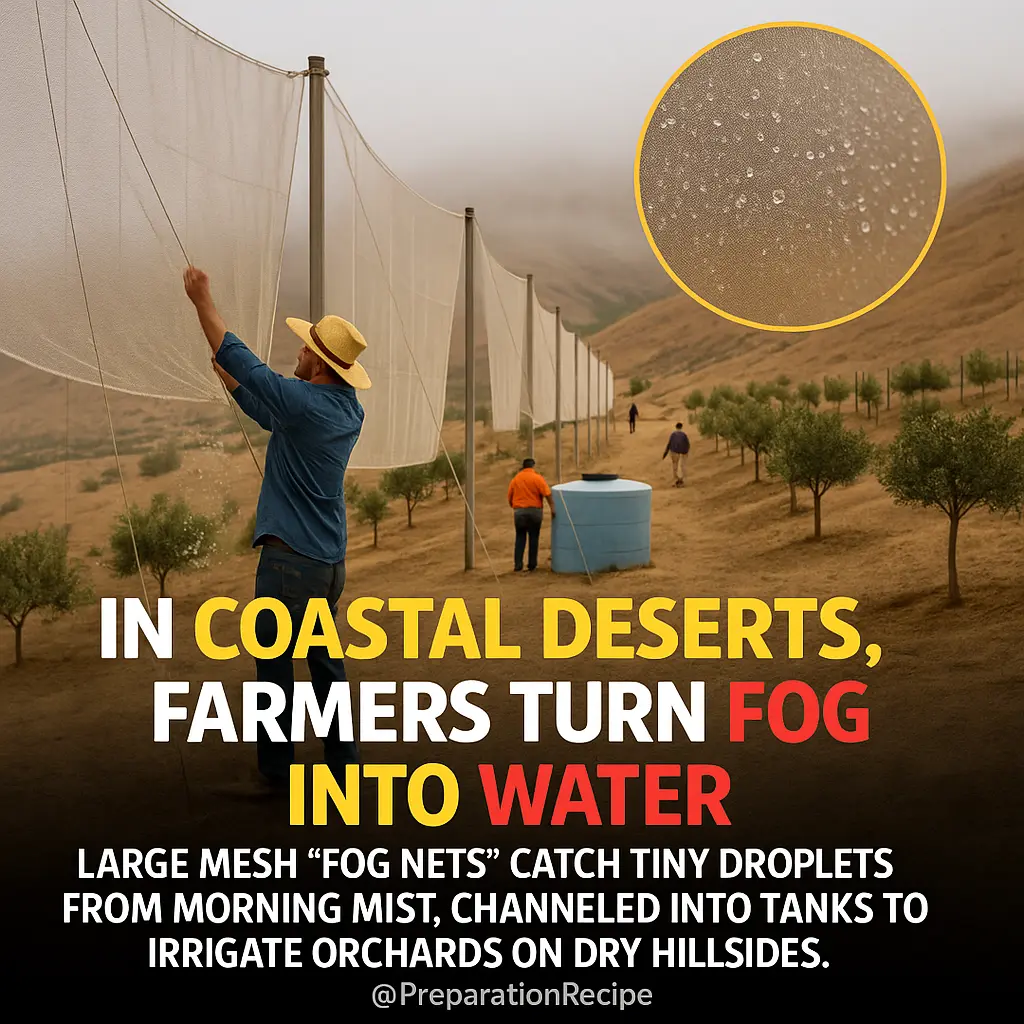
The first time I heard that someone could “catch” fog to water a tree, I honestly thought it was a joke.
It was during a call with an old friend who lives near the coast. She mentioned that in some desert areas, farmers use giant nets to trap fog. Nets. For fog. I had to pause. But then she sent me a picture – and I couldn’t stop staring. There it was: a simple mesh screen, stretched wide like a clothesline, glistening with tiny droplets, with green crops growing nearby.
That moment stuck with me. So I looked into it, and guess what? Fog farming is a real thing, and it’s not just clever… It’s inspiring. Let’s explore how it works, why it’s becoming more important, and how it might just be a sign of the creativity we all need more of.
What Is Fog Farming, Anyway?
Picture this: the sun hasn’t fully risen yet. A soft blanket of fog rolls over the hills. It’s quiet. Instead of letting that mist drift away, farmers use tall mesh nets – kind of like big screens on poles – to catch the fog.
These nets are made of a special material that grabs tiny water droplets from the air. As the moisture clings to the mesh, it slowly drips down into a gutter, then into storage tanks. From there, the water can be used to irrigate crops like olives, figs, and even grapes.
No pumps. No pipes. No chemicals. Just wind, fog, and gravity.
And the best part? It works in places where rain is rare, but fog is common – like the coastlines of California, Chile, and Morocco.
Why It’s So Smart (and Kind of Beautiful)
Let’s be honest: farming is hard enough. Add in dry soil, little rainfall, and rising temperatures, and it can feel nearly impossible. But fog nets flip the script. They give farmers a quiet, gentle way to bring life to dry land.
Instead of waiting for rain that may never come, these nets work with what nature already provides.
And there’s something beautiful about that, right? The idea of turning something as light and quiet as fog into clean, usable water feels… peaceful. It’s like gathering morning dew with your hands – only scaled up for an orchard.
Plus, fog water is incredibly clean. Since it hasn’t hit the ground, it hasn’t picked up dirt or pollution. That means less need for filtration and fewer added costs.
What Can You Actually Grow With Fog?
You might be surprised by how much.
Farmers who use fog nets often plant drought-tolerant crops – ones that don’t need gallons of water every day. Think:
- Olives – Hardy, slow-growing, and deeply rooted.
- Figs – Sweet, tough, and perfect for hot, dry places.
- Aloe vera – Known for its soothing gel and ability to thrive in rough conditions.
- Grapes – Especially desert varieties grown for table grapes, raisins, or juice.
- Nuts like almonds or pistachios – Though they take more water, smaller orchards can still benefit.
Even community gardens have used fog nets to grow lettuce, kale, and herbs in dry areas near the coast.
So, while fog farming won’t replace massive irrigation systems overnight, it can absolutely support local food and keep smaller farms going – especially during dry years.
Is This Something You Could Try?
You might be wondering if this works outside deserts – and the short answer is: maybe.
If you live in a place that gets foggy mornings (especially near the ocean or in hilly areas), and you have the right kind of wind patterns, a small fog net could help your backyard garden.
Here’s what you’d need:
- A strong mesh net (not plastic – it won’t catch as well)
- Poles to raise the net at least 6–8 feet high
- A sloped gutter system at the bottom
- A small tank or barrel to collect the drip
Even if you only gather a few gallons a day, that’s enough to water potted plants, herbs, or a few vegetable beds.
Of course, this depends a lot on your location. But if nothing else, it’s a fun way to learn more about nature, water, and how creative solutions can make a big difference.
What This Teaches Us (Even If We Don’t Farm)
Maybe you’re not a farmer. Maybe you live far from fog, or you’ve never grown anything in your life.
Still – there’s something powerful here.
Fog farming is a reminder that small ideas, simple materials, and local knowledge can create real change. It tells us that when we stop fighting against nature and start working with it, good things can grow.
Even in dry soil. Even with no rain.
So the next time you see a patch of fog drift by in the morning, pause for a moment. Imagine what it might become – not just a passing cloud, but a drop of hope.
Final Thought
In a world full of complicated problems, it’s comforting to know that some solutions are quiet, clever, and built from the breeze. Fog nets don’t make headlines, but they do make food, water, and a bit of wonder in the morning mist.
Let’s keep finding ways, big or small, to make the most of what we already have.