
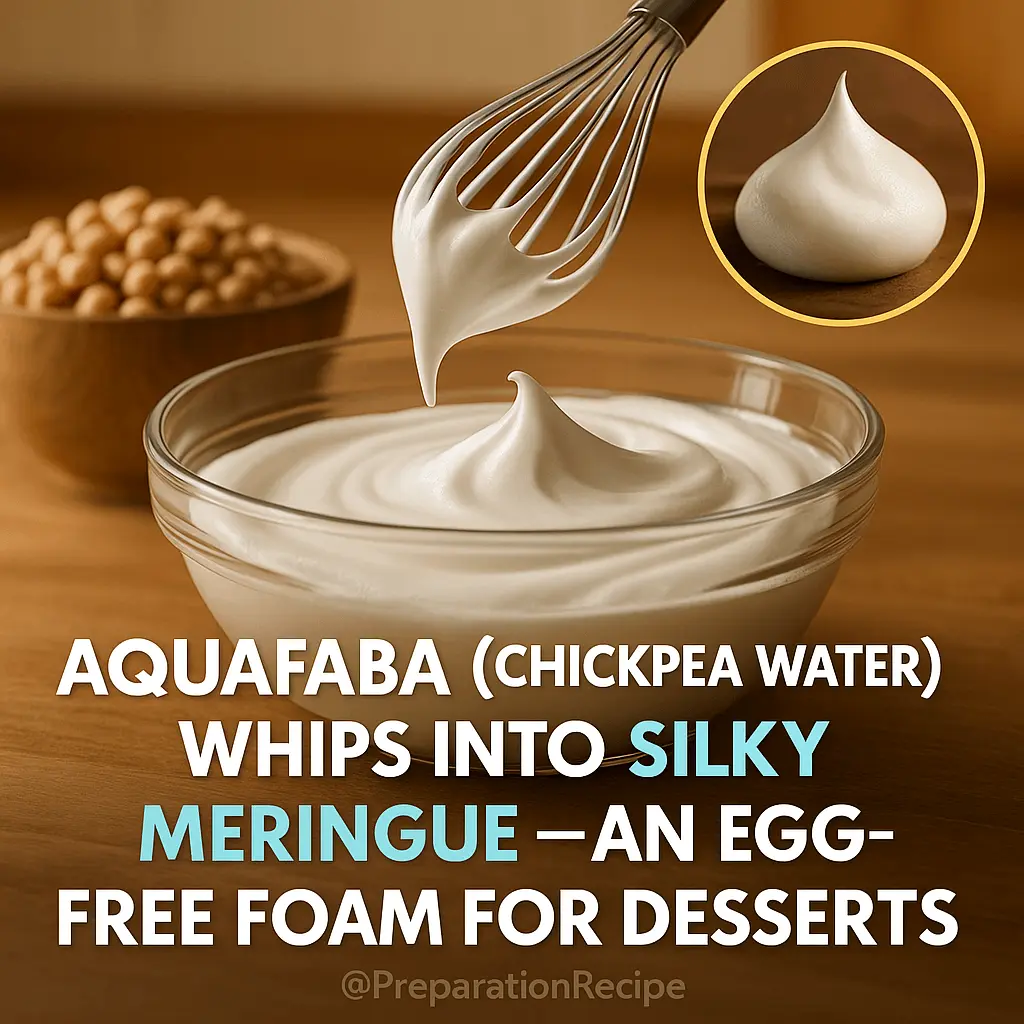
I’ll be honest – when I first heard someone say they used chickpea water to make meringue, I thought they were joking. I even laughed a little. Chickpea water? The stuff I usually pour down the sink after draining a can?
But then, my cousin brought a tray of the fluffiest-looking lemon meringue tarts to a family dinner and casually mentioned they were 100% egg-free. That’s when I decided I had to try it for myself.
And wow – turns out, this simple pantry leftover isn’t just a neat trick. It’s a creamy, fluffy, surprisingly powerful ingredient that can whip up just like egg whites. Let’s explore how this works, how to try it yourself, and why it might just become your new kitchen favorite.
What Is Aquafaba, Anyway?
If you’ve ever opened a can of chickpeas, you’ve seen aquafaba – it’s the pale, starchy liquid the beans sit in. The word comes from Latin: aqua (water) and faba (bean). Sounds fancy, but it’s really just bean water.
When you whip it, something incredible happens. It foams up just like egg whites, creating silky peaks you can use for meringues, mousse, even marshmallows.
The best part? It doesn’t taste like beans once it’s sweetened or flavored. It’s light, neutral, and blends right in with sugar, cocoa, or vanilla.
Why People Are Using It (Even If They Eat Eggs)
I thought this was just a hack for people who avoid eggs, but I’ve seen home bakers and chefs use it just for the fun of it. Why?
- No waste: Instead of tossing the liquid from canned beans, you’re giving it a second life.
- Budget-friendly: Cans of chickpeas are cheap – and now they do double duty.
- Impress-your-friends factor: Telling someone you made mousse with bean water always gets a “Wait… what?!”
And if you do avoid eggs for any reason, this is a delicious alternative that works in more recipes than you’d expect.
How to Use Aquafaba: A Beginner’s Guide
Let’s say you’re curious and want to try this at home. Here’s a simple breakdown to get you started:
1. Grab a Can of Chickpeas
That liquid in the can? Don’t pour it out! Gently drain the chickpeas over a bowl and save that liquid. You’ll get about ¾ cup per can.
Tip: Choose unsalted chickpeas for a more neutral taste.
2. Chill It (Optional but Helpful)
Cold aquafaba tends to whip faster and hold its shape better. Just pop it in the fridge for 10–15 minutes.
3. Start Whipping
Use a hand mixer or stand mixer with a whisk attachment. Pour in the aquafaba and beat on high speed. Within 5–10 minutes, it will turn from foamy to glossy stiff peaks – just like egg whites.
Add a pinch of cream of tartar if you want extra structure.
4. Sweeten It Up
If you’re making meringue or mousse, add a few spoonfuls of sugar and a dash of vanilla. Want chocolate mousse? Fold in melted (cooled) chocolate for a rich, airy dessert.
Pro tip: Taste as you go. It’s super easy to customize the sweetness.
What You Can Make With Aquafaba
Once you’ve whipped up a bowl of fluffy goodness, here’s what you can try:
- Meringue cookies: Light, crispy bites that melt on your tongue
- Chocolate mousse: Creamy, rich, and dairy-free too
- Frosting: A glossy topping for cupcakes or pies
- Pavlova: A crispy outer shell with a soft, marshmallow-like center
- Homemade marshmallows: Yep, you can go that far!
Honestly, it’s fun just experimenting. One time, I swirled whipped aquafaba into warm cocoa just to see what would happen. (It was like a light, sweet cloud on top.)
What It’s Not Good For
Okay, it’s not perfect for everything.
Aquafaba won’t make scrambled eggs or quiches. It’s best used in recipes where egg whites act as a foaming agent – not as a binder or main ingredient.
Also, you’ll need to use it fairly fresh. Leftover whipped aquafaba doesn’t hold forever – use it within a few hours or store the liquid in the fridge for 2–3 days before whipping.
How It Works (Simple Science Stuff)
Here’s the quick version: Aquafaba contains proteins and starches that mimic the behavior of egg whites. When you whip it, air gets trapped in tiny bubbles, forming a stable foam.
Think of it like this: You’re making fluffy clouds out of legume leftovers.
Pretty cool, right?
Why This Surprised Me (and Might Surprise You Too)
I expected it to be weird. I thought it might smell like beans or fall apart in the oven. But it didn’t.
Instead, I got perfectly piped meringue cookies that held their shape and tasted like vanilla and sugar. Even my neighbor – who’s skeptical of anything “creative” in the kitchen – was impressed.
What surprised me most? It felt empowering. Like I unlocked a little kitchen secret I’d walked past for years without noticing.
In Case You’re Wondering…
- Does it taste like chickpeas? Nope, not after flavoring.
- Can I use it in savory recipes? Definitely! Some people use it in salad dressings or mayo.
- Is it safe? Yes, as long as your chickpeas were canned or cooked properly.
Final Thoughts: A Little Foam, a Lot of Fun
Trying aquafaba felt like discovering a hidden gem. It’s easy, unexpected, and kind of amazing when you see that foam rise for the first time.
Whether you’re baking for someone avoiding eggs or just want to try something new, this is a kitchen trick worth exploring. No pressure – just play around, have fun, and see where it takes you.
And hey, next time you drain a can of chickpeas… maybe keep the liquid. You might just be one whisk away from your next favorite dessert.