
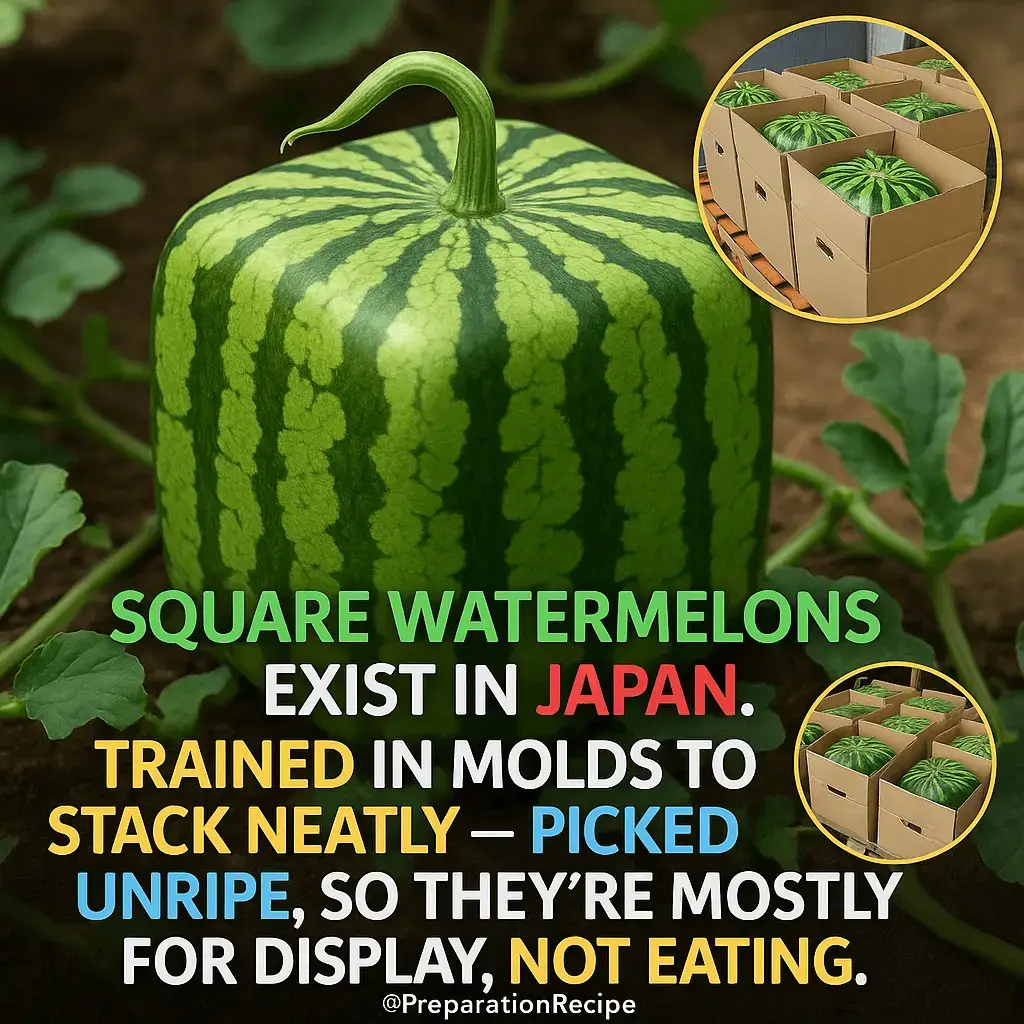
A watermelon that fits in a box? Here’s the curious story behind Japan’s square fruit obsession – plus what it means for us.
A few months ago, I saw a photo of a perfectly cube-shaped watermelon online and thought it had to be fake. Watermelons are round. That’s just how they grow… right?
But after doing a little digging (okay, a lot), I found out it’s real. In Japan, square watermelons are grown intentionally – and not for the reason you might expect. Let’s explore why they exist, how they’re made, and whether or not they’re worth the hype. Spoiler: don’t expect a sweet bite.
1. The Real Reason They’re Square
At first glance, square watermelons seem like a quirky novelty or maybe some genetic experiment. But the real reason they exist is surprisingly practical: storage.
Japan is known for creative problem-solving in small spaces – tiny homes, compact cars, and, yes, even space-saving fruit. These watermelons are grown in square molds so they can fit neatly in refrigerators and on shelves. Round melons roll around and take up awkward space; square ones sit flat and tidy.
It’s a design-first idea, not a flavor-first one. And that’s where things get interesting.
2. They’re Grown Differently (And Not Fully Ripe)
Unlike regular watermelons that are left to ripen in the sun until they’re sweet and juicy, square ones are picked before they’re ripe. Why? Because letting them mature inside the mold could make them burst or warp the shape. So farmers harvest them early – when the outer skin has firmed up and the shape is locked in, but the inside is still pale and flavorless.
If you sliced one open, you’d likely find hard, bland flesh – not the refreshing summer treat you’re hoping for. They’re mostly used for display, not for dessert.
3. You Can’t Miss Them – But You Probably Won’t Eat Them
Walk through a high-end fruit market in Tokyo and you might see a few of these melons sitting behind glass, carefully placed like artwork. Sometimes they’re given as gifts, especially in business settings where presentation matters.
They’re also expensive. Like, really expensive. Some square watermelons sell for over $100. That price isn’t because of their taste (remember, they’re not ripe), but because of the rarity, care, and craftsmanship involved in shaping them.
Would you spend that much on something just to look at? In Japan, some people do. For others, it’s more of a conversation piece than a grocery item.
4. How They’re Made (You Can Try This!)
If you’re curious, yes – it’s possible to grow your own square watermelon. Farmers start with a regular watermelon vine and, while the fruit is still small, place it inside a sturdy, clear box with just enough space to grow.
As the melon expands, it fills the container, taking on the shape of the box. The trick is in timing. Too early, and it won’t grow properly. Too late, and the shape won’t hold. And if the box isn’t strong enough, it might even crack from the pressure.
You could try this in your garden at home with a small watermelon variety and a square mold (or a food-safe container with ventilation). Just keep in mind – it might look cool, but it won’t taste like the sweet, red fruit you’re used to.
5. Beyond the Gimmick: What It Tells Us About Food Culture
Square watermelons are a reminder that food isn’t just about eating – it’s about presentation, storytelling, and even identity. In Japan, gifting beautifully shaped fruit is a cultural tradition that values care and visual appeal. And while it might feel unusual to us, it reflects a different way of thinking about what food can be.
It also raises questions about how we define value. Are we more drawn to flavor or form? Are we okay with food that’s beautiful but not meant to be eaten?
And in a world where food waste is a growing concern, some might argue that unripe fruit being sold for looks sends a mixed message. But others see it as art, tradition, and innovation rolled into one.
Final Thoughts
So yes, square watermelons are real – and yes, they’re pretty striking to look at. But they’re not about the taste. They’re about design, culture, and a little bit of fun.
If you ever see one in person, take a moment to admire it. Maybe even snap a photo. But when it comes to eating? You’re better off grabbing a juicy round one.
Because some things are meant to be square… and some are just better round.