
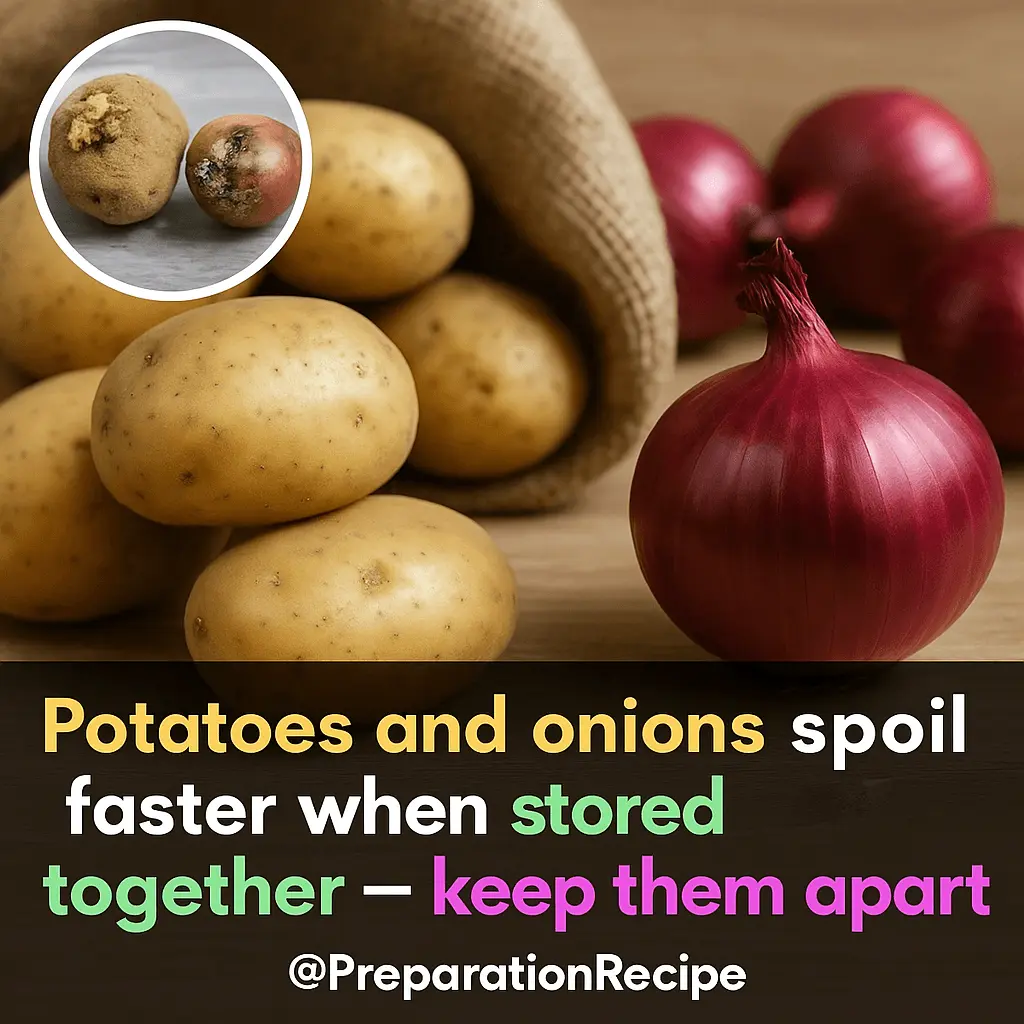
I used to toss onions and potatoes into the same basket under my kitchen counter, thinking I was being efficient. One spot, less clutter, easy access – done. But then I noticed something weird: my onions were sprouting like crazy, and the potatoes turned soft way sooner than expected. At first, I blamed the weather… or maybe the market. But after one too many wasted bags, I finally looked into it.
Turns out, storing onions and potatoes together is actually a recipe for spoilage.
Let’s explore why that happens – and how a simple change can save your ingredients, your money, and maybe even your next meal.
Why These Two Just Don’t Get Along
At first glance, onions and potatoes seem like pantry soulmates. They’re hearty, earthy, and show up in so many comfort dishes. But below the surface, they’ve got chemistry… and not the good kind.
Onions release a gas called ethylene. It’s not harmful to you, but to nearby potatoes? It’s a troublemaker. Ethylene speeds up ripening – and in potatoes, that means sprouting and soft spots way before their time.
Meanwhile, potatoes give off moisture as they sit. That dampness? Onions soak it right up, which makes them spoil faster and even grow mold. Not exactly what you want in your next stir-fry.
Keeping them together basically turns your pantry into a tiny spoilage factory. Once you know it, you can’t unsee it.
What Happens When You Store Them Separately
I decided to give it a try. I moved my potatoes into a cool, dark cabinet and left the onions in a wire basket on the opposite side of the kitchen, where the air flows a bit better.
The result? My potatoes lasted longer – like, way longer. No soft spots, no weird smell, no alien-like sprouts. And the onions? Crisp, firm, and still had that gentle snap when I sliced them a week later.
Turns out, a little distance really does make the heart (and pantry) grow stronger.
Tips for Storing Potatoes the Right Way
Let’s start with the spuds. These guys are low-maintenance, but they still need a little love.
- Cool and dark is key. Think pantry, cabinet, or a drawer – not your fridge. Cold temps can turn potato starch into sugar, messing with the taste and texture.
- Skip the plastic bags. Use paper, mesh, or even a basket to let them breathe. Trapped moisture = rot.
- Check regularly. One bad potato can take the rest down with it. If one starts to go soft, give it the boot.
A little extra attention goes a long way – and keeps them ready for your next batch of mashed potatoes or crispy wedges.
And What About Onions?
Onions are a little more sensitive, even if they act tough.
- Airflow matters. A mesh bag or open basket works wonders. No sealed containers.
- Keep it dry. Avoid damp spots or anywhere near your sink or dishwasher.
- Don’t fridge them (until cut). Whole onions get rubbery in the fridge. But once you slice one open, go ahead and store the rest in a sealed container inside.
Bonus tip? Keep a cloth or paper towel underneath the basket to absorb any sneaky moisture.
Can You Store Either in the Fridge?
It’s tempting, especially when the kitchen gets warm. But generally speaking:
- Potatoes? No. Cold messes with their texture and flavor.
- Onions? Only once cut. Whole onions stay better at room temp in a dry spot.
If you do refrigerate a cut onion, seal it well and use it within a few days. No one wants that lingering onion smell taking over the fridge.
A Smarter Pantry = Less Waste + More Flavor
When I finally separated my onions and potatoes, it wasn’t just about preserving groceries – it made my whole kitchen feel more intentional. No more surprise sprouting. No more last-minute dashes to the store because something turned mushy.
It’s one of those little shifts that adds up over time. Less food waste. More reliable ingredients. Better flavor. And honestly? It just feels good to know what’s going on behind the scenes in your pantry.
Wrapping It Up
So here’s the simple truth: onions and potatoes are better off apart.
It’s not dramatic – it’s just chemistry.
If you’ve ever found yourself tossing out a bag of sprouted spuds or mushy onions, maybe it’s time to give them some space. Your meals (and your grocery budget) will thank you.
And hey – every small step like this helps build a kitchen that works with you, not against you.