
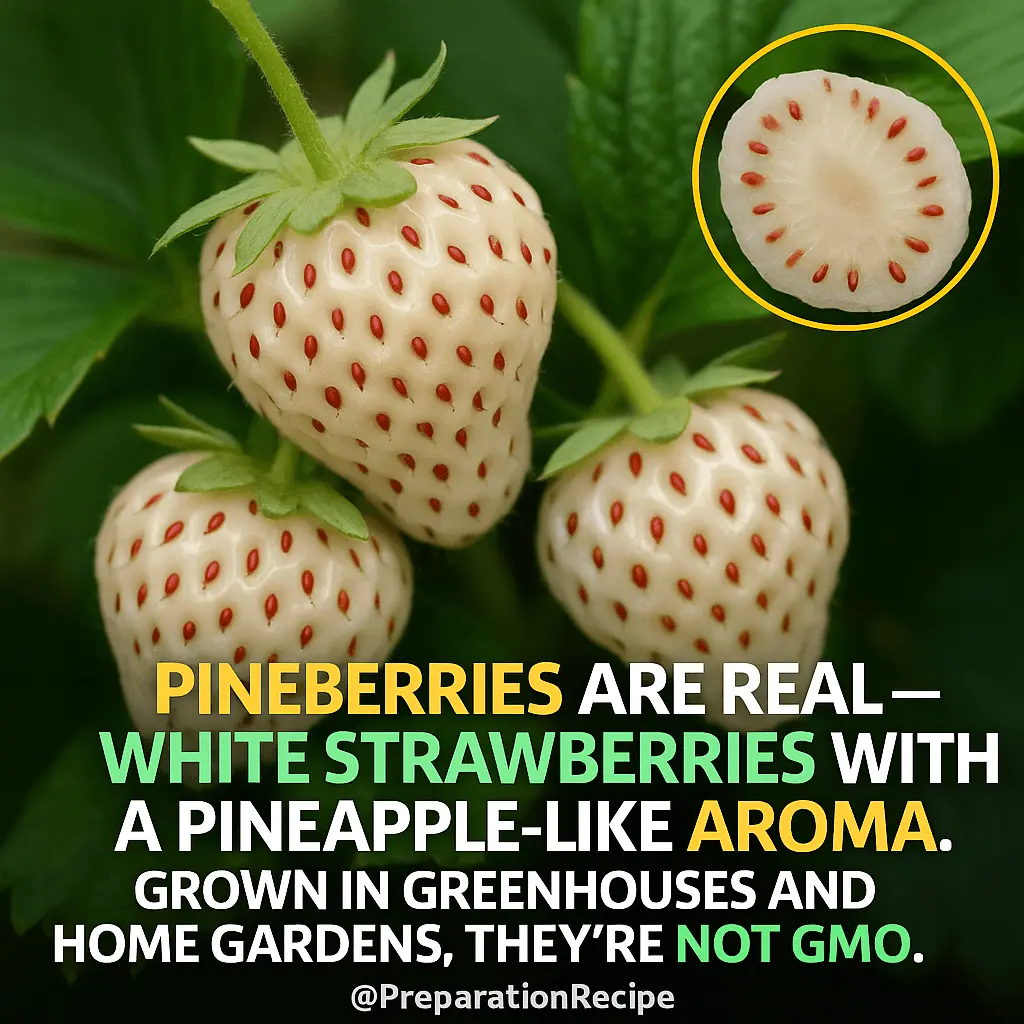
A few weeks ago, a friend handed me what looked like a ghost strawberry.
It was pale white, speckled with tiny red seeds, and smelled… fruity? Not like your average strawberry – more like a hint of pineapple. I was sure it was either unripe or some sort of prank.
But nope – turns out, it was a pineberry.
And once I started digging into it, I realized these curious little fruits have a story worth sharing. So, let’s explore what pineberries really are, where they come from, and why you might want to try them – or even grow your own.
What Are Pineberries, Really?
At first glance, pineberries look like strawberries that forgot to blush.
But they’re not unripe. That pale-white color is actually their final form. Pineberries are a real, naturally bred fruit – a cross between different types of strawberries that gives them their signature look and taste.
They’re about the same size as a regular strawberry, sometimes a little smaller. They’ve got white or pale pink flesh and bright red seeds, making them pop visually. But it’s their flavor that surprises most people: a soft, juicy bite with hints of pineapple and subtle citrus.
It’s a strawberry with a tropical twist.
Are Pineberries Genetically Modified?
This was my first question, too – and the answer is no.
Despite their unusual appearance, pineberries are not genetically modified (GMO). They’ve been naturally crossbred from heirloom strawberry varieties in Europe and South America, carefully selected over time to develop that white flesh and fruity scent.
Think of it like dog breeding – only instead of golden retrievers, farmers were encouraging pale strawberries with pineapple-like notes.
So you can enjoy pineberries with peace of mind, knowing they weren’t made in a lab.
Where Do Pineberries Come From?
Pineberries aren’t some brand-new invention. In fact, they’ve been grown in Europe for quite a while, but they’ve only recently gained popularity in the U.S.
Originally, wild white strawberries (known as Fragaria chiloensis) were found in South America hundreds of years ago. Later, they were crossbred with red strawberries to get what we now call pineberries.
Today, you can find them in specialty grocery stores, farmers markets, or even online plant nurseries. They’re grown in greenhouses, small farms, and increasingly in people’s backyards.
What Do Pineberries Taste Like?
If you’re wondering whether they really taste like pineapple, yes and no.
They don’t have the sharp tang of pineapple juice, but there is a tropical note that’s lighter, almost floral. The flavor is less sweet than a typical strawberry, with a smoother, mellow bite.
I’d describe them as refreshing, a little tart, and surprisingly aromatic. Some people say they taste like a mix between a strawberry and a pear. Others swear they get hints of passionfruit.
Either way, they’re worth trying at least once – even if just to surprise your taste buds.
How to Use Pineberries (If You Find Them)
Because pineberries are delicate and don’t ship well over long distances, they can be hard to find in stores. But if you do spot them, here’s what you can do with them:
- Eat them fresh – Their flavor really shines raw.
- Add to fruit salads – They’re a fun visual contrast.
- Dip in chocolate – A sweet and creamy pairing.
- Top a cake or tart – Gorgeous and unexpected.
- Blend into smoothies – A light twist to your usual mix.
They’re especially pretty when mixed with red strawberries, giving a festive and colorful plate. Plus, they’ll get people talking – they’re not something you see every day.
Can You Grow Pineberries at Home?
Yes! If you’re into gardening, pineberries are surprisingly easy to grow – even in pots.
Here’s the basics:
- They grow just like strawberries.
- They need full sun and well-draining soil.
- Most types are self-pollinating (but some grow better with a red strawberry plant nearby).
- You’ll want to keep an eye on birds – they love these sweet little fruits.
Pineberry plants are sold at garden centers or online. They’re a fun addition to a backyard garden, and kids especially love their quirky look.
And the best part? You’ll probably be the only one on your block growing them.
Why Are They Pale and Not Red?
That pale color throws a lot of people off. We’re used to thinking that red = ripe, and white = unripe.
But with pineberries, the opposite is true.
They don’t turn red when ripe. In fact, if they start looking red, they might be overripe. When they’re ready to eat, they’ll be white or creamy with a slightly pink blush – and their seeds will be bright red.
So don’t wait for them to turn ruby. That subtle glow means it’s go-time.
Are Pineberries Worth Trying?
Absolutely – especially if you’re into trying new foods or growing your own.
They’re not just a trend. Pineberries offer a unique taste, a lovely scent, and a gentle surprise for anyone who bites into one thinking it’s just another strawberry.
They’re also a great way to bring a little conversation to your table, your garden, or your next picnic.
Final Thoughts
Pineberries might look strange at first, but they’re full of charm. They remind us that food can be surprising, delightful, and a little playful.
So if you ever spot a basket of white strawberries with red seeds, go ahead – pick one up, take a bite, and let the pineapple-strawberry blend win you over.