
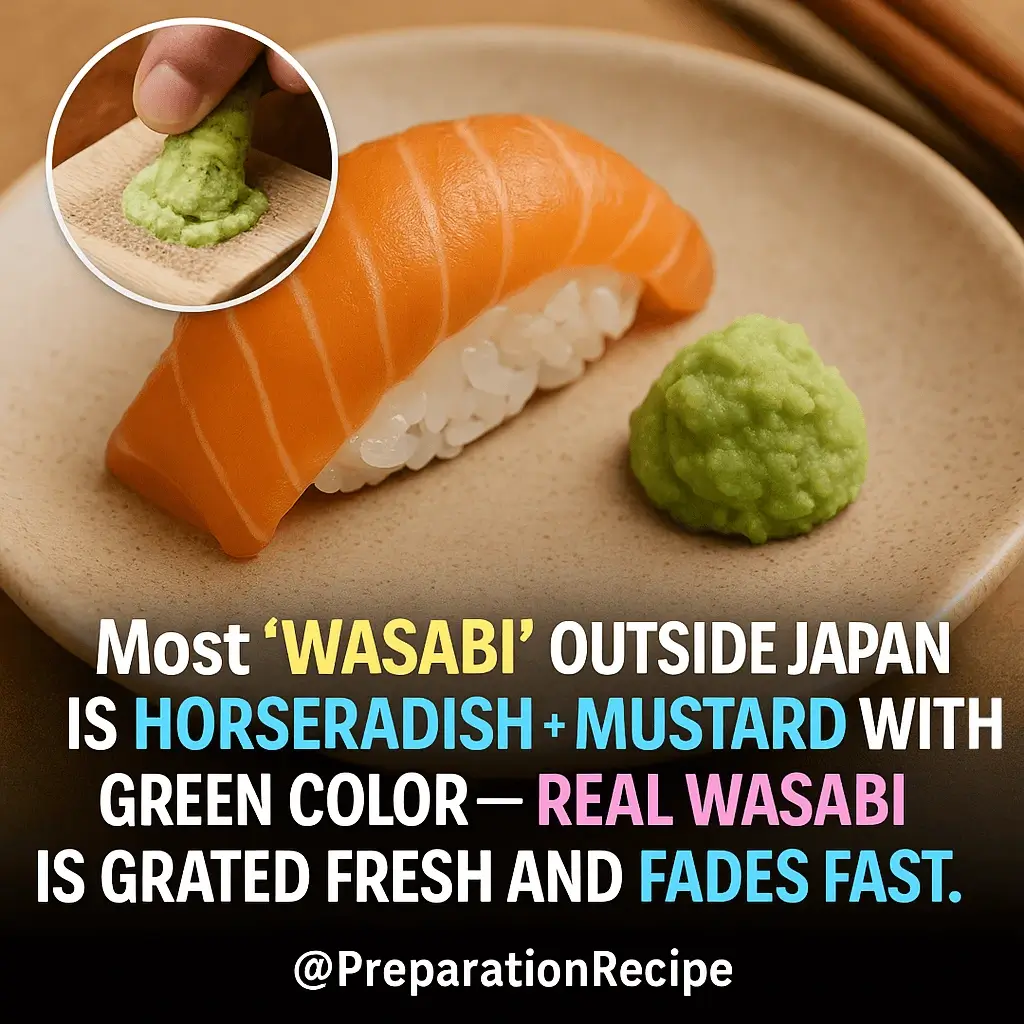
The first time I went out for sushi with my cousin Mia, she confidently slapped a huge glob of green paste onto her roll. One bite later, her eyes were watering, her nose was on fire, and we were both laughing way too hard in the middle of a quiet restaurant. “I LOVE wasabi,” she gasped through tears. But when I looked it up later, I found out… that wasn’t really wasabi at all.
It turns out, what most of us think is wasabi isn’t even close to the real thing. And once you learn what’s actually going on, you might see your sushi night in a whole new light.
Let’s explore what real wasabi actually is, why it’s so rare, and how you can try the real stuff (if you’re lucky!).
What Even Is Wasabi?
Let’s start with the basics.
Wasabi is a plant – specifically, Wasabia japonica – that grows naturally in cool, flowing mountain streams in Japan. The part that’s used is the stem, or rhizome, which looks a little like a knobby green root. It’s grated fresh right before eating and has a bright, clean heat that hits your nose, not your tongue. It doesn’t linger, and it won’t burn like a chili pepper does.
But here’s the wild part: most “wasabi” served outside of Japan isn’t real wasabi at all.
What You’re Really Eating
That neon green paste on your sushi plate? It’s almost always a mix of horseradish, mustard powder, and green food coloring. That’s right – it’s fake.
Horseradish has a similar kind of nose-tingling heat, which is why it’s used as a substitute. It’s way cheaper, easier to grow, and more shelf-stable. Real wasabi, on the other hand, is incredibly picky about where it grows, and it starts losing its flavor within minutes of being grated.
So restaurants use the substitute – sometimes without even mentioning it.
Why Real Wasabi Is So Rare
Growing real wasabi is really tricky. It needs:
- Running water
- Cool temperatures
- High humidity
- Just the right amount of shade
Only a few farms in Japan (and a handful elsewhere) have the right setup to grow it. And even when it grows, it takes around 18 months to reach a usable size.
All of that makes it one of the most expensive vegetables in the world – some roots go for over $100 a pound. So most restaurants don’t use it. Even high-end places might only use a mix.
What Real Wasabi Tastes Like
I was lucky enough to try the real stuff once at a food festival – and honestly? It shocked me.
Instead of a harsh, almost chemical burn, it had a gentle, fresh heat that faded quickly. It was slightly sweet, with a green, plant-like flavor that reminded me of spring vegetables. And it didn’t overpower the sushi – it lifted the flavors.
It was nothing like the fake stuff that made Mia cry.
How to Tell If It’s Real
Want to know what you’re getting? Here are a few clues:
- Color: Real wasabi is a soft, natural green – not neon.
- Texture: It looks freshly grated and a bit wet, not dry or paste-like.
- Taste: It has a subtle, short-lived heat, not a burn-your-face-off sting.
- Price: If you’re paying regular sushi prices, it’s probably fake. Real wasabi is usually offered as a premium upgrade or only at specialty restaurants.
You can also ask your server – just keep in mind, not every restaurant is upfront about it.
Can You Try Real Wasabi at Home?
If you’re curious (and brave), you can order real wasabi online – but it’s not cheap, and it needs to be shipped cold and used fast. The root starts losing its flavor just 15 minutes after grating.
If you do get your hands on one, use a ceramic or sharkskin grater (traditional in Japan) and grate it in circles to release the flavor oils. Eat it within minutes.
You can also find wasabi kits or powders made from the real plant – just be sure to check the ingredients carefully. Many “wasabi powders” are just horseradish with green coloring.
Should You Ditch the Fake Stuff?
Not necessarily.
The horseradish blend isn’t bad – it just isn’t wasabi. If you like it, keep enjoying it! But knowing the difference lets you appreciate the real thing when you come across it.
Think of it like maple syrup vs. pancake syrup – they’re different, but both can be tasty in the right moment.
The Bottom Line
Most of us have never actually tasted real wasabi – and that’s okay. But now you know! Next time you sit down for sushi, you can impress your friends with the inside scoop. And if you ever get a chance to try the real thing, go for it – it’s a tiny, fresh burst of flavor that’s surprisingly bright.
Food is full of surprises, and the more we learn, the more fun it becomes. So go ahead – explore, taste, and enjoy every bite. 💚