
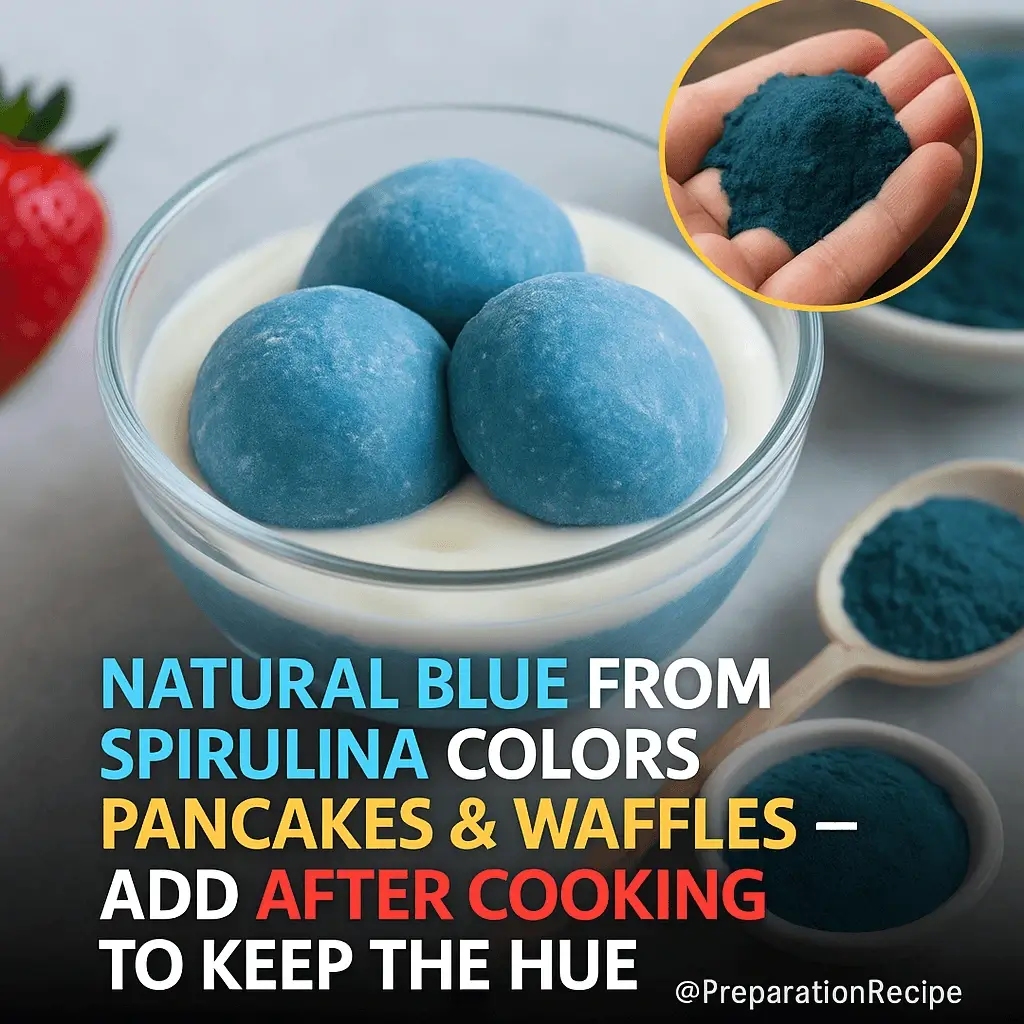
A few weeks ago, I was scrolling through my social feed when I saw the most mesmerizing stack of pancakes – sky-blue, fluffy, and topped with golden syrup. I assumed someone had gone overboard with food dye… until I read the caption: “Colored with spirulina.” That stopped me cold.
I remembered spirulina as that green powder from health stores, not something you’d mix into frosting or mochi. But as it turns out, there’s a special blue pigment in spirulina that’s completely natural – and people are using it to color foods in the most stunning way.
Let’s explore what this vibrant natural blue is all about, and how you can use it in your kitchen too – without turning your treats into science experiments.
What Is This Natural Blue, Exactly?
You might already know spirulina as a type of algae – yes, the same stuff you hear about in smoothies. But what gives it that bold, rich blue color isn’t just the algae itself – it’s a pigment inside called phycocyanin.
Sounds technical, but here’s the deal: phycocyanin is what gives some spirulina its ocean-deep blue tint. It’s extracted gently (usually with water, no chemicals), and turns out to be safe to eat. Think of it as nature’s version of blue dye, minus the artificial vibe.
It’s not just about looks, either. This blue is gentle. It can fade when heated too much, which is why most bakers and food artists suggest adding it after cooking if you want to keep the vivid hue. The result? Foods that look playful, elegant, and surprising – all without a hint of weird flavor.
Where People Are Using It (and Why It’s Everywhere Lately)
One of the first things people try is ice cream. A scoop of blue soft-serve instantly feels like something from a summer daydream. But it doesn’t stop there. People are stirring the powder into:
- Yogurt bowls (a dollop of blue next to strawberries? Gorgeous.)
- Macarons and frosting (it tints them without overpowering)
- Mochi balls (like the ones you might see at trendy dessert spots)
- Pancakes and waffles (yes, the ones I saw that sparked this rabbit hole)
The trick is to use it in cold or lightly warm mixtures. If you’re baking cupcakes, for instance, the color might fade in the oven. But if you’re tinting icing or layering yogurt parfaits? You’re golden.
What It Tastes Like (Spoiler: Nothing Weird)
If you’re wondering, “Does this make my food taste like seaweed?” – you’re not alone. That was my first question, too.
Luckily, the blue spirulina extract (often sold as “blue spirulina” or “phycocyanin powder”) doesn’t taste like much at all. It doesn’t have that earthy or marine aftertaste some green spirulina powders carry. That makes it perfect for delicate sweets like macarons, whipped cream, or fruit smoothies.
So you can enjoy that electric blue without feeling like you’re sipping ocean water.
How to Use It in Your Kitchen (Without Messing It Up)
Let’s say you’re ready to play with this gorgeous blue in your own cooking. Where do you start?
1. Buy the right kind: Look for blue spirulina powder or phycocyanin extract. It usually comes in a small jar and is more concentrated than regular green spirulina.
2. A little goes a long way: You only need a pinch – start small, mix, and adjust. It’s powerful!
3. Add it at the right time: For cold items like smoothies or yogurt? Mix it in directly. For warm things like waffles or pancakes, you can add it to the batter after it cools a little, or use it in toppings instead.
4. Store it right: Keep your powder in a cool, dry place. No need for the fridge, just avoid sunlight to keep the color bright.
A fun tip? Add it to lemon juice and watch the color shift. That’s nature doing its thing.
Kid-Friendly, Party-Ready, Photo-Ready
There’s something undeniably fun about serving blue food that isn’t fake. It brings a little magic to the table, especially when kids are involved. Imagine a birthday party with blue cupcakes that actually come from algae – your guests will be curious (and probably impressed).
And if you’re into taking pretty photos of your food, this stuff pops on camera. The contrast with pinks, golds, and whites is just… chef’s kiss.
Where to Find It (Without Going on a Treasure Hunt)
You can usually find blue spirulina powder online or at well-stocked natural grocery stores. Look for food-grade options labeled clearly for culinary use.
Read the label and stick with brands that don’t add extra fillers or flavors. It should just be the pigment powder – pure and simple.
So, Is It Worth Trying?
Absolutely. If you’re into baking, smoothie-making, or just having fun with food, this little jar of blue color can open up so many creative doors.
It’s easy to use, safe to eat, and surprisingly delightful to work with. Whether you’re prepping a brunch with colorful waffles or just want to wow your niece with blue yogurt swirls, it’s worth having on hand.
Final Thoughts: Add a Little Blue to Your Day
The first time I mixed a little blue spirulina into my whipped cream, I didn’t expect much. But the soft, dreamy shade it created was something else – it felt like dessert with a wink. Not over-the-top, just a quiet kind of joy.
And that’s what this trend really is. It’s not about being flashy or health-obsessed. It’s about playing with your food in a way that brings surprise and delight.
So go ahead. Stir in a little blue. Serve something dreamy. And maybe even impress yourself.