
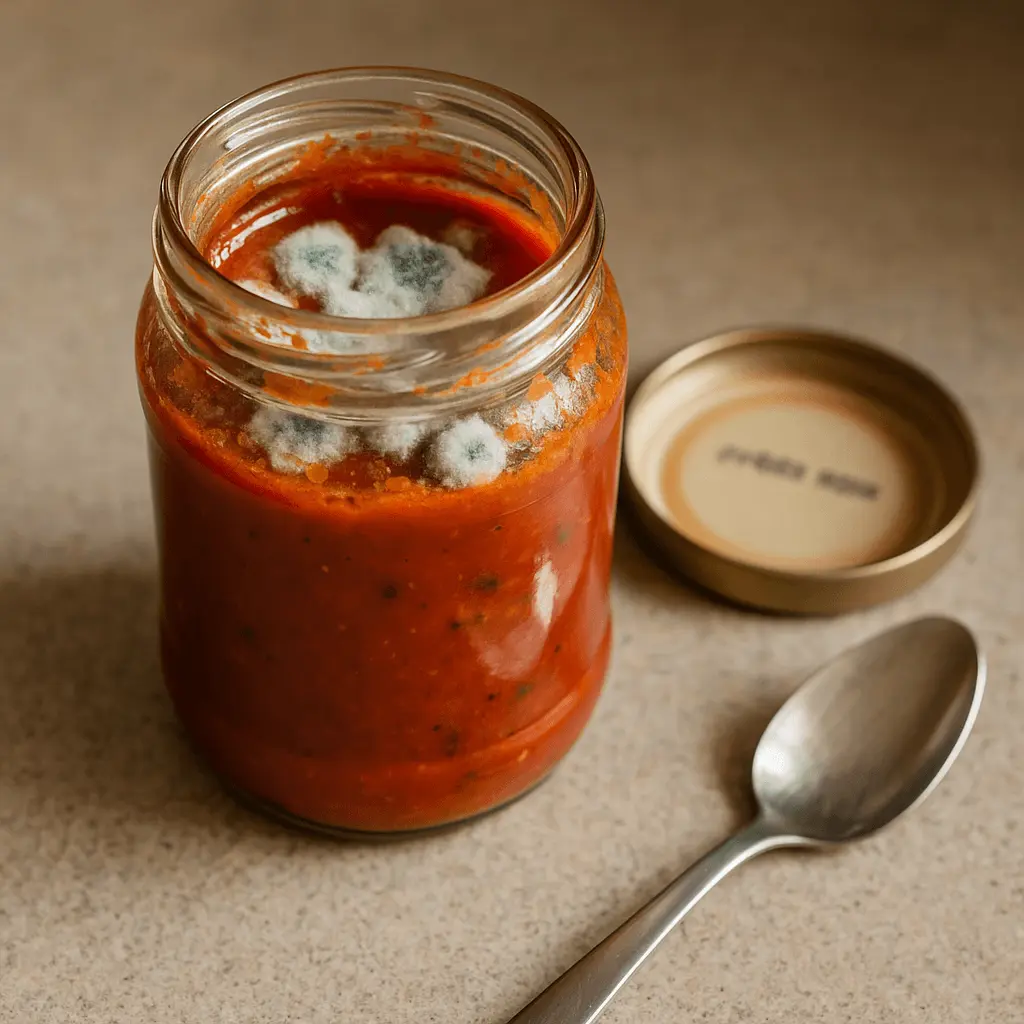
Last night, I reached into the fridge and grabbed a half-used jar of tomato sauce for a quick dinner. But when I twisted off the lid, I spotted fuzzy blue-green patches lounging right on top. My partner shrugged and said, “Just scoop it off – it’s fine after a boil.”
I didn’t feel so sure.
If you’ve ever been in this spot – staring down a suspicious jar while someone in your household insists it’s still good – you’re not alone. It feels wasteful to toss a whole jar, but it also feels…well, risky.
So let’s explore what’s really going on in that jar, what your options are, and how to stay safe without losing your peace of mind (or your appetite).
What’s Really Growing in There?
Let’s get right into it – those colorful fuzzy spots on the surface? That’s mold, and it’s not just hanging out on top.
Mold can grow on the surface of moist foods like tomato sauce, especially after it’s been opened and stored in the fridge for a few days (or weeks). It’s not just about what you can see. The roots of the mold, called hyphae, can stretch deeper into the sauce – even if the mold itself is only visible on the top. That’s where the real problem lies.
You might hear people say, “Just remove the moldy part,” but that advice only works for some hard cheeses or firm vegetables – not soft, moist foods like sauce, dips, or spreads.
Bottom line: If you see mold, the rest of the jar might already be contaminated even if it looks “normal.”
Is It Ever Safe to Keep Moldy Sauce?
Short answer: No. And here’s why.
Tomato sauce has the perfect environment for mold and bacteria, moisture, warmth (when stored improperly), and sometimes even a bit of sugar. Once mold gets in, it doesn’t stay in one place. And unlike dry bread or hard cheese, sauce isn’t firm enough to act as a barrier.
Plus, some types of mold can produce mycotoxins, which are harmful substances that can make you sick even in small amounts. And no, boiling or reheating won’t reliably destroy them.
So if you’re tempted to save that jar by scraping, reheating, or adding it to a bubbling pot, don’t. It’s not worth the risk.
Why Does It Go Moldy So Fast?
You did everything right – bought a fresh jar, used it once, stored it in the fridge with the lid tight. And still, mold.
Let’s unpack why it might happen anyway:
- Double dipping: Using a spoon that touched pasta or your mouth and then going back into the jar brings in bacteria or food residue that accelerates mold growth.
- Warm fridge spots: If your fridge isn’t evenly cold, items stored in the door or near the front may stay too warm, allowing mold to grow.
- Time open: Even if refrigerated, once opened, tomato-based sauces usually last 3–5 days (up to 5–7 for plain, high-acid sauces); homemade or dairy/meat sauces spoil sooner.
So no shame if yours turned moldy – it’s more common than most people admit.
What Should You Do With a Moldy Jar?
It can feel wasteful to toss out food, but moldy sauce should not be saved. Here’s what you can do instead:
- Toss the whole jar: Even if only the top is moldy. Don’t try to save any of it.
- Rinse the jar (carefully): Don’t sniff. Seal and discard the contents. Then wash the empty glass jar in hot, soapy water or run a dishwasher sanitize cycle.
- Take it as a lesson: Next time, consider freezing leftover sauce if you won’t use it soon. Tomato sauce freezes really well in small containers or even silicone ice cube trays.
You’re not being dramatic or wasteful – you’re being smart.
Tips to Avoid Sauce Turning Moldy Again
Now that we know what went wrong, let’s talk about how to keep it from happening again.
1. Store it smarter
Keep opened jars in the back of the fridge, where it’s coldest. Don’t store them in the door where temps fluctuate.
2. Use clean utensils
Always use a clean spoon or pour out the sauce into another dish. Even a crumb or drop of moisture can trigger faster spoilage.
3. Label the date
Use a sticky note or write on the lid with a marker. If you opened it on Tuesday, mark it. A week later, if you haven’t used it, reconsider.
4. Freeze what you won’t use soon
Leftover sauce? Portion it into freezer-safe containers and freeze it. It stays good for months and thaws quickly when needed. No mold. No guilt.
So, Should You Feel Bad About Tossing It?
Nope, not one bit.
Throwing away moldy food is not wasteful when it protects your health. It’s responsible. It’s what food safety experts recommend, and it’s what you’d tell a friend to do, too.
Remember: our peace of mind in the kitchen is worth more than a few dollars’ worth of sauce. And learning from this moment means next time, you’ll store it better or freeze the rest.
Final Thoughts: When in Doubt, Toss It Out
Food waste stings a little. But so does worrying if your pasta might make someone sick. If your tomato sauce has mold – even a little – it’s time to say goodbye. It’s not just about being cautious – it’s about protecting the people at your table.
So embrace the tiny waste if it keeps your home healthy. Next time, try freezing leftovers sooner, or keep a marker nearby for fridge dating. And if someone tells you “just scrape it off,” feel free to gently say, “I looked into it – let’s not risk it.”