
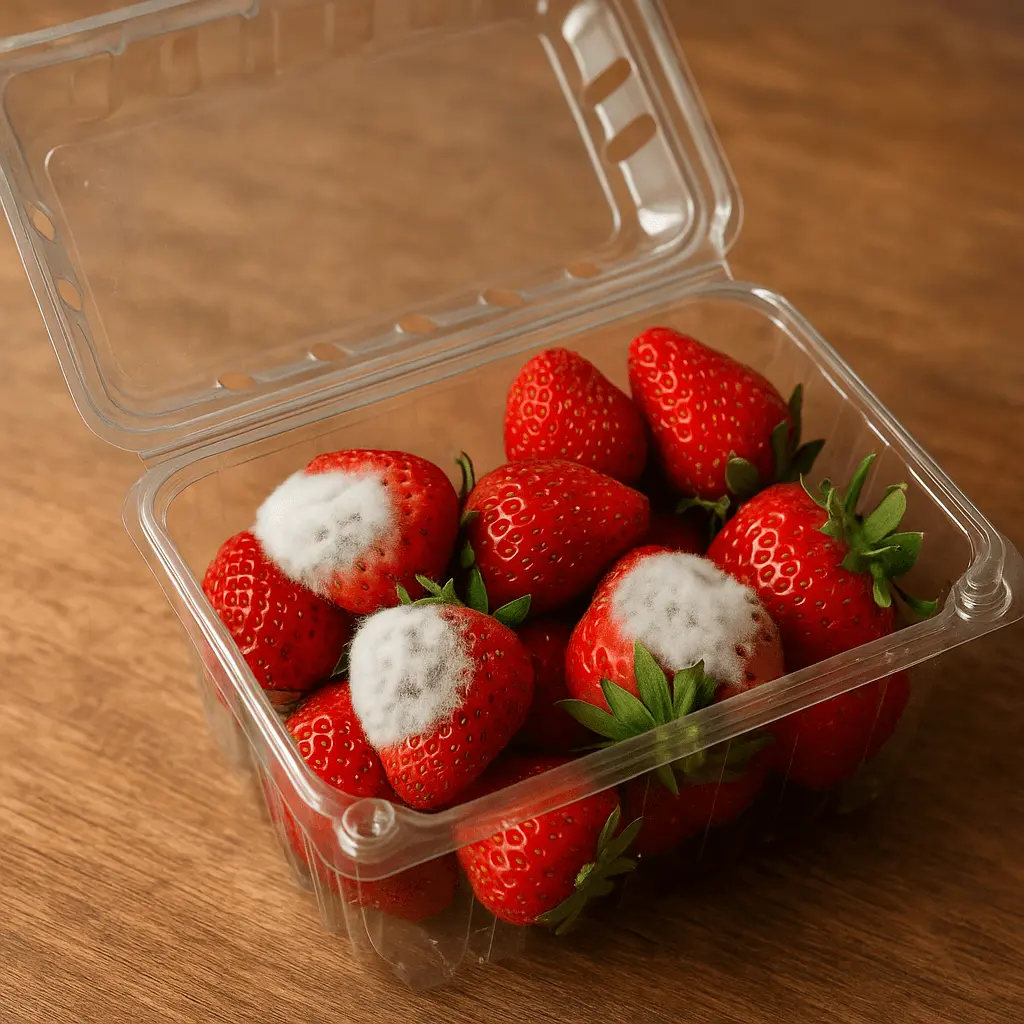
The other day, I reached into the fridge, craving a handful of juicy strawberries. But when I popped open the plastic clamshell, I froze. Some of the berries looked perfect – shiny, red, and plump – but a couple had grown soft white fuzz with a hint of green. My first instinct was to toss the whole container. But then I heard my mom’s voice in my head: “Just pick out the bad ones. The rest are fine!”
That’s when I started wondering – Are they really fine? Or am I risking more than just a disappointing snack?
Let’s explore what to do when your strawberries (or any fruit, really) turn on you a little too early. Can you save the good ones? How can you prevent mold next time? And what does mold even mean for your health?
1. Let’s Talk About the Mold You See
When strawberries go bad, they usually grow a fuzzy patch of white mold that can turn blueish or greenish. It’s often soft, kind of fluffy, and pretty unmistakable once you spot it. That fuzz is a type of fungus, and while it’s common, it’s not something you want to eat – even in small amounts.
Strawberries, like most berries, have thin skin and high moisture. That makes them extra vulnerable. Once mold shows up on one berry, it might have already started spreading (even if you don’t see it yet). Mold spores are tiny and travel fast.
If one or two berries are moldy and the rest look okay, it’s tempting to just remove the bad ones and keep the rest. But here’s the thing: those invisible mold threads can stretch through the container. So it’s not just about what you see – it’s about what might already be there.
2. Can You Save the Rest of the Strawberries?
Short answer? It depends on how far the mold has spread. If just one or two berries are moldy and they’re not touching the others, some people feel comfortable tossing the moldy ones and using the rest right away. But food safety experts tend to be cautious, especially with soft, wet fruits like strawberries. If several berries are moldy, or you’re unsure, it’s reasonable to toss the whole container; otherwise, discard the moldy berries and any that touched them, then wash the remaining ones.
It’s not about being wasteful – it’s about being careful. Unlike hard foods (like a block of cheese), soft fruits don’t have firm barriers to keep mold from spreading under the surface.
And trust me, the stomach ache you might avoid? Totally worth it.
3. How to Store Strawberries to Avoid Mold in the First Place
I’ve learned this the hard way more than once. Strawberries can go from perfect to fuzzy overnight. But a few simple storage tricks can help them last longer:
- Don’t wash them right away. Moisture is mold’s best friend. Wait to rinse until just before eating.
- Use a paper towel. Line the bottom of the container or transfer berries to another container with a paper towel. It’ll absorb extra moisture.
- Leave the lid cracked or use a ventilated container. Strawberries need some airflow to stay fresh.
- Check them daily. The sooner you remove a berry that’s turning, the better chance you have to save the rest.
Some people also swear by a quick vinegar rinse when they first bring berries home (a mix of one part white vinegar to three parts water). It may help kill off mold spores – as long as you dry them thoroughly afterward.
4. What Happens If You Accidentally Eat a Moldy Berry?
First, don’t panic. Most of the time, if you eat a small amount of mold by accident, your body handles it just fine. You might not even notice. But mold can cause allergic reactions or upset stomachs in some people, especially if you’re sensitive.
If you start to feel unwell – nausea, cramping, or anything unusual – it’s okay to call your doctor and explain what happened. But again, for most healthy adults, one bite isn’t usually dangerous. Just unpleasant.
That said, moldy food isn’t something to take lightly, especially for kids, elderly folks, or anyone with a weakened immune system.
5. Creative Ways to Use Up Strawberries Before They Turn
If you’ve got a batch that’s starting to look a little tired (but not yet moldy!), this is your chance to get creative:
- Smoothies – Slightly soft berries are still perfect in a blender.
- Baked goods – Muffins, quick breads, and cakes love sweet ripe berries.
- Jam or compote – Cook them down with a little sugar and lemon juice.
- Frozen treats – Freeze them on a tray for later use in recipes or snacks.
Just remember: once mold is visible, it’s no longer safe for any of those ideas. But if they’re just a bit too ripe to snack on raw, don’t let them go to waste!
6. Why This Happens So Fast – and What You Can Do About It
Strawberries are fragile by nature. From the moment they’re picked, they start breaking down. Even under ideal conditions, they usually last only 3–7 days in the fridge.
Here’s the frustrating part: sometimes, store-bought strawberries already have mold spores when you bring them home. You just can’t see it yet. That’s why even super fresh-looking berries can surprise you a day later.
The best we can do? Handle them gently, store them smartly, and eat them sooner rather than later. Oh – and don’t ignore the ones hiding at the bottom of the container. Those are the first to go.
Final Thoughts: A Little Mold Means a Bigger Choice
So what’s the verdict? If you open a container and see moldy strawberries, even just a few, it’s usually safest to let them all go. It’s disappointing, sure. But your health (and your peace of mind) is worth more than a handful of berries.
The good news? You can always learn from the experience. Next time, store them better, check them often, and eat them sooner. And maybe, just maybe, share them before they get the chance to turn.
Your future self, snacking happily and mold-free, will thank you.