
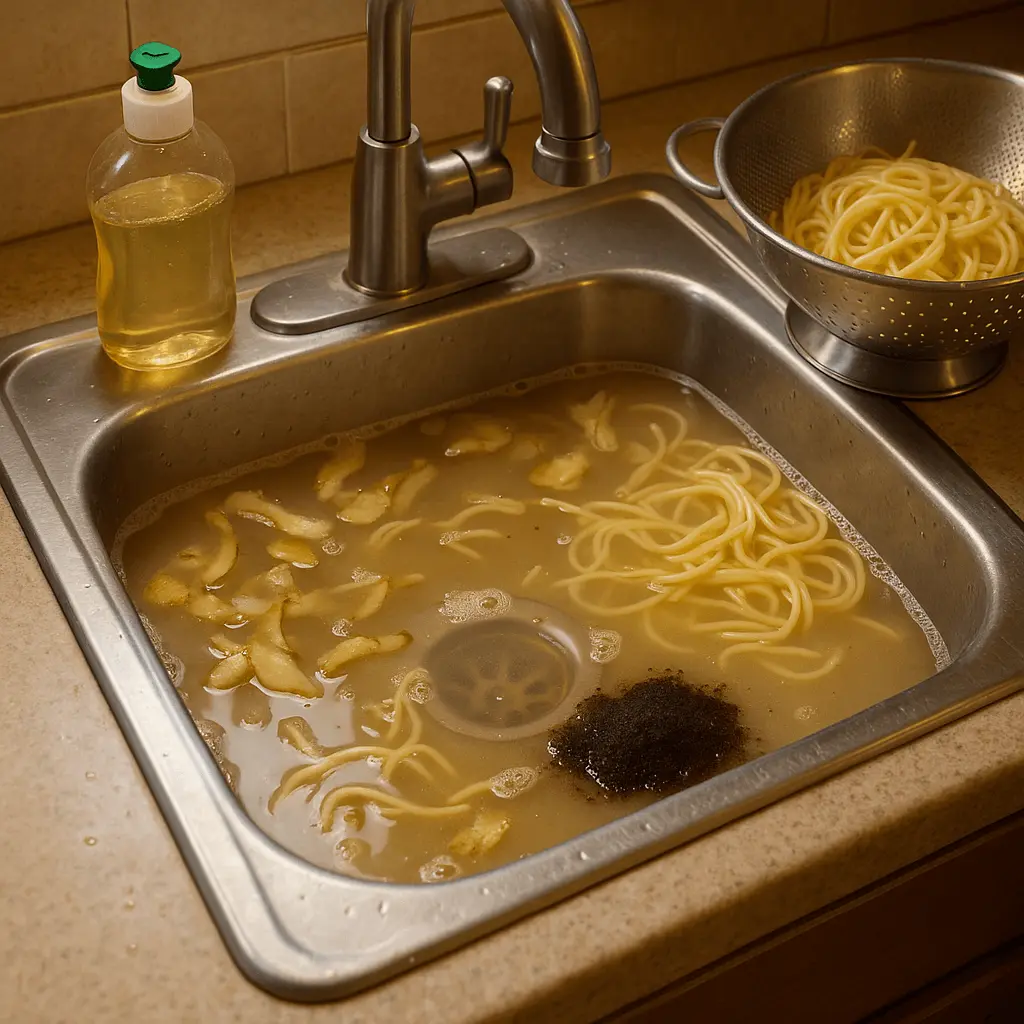
The other night, I was halfway through making dinner – pasta and a quick veggie stir-fry – when I looked over and realized something wasn’t right. My sink was filled with murky water, floating potato peels, lemon slices, and coffee grounds. The water just…sat there. No gurgling. No draining. Just a sad, soupy mess.
I called my sister (she’s the unofficial fixer in the family), and her first question was, “Did you dump peels and coffee grounds down the sink again?” Guilty. Her second suggestion? “Don’t touch anything yet.”
If you’ve ever found yourself standing over a clogged sink, wondering if you’ve just ruined dinner and your plumbing, you’re not alone. Let’s explore what’s going on – and what you can safely do to get your kitchen flowing again.
1. First, Let’s Talk About What NOT to Do
It’s tempting to poke around with a spoon or just run the garbage disposal and hope for the best. But hold off for a second.
If you’ve got standing water that’s not budging, jamming the disposal can actually make things worse. And pushing food debris deeper could lead to a bigger clog or even damage your pipes. Also, and I say this lovingly, no store-bought cleaner right away. Skip chemical drain cleaners for now. Never mix any commercial drain cleaner with other substances, including vinegar, baking soda, bleach, or ammonia, because it can release heat or toxic fumes. If you already poured in a cleaner, don’t plunge or disassemble pipes; call a pro.
So, don’t panic, don’t pour random chemicals, and definitely don’t try to force anything down the drain with a butter knife (been there, done that, no thanks).
2. What Likely Caused the Backup?
When you peel potatoes or strain pasta, bits of starch and food tend to slip past the drain screen. Add lemon rinds and coffee grounds, and it’s a recipe for a slow, sticky clog.
Potato peels, in particular, break down into a gummy paste when wet. Coffee grounds clump together like wet sand. And citrus rinds? They might smell nice, but they’re thick and fibrous – not easy on your pipes.
Over time, even little bits build up. Especially if you’re in a rush and skip the compost bin or drain strainer.
3. The Simple Fixes You Can Try Right Now
Let’s roll up our sleeves. Here are a few gentle methods that usually help clear a mildly clogged sink without calling in a pro.
a. Boiling Water Flush
Start with the simplest solution: Heat a large pot of very hot (near-boiling) water. First, bail out as much standing water as you can. Pour the hot water down the drain in stages, waiting a minute between pours. (If your home has PVC pipes, stick to very hot – not fully boiling – water.)
b. Baking Soda + Vinegar Combo
If the sink still isn’t draining, pour half a cup of baking soda down the drain, followed by a full cup of white vinegar. Let it bubble and fizz for about 15 minutes. Then flush with hot water again. It’s a safe, gentle way to dislodge minor blockages.
c. Plunge (Gently!)
Use a sink plunger – the kind with a flat bottom. Seal the drain and give it a few light plunges. This can help loosen trapped food without forcing anything deeper. Just make sure the sink has enough water to cover the plunger’s rubber head. Got a double sink? Plug the other drain with a wet cloth or stopper before plunging so you get good pressure.
4. What If Nothing’s Working?
If the water still refuses to budge after a few of those tricks, the clog might be deeper in the pipes – beyond your reach. Here’s what you can do next.
a. Check the Trap
If you’re comfortable, place a bucket under your sink and unscrew the U-shaped pipe (called the trap). Be ready for some mess! Often, food scraps gather here. Clean it out, rinse it, and reattach it.
b. Try a Drain Snake
A manual drain snake (you can find one at most hardware stores) might help you reach a deeper clog. You feed it gently down the drain and twist to hook the blockage. It’s surprisingly satisfying when it works!
Still stuck? That might be the time to call in a plumber. Especially if the water’s been sitting for a long time or there’s an odor – you don’t want to risk bacteria build-up or pipe damage.
5. How to Avoid This Mess Next Time
We’ve all been there, peeling potatoes directly over the sink because it’s just easier, or tossing coffee grounds after a rushed morning. But a little prevention goes a long way.
- Use a drain catcher – even if you have a garbage disposal.
- Scrape plates into the trash before rinsing.
- Compost peels and grounds when possible.
- Avoid putting fibrous or starchy foods (like pasta, peels, rice) down the drain.
It’s one of those “future me will thank you” kind of habits.
6. One Last Thing: What About That Leftover Water?
If your sink is full and you’ve fixed the clog but still have water sitting there, try scooping it out with a bowl into a bucket before flushing the drain again. It’s a bit of work, but it’ll help things clear faster – and it prevents overflow when you test your fix.
After the water’s gone, wipe down the sink with some dish soap and hot water. It’ll feel like a fresh start.
The Wrap-Up
In the end, clogged sinks happen – especially in busy kitchens. The good news? With a little patience and a few simple steps, you can usually fix it yourself and get right back to cooking. And even if it takes a call to the plumber, you’ll know what went wrong and how to stop it next time.
So the next time your sink looks like a soup of lemon slices and mystery bits, you’ll know what to do. And maybe, just maybe, you’ll keep a strainer in there before the pasta goes in.