
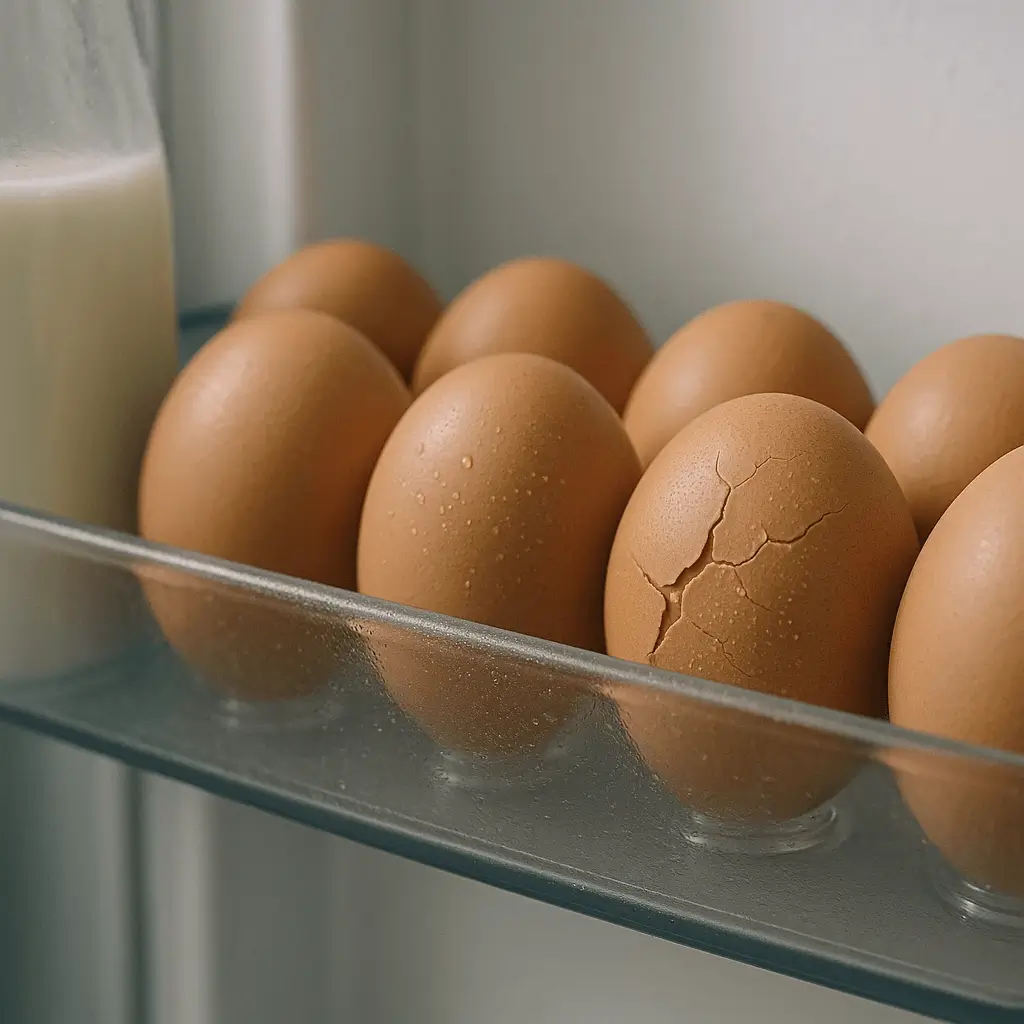
Last week, I opened my fridge to grab some eggs for breakfast, and there it was – one of the eggs had a deep crack running across the shell. Not just a hairline crack, either. It looked like someone had tapped it a bit too hard on the counter and forgot to mention it. I froze for a second, unsure if I should toss it, cook it right away, or just pretend I hadn’t seen it.
I asked my neighbor, who grew up on a farm and always seems to know the “old-school” way. She said, “As long as it’s not leaking, just cook it well!” But I still wasn’t so sure. I didn’t want to risk getting sick over scrambled eggs.
So I looked into it, and here’s what we can all do when we find a cracked egg staring back at us from the fridge.
1. First, Take a Closer Look
Let’s start simple. Not all cracks are the same, and how the egg looks (and smells) can tell you a lot.
If you found an egg already cracked in the fridge and you don’t know when it happened, play it safe and toss it – even if there’s no leak. Cracks let bacteria in, and time isn’t on your side.
See any dried egg white on the shell? A watery look? An odd or sulfur-y smell? That’s your cue to discard it. Handle the shell as little as possible – no poking or “testing” the crack – and wash your hands after any contact.
The one exception: if you just now caused the crack yourself (unpacking groceries or bumping it while cooking), break it into a clean container, cover, refrigerate, and use within 2 days – and cook it thoroughly.
Bottom line: When in doubt, throw it out. If it’s a fresh, just-cracked accident you can control, use it promptly and cook it completely.
2. Can You Still Cook with It?
Let’s say your cracked egg looks okay – no leakage, no smell. The safest move? Cook it thoroughly, and right away.
Use it in something where the egg will be well-heated. Think scrambled eggs, a veggie omelet, or even baked into muffins. Avoid using it for dishes where the egg stays runny or raw, like soft-boiled eggs or homemade sauces that aren’t cooked through.
If you’re unsure how long it’s been cracked, or if it might’ve been sitting like that overnight or longer, skip it. No recipe is worth a risk to your health.
Friendly tip: If you find a cracked egg while prepping, just use it first. Crack it into a separate bowl and make sure there’s no weird smell or discoloration before adding it to your dish.
3. What About Freezing or “Saving for Later”?
This part’s a little tricky. You might be wondering – can you freeze it, or just tuck it back in the fridge for later?
Once an egg is cracked, its natural barrier is gone. Even in the fridge, the clock starts ticking.
- Don’t freeze eggs in the shell. If you planned to freeze eggs, you’d crack them into a clean container, lightly beat (or separate whites/yolks), label, and freeze. Then use the thawed egg only in fully cooked dishes. That’s a prep step – not a “whoops, found a cracked egg” fix.
- Don’t put a cracked egg back on the shelf. If it’s already cracked and you don’t know when it happened, discard it. If you just cracked it yourself, transfer to a clean container, refrigerate, and use within 2 days – and cook it thoroughly.
In short: No shell-freezing, no parking it for “later.” If it’s usable at all, use it now and cook it completely.
4. Could It Have Happened in the Store?
Honestly? Probably. Sometimes eggs get small cracks during packing, transport, or even when someone opens the carton roughly at the grocery store. Other times, the cracks happen when we accidentally place something heavy on the fridge door or knock the tray when rearranging groceries.
That’s why it’s a smart habit to open the egg carton at the store and check. Turn each egg in place gently and look at the bottoms – cracks like to hide there.
And at home, try storing eggs toward the back of the fridge shelf rather than the door. The door gets warmer every time it opens, and it’s also where things get bumped around the most.
5. How to Handle a Cracked Egg Safely
Okay, you’ve decided it looks okay. Now what?
Here’s a quick safety path:
- Wash your hands before and after touching the cracked shell.
- Crack it into a clean bowl (not directly into a pan or recipe).
- Look for anything unusual – odd smell, cloudy whites, or pinkish yolk? Toss it.
- If it looks and smells normal, cook it until fully firm.
- Don’t save part of the egg or reuse the shell for separating eggs.
Even though it’s just one egg, cross-contamination can happen easily. A little caution now can save you a lot of regret later.
6. Tips to Prevent Cracks Next Time
Let’s avoid this in the future! Here are a few gentle ways to baby your eggs:
- Don’t stack heavy groceries on top of cartons.
- Keep eggs in their original carton – they’re designed to protect them better than those fridge-door trays.
- Store them in the center of the fridge, where the temperature is steadier.
- Be extra gentle when moving them around or during grocery bagging.
If you’re buying in bulk (like those big 30-egg trays), consider transferring eggs to a few smaller cartons for safer storage.
7. What If You Already Used It Without Realizing?
It happens. Maybe you cracked a few eggs into a bowl and only noticed one had a slightly broken shell after it was already mixed in. Or maybe someone in the house used it while cooking and didn’t even think to check.
Don’t panic. If the dish was fully cooked (eggs firm; casseroles baked through), the risk is lower. If undercooked, monitor for symptoms and consider calling a healthcare provider for advice.
If in doubt, call your local health provider and explain what happened. But in most cases, a one-time accident won’t lead to major problems – especially if everything was cooked.
Wrap-Up: When Eggs Crack, Stay Cool (and Safe)
Finding a cracked egg in your fridge isn’t a reason to panic – but it is a reason to pause. With a quick check and smart choices, you can keep your kitchen safe and your meals tasty.
My go-to rule now? If the egg is clean, un-leaked, and very recently cracked, I use it right away and make sure it’s fully cooked. If there’s any weird smell or slime – or I just don’t feel right about it – I toss it without second-guessing. It’s just an egg, after all.
Let’s stay safe, trust our senses, and keep cooking smart.