
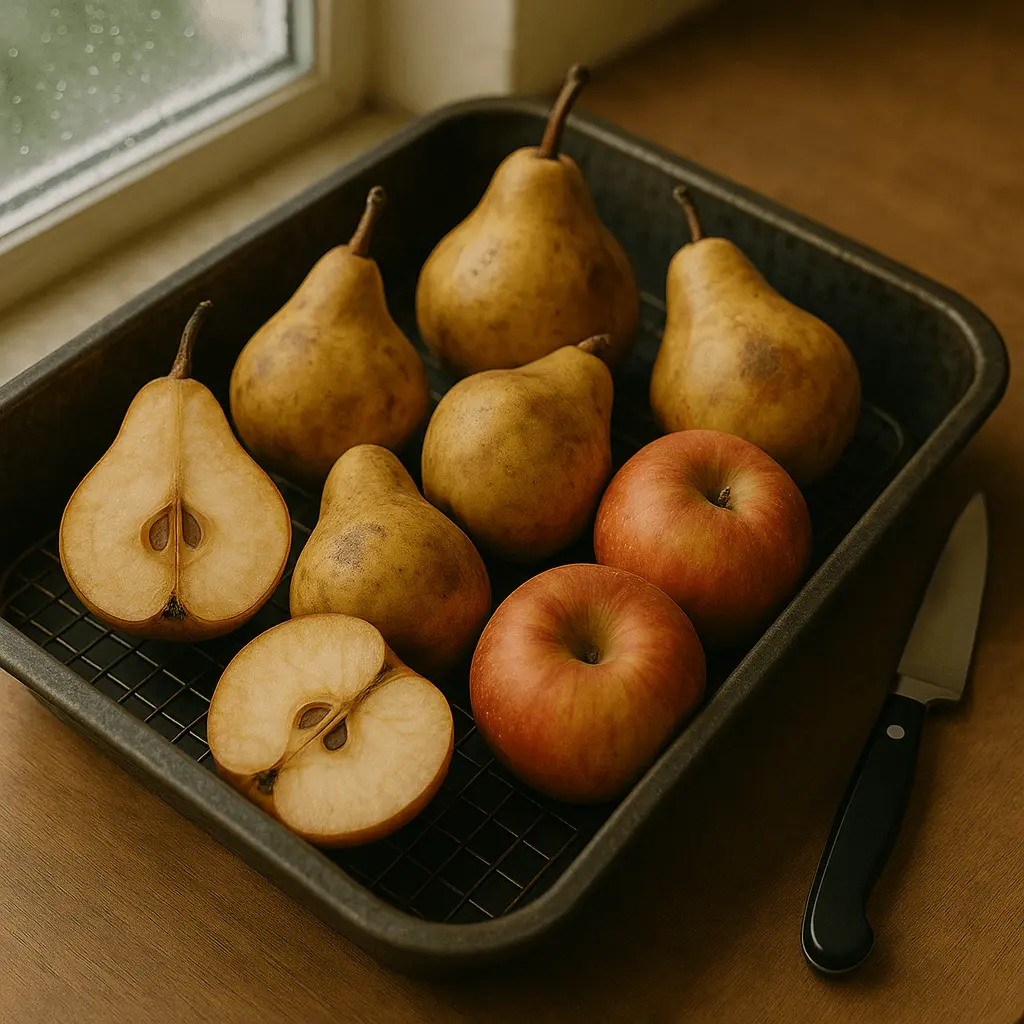
A few days ago, I left some pears and apples out on the counter, planning to bake something cozy “soon.” You know how that goes – life got busy, and now they’re staring back at me, looking a little tired. Some are bruised, a couple have soft spots, and the skins aren’t as perky as before.
I texted a photo to my sister. She replied, “They look fine! Just cut around the bad parts.” But my gut said maybe not. I didn’t want to throw them away – especially with how expensive produce has gotten – but I also didn’t want to make anyone sick.
So, I did some digging. And now I can confidently say, you’re not the only one facing the overripe fruit dilemma. This article explores when apples and pears are still okay to use, when they should go, and what you can actually do with them so they don’t go to waste.
1. How to Tell If Apples and Pears Are Still Safe to Eat
Let’s start with the sniff test – but with a few extra steps.
If the fruit smells fresh and fruity, that’s a good sign. A fermented or sour odor? Toss it. For pears especially, softness doesn’t always mean spoilage. They ripen from the inside out, so it’s normal for them to feel soft or even a little squishy.
But here’s the key: cut it open. If the flesh is mostly firm and creamy-looking (even if the outside looks tired), you’re probably good. Bruises or brown spots can be cut away. But if the inside is:
- mushy all the way through,
- slimy,
- smells off, or
- has mold…
…it’s time to say goodbye.
For apples, wrinkled skin isn’t a dealbreaker either – it just means they’re dehydrating. That’s actually great for baking (more on that soon).
Trust your senses – if something feels off, you don’t have to justify tossing it. Safety first.
2. Can You Still Eat Fruit With Brown Spots or Wrinkles?
We’ve all seen those weird black spots or soft dents on pears and apples. They look scary – but most of the time, they’re just bruises or cosmetic damage.
If the fruit is still firm in most places and smells normal, just cut around the affected areas. The rest is safe to eat or cook.
Wrinkles on the skin just mean moisture has left the fruit – it’s drying out. That makes the flavors more concentrated, especially in apples. It’s why people use older apples in pies and crisps. They’re less juicy, more flavorful.
So don’t let a little wrinkling fool you. It might be the start of something delicious.
3. When You Definitely Shouldn’t Use the Fruit
Okay, here’s the not-so-fun part. If you notice any of the following, it’s best to toss the fruit entirely:
- Mold inside or on the cut surface
- Unlike bread, fruit mold can go deep without being visible. Cutting it off doesn’t always guarantee safety.
- Slimy or translucent flesh
- That’s a sign it’s starting to rot. Not worth the risk.
- A fermented, vinegary smell
- That means the sugars are breaking down and starting to turn.
- Bubbling or fizzing juices
- Yep, it happens. And nope, don’t eat it.
If you’re unsure, it’s better to be cautious. Your gut (literally) will thank you later.
4. What You Can Still Make With “Tired” Apples and Pears
If the fruit passes the safety check, you’ve got options – great ones, actually.
Try These:
- Baked fruit bowls: Slice and toss with a little cinnamon and butter. Bake until soft and bubbly. It smells like autumn in a bowl.
- Stovetop fruit compote: Cut away bad spots, chop the rest, and simmer with a splash of water and a bit of brown sugar. Great on toast, pancakes, or oatmeal.
- Smoothies: Freeze the slices (yes, even slightly mushy ones) and blend with yogurt and frozen banana.
- Fruit crisp: A buttery oat topping hides a world of overripe fruit. Bake until golden and juicy.
- Jam or fruit butter: If you have several pieces, make a small-batch jam. No canning needed – just refrigerate and enjoy within a week.
When you cook them, all those cosmetic flaws disappear. The flavors deepen, and the texture melts into something comforting. It’s honestly better than using brand-new fruit in some cases.
5. How to Store Apples and Pears So This Doesn’t Happen Again
Let’s be real – we’re not always going to use fruit right away. But here’s how to keep it from reaching the “uh-oh” stage too fast:
- Store apples in the fridge, away from strong-smelling foods. They can last up to 4–6 weeks that way.
- Pears should ripen on the counter, but once they’re soft, move them to the fridge. That slows them down.
- Keep them dry. Moisture invites mold. If they’ve been washed, make sure they’re dry before storing.
And maybe… just maybe… don’t overbuy next time (I’m saying this to myself, too).
Final Thoughts: When in Doubt, Cut It Open
If you’re ever unsure, just grab a knife and cut into the fruit. That’s the easiest way to see what’s going on inside. You’ll know pretty quickly whether it’s usable – or time for the compost bin.
The bigger picture here? Don’t beat yourself up over a few sad-looking apples and pears. We all buy with good intentions. Sometimes we use it. Sometimes life gets in the way.
But when you can save them, it feels like a little win – like making something sweet out of something sour (literally).
So go ahead: check that tray of fruit. You might be just one baked pear away from turning your week around.