
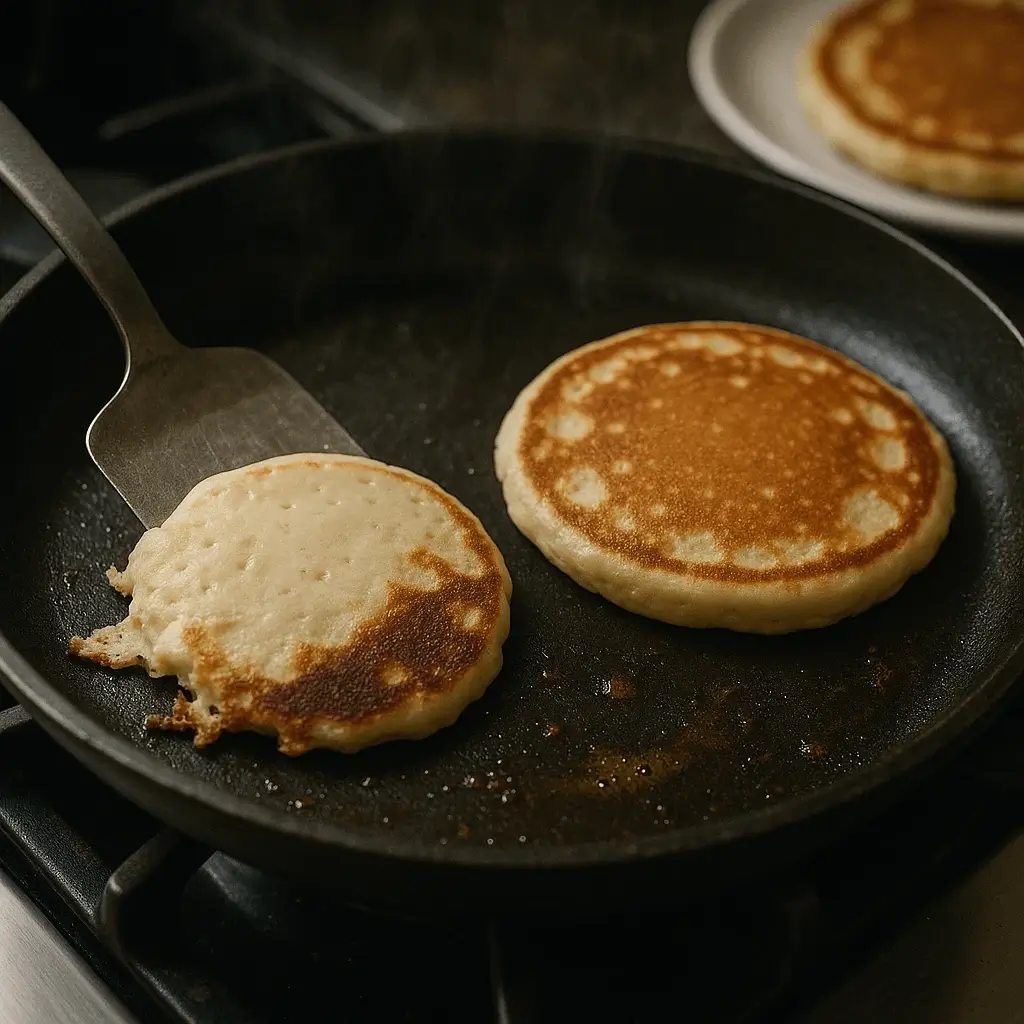
Last Sunday morning, I was in the mood for something cozy. I poured some coffee, turned on my favorite playlist, and set out to make pancakes. You know the kind – fluffy, golden, slightly crisp around the edges. I had this image in my head, but the reality? One pancake stuck to the pan like it had grown roots, and the other browned in weird blotchy patches. It was frustrating. And breakfast ended with me scraping off bits of batter instead of enjoying a stack.
If you’ve ever dealt with pancakes that cling stubbornly to the pan or cook unevenly, burned in one spot, pale in another, you’re not alone. It’s one of those small kitchen battles that can feel personal. But don’t worry, we’ve looked into it for you.
This article explores why this happens, what it actually means, and how you can fix it so your pancakes come out soft, even, and golden every time.
1. Let’s Talk About Your Pan First
Okay, first things first: the pan. It’s the foundation of your pancake-making world. And not all pans are built the same.
If you’re using an old non-stick pan that’s seen better days, the surface may be worn down in spots. This causes uneven heat distribution, which means some parts of your pancake cook faster than others. That’s how you end up with strange dark spots and raw middles.
Also, if your pan isn’t fully heated before the batter hits, the pancake can stick immediately. A cold or unevenly heated surface is one of the most common culprits of sticky, stubborn pancakes.
What you can try:
Let your pan preheat for a few minutes on medium heat. Flick a few drops of water on it – if they dance and sizzle, it’s ready. And if your non-stick pan is scratched or peeling, it may be time to retire it (no shame – pans have a lifespan, too).
2. Don’t Skip the Fat (Even Just a Bit)
Even on non-stick surfaces, a little fat helps. Think of it as insurance for both your pancakes and your mood.
Some folks avoid using butter or oil in the pan, thinking the non-stick coating will handle it all. But without that little layer of grease, the batter has no barrier and grabs onto the hot surface like glue.
What you can try:
Before pouring your batter, wipe a small amount of neutral oil or melted butter around the pan using a paper towel. You want a thin, even layer, not puddles. This helps give you that crispy golden edge and makes flipping easier.
3. Your Batter Might Be to Blame (A Little)
Sometimes it’s not you, it’s your batter.
If your batter is too thick, it may not spread evenly, leading to a lumpy cook. If it’s too thin, it can run and form uneven edges that overcook or burn. And if you’ve mixed the batter too much, the gluten in the flour can turn tough, making the pancakes rubbery and harder to flip.
What you can try:
Aim for a batter that’s pourable but not runny – kind of like thick cream. Stir gently, just until there’s no dry flour left. A few small lumps are fine – they’ll smooth out on the griddle.
4. Keep the Heat Just Right (Goldilocks Style)
High heat might seem like a shortcut to golden-brown goodness, but it’s a trap. Pancakes cooked too hot will scorch on the outside and stay raw inside. On the flip side, low heat might cook them too slowly and dry them out.
What you can try:
Stick with medium to medium-low heat. It takes a bit longer, but it gives the pancakes time to rise and brown evenly. Adjust if needed – every stove is a little different, and finding the sweet spot takes a little patience.
5. Flipping Too Early (Or Too Late)
Timing your flip is an art. Flip too soon, and your pancake will fall apart. Flip too late, and it’s likely to burn.
What you can try:
Watch for bubbles forming on the surface of the pancake and edges that look set. That’s your cue. Slide your spatula gently under the pancake and flip with confidence – don’t hover or hesitate.
Also, use a wide spatula. It helps support the whole pancake, especially if it’s on the fluffier side.
6. Crowding the Pan? That Could Be It Too
Trying to cook too many pancakes at once can make things tricky. The temperature of the pan drops, steam gets trapped, and flipping becomes awkward. Plus, uneven spacing leads to uneven cooking.
What you can try:
Cook one or two pancakes at a time, depending on your pan size. Give each one room to breathe. It may take a little longer, but you’ll get better results.
7. Cleaning Between Batches Makes a Difference
You may not realize it, but leftover crumbs or burned butter in the pan from the first batch can mess up the second. That residue keeps cooking and adds unwanted dark spots.
What you can try:
Between batches, gently wipe out your pan with a paper towel and add a fresh swipe of oil or butter. It’s a small step that makes a big difference in how your pancakes look and taste.
8. The Emotional Side of Pancakes (Yes, Really)
Here’s the thing: making pancakes feels simple, but it carries a vibe. It’s warm. It’s weekend-y. It’s about cozy kitchens and shared plates. So when they stick, burn, or come out funny-looking, it can feel surprisingly discouraging.
But you’re not failing – you’re learning. Pancakes are oddly sensitive to heat, pan condition, batter texture, and timing. The fact that you care enough to search for answers says a lot.
Wrapping It All Up
So, if your pancakes are sticking or browning unevenly, the answer probably lies somewhere between your pan, your batter, and your heat. But it’s nothing you can’t handle.
We’ve all scraped one pancake too hard or tossed a wonky one to the side. Keep your pan warm, your batter balanced, and your heat steady – and you’ll be back to beautiful stacks in no time.
And hey, even imperfect pancakes are still pancakes. Share them. Laugh about them. And if all else fails, add more syrup.