
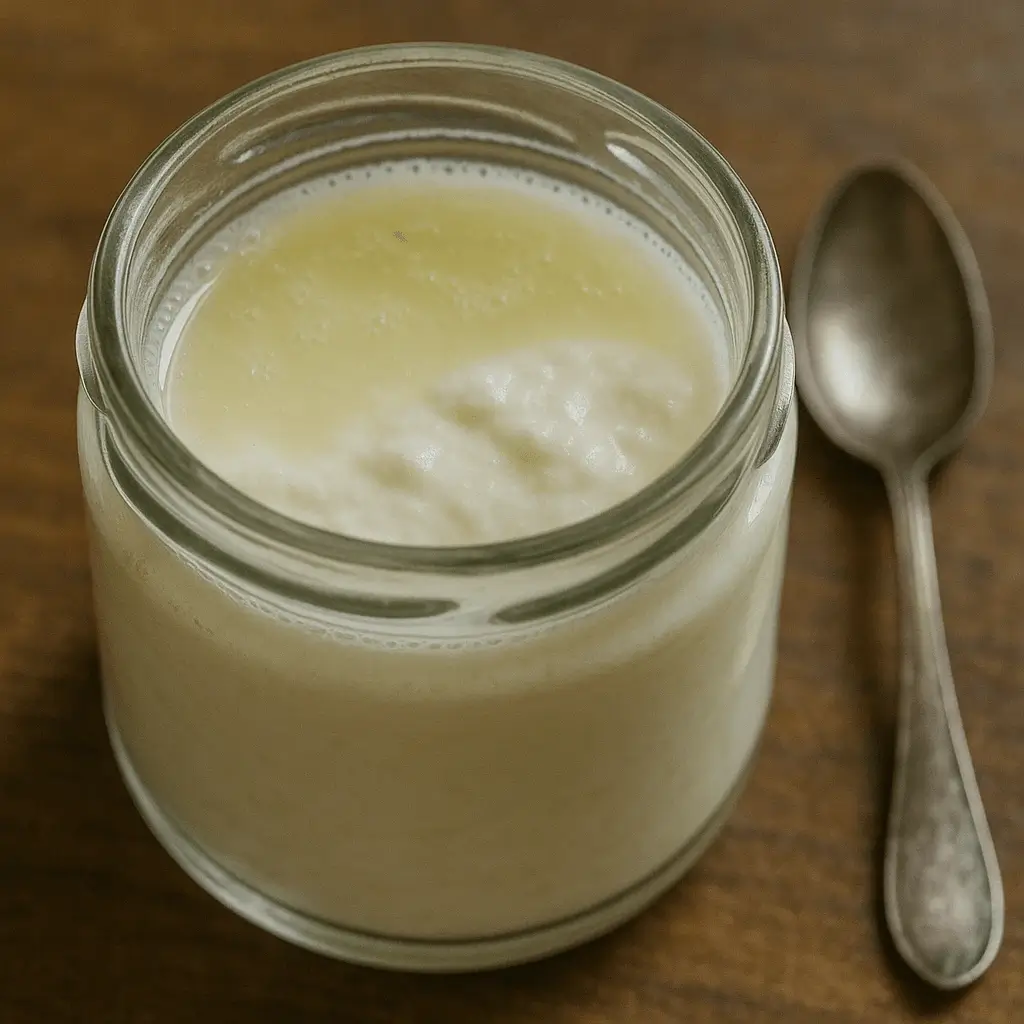
Last week, I opened a new jar of yogurt, ready to add a few spoonfuls to my granola, when I noticed something odd. There was a thin, watery layer sitting on top of the yogurt – kind of yellowish and glossy. For a second, I paused. Is it spoiled? Should I stir it in or throw it out?
My friend Rachel, who’s big on “nothing goes to waste,” told me it was totally normal – just the whey. Still, I wasn’t sure. So, I did what we all do: I went down the rabbit hole of yogurt research. And now? I’ve looked into it for you.
If you’ve ever hesitated over a tub of yogurt that looks a little… separated, you’re definitely not alone. Let’s explore what that liquid really is, why it shows up, and what you can do about it.
What Is That Liquid on Top of Yogurt?
That watery stuff is called whey, and yes – it’s natural.
When yogurt sits for a while, especially if it hasn’t been stirred or if it’s been in the fridge for a few days, the solid and liquid parts can separate a little. That thin layer that pools on top is whey, a liquid from milk that contains some protein, lactose, and minerals.
It might look weird, especially if you’re expecting your yogurt to be thick and uniform. But in most cases, it doesn’t mean the yogurt has gone bad. It’s just how dairy behaves sometimes.
Still unsure? Here’s a tip: Smell it. If it smells fresh and tangy like yogurt should – and there’s no sign of mold – it’s likely just fine.
Should You Stir It In or Pour It Out?
Here’s where personal preference comes in.
If you don’t mind a slightly thinner texture, stirring the whey back in is actually a good thing. It adds back some water-soluble nutrients (including whey proteins and minerals), and keeps your yogurt nice and creamy.
On the other hand, if you prefer thicker yogurt, you can pour off the whey. That’s basically how Greek yogurt is made – by straining out much of the whey.
Just don’t feel like you have to toss the whole thing just because of a little liquid. It’s not a mistake or a sign of spoilage – it’s part of the process.
What If It’s Been Sitting a While?
Sometimes, yogurt does get past its prime.
If there’s more than just liquid – like mold spots, a funky smell, or a slimy texture – it’s best to be cautious. Mold, even on dairy, can spread in ways we can’t always see, and once it’s there, the yogurt’s no longer safe to eat.
But just whey on top? That’s usually not a problem, even if it’s been in the fridge for a few days – generally within 3–7 days after opening – provided it smells normal, shows no mold, and has been kept cold and covered (also check the date on the package).
How to Prevent That Liquid from Showing Up
You can’t always stop the whey from separating – but there are a few things you can do to slow it down:
- Keep the yogurt cold and store it in the back of the fridge where temperatures are more stable.
- Avoid shaking or jostling the container too much, which can cause more separation.
- Use clean utensils when scooping to keep bacteria out, which helps it stay fresh longer.
If you’re making homemade yogurt, letting it chill and set properly after fermenting can help reduce the whey layer, too.
Can You Use Whey for Anything Else?
Yep! If you’ve poured it off and saved it, you can actually use that leftover whey in small ways.
It’s a great liquid to add to smoothies, pancake batter, or even homemade bread dough. It adds a slight tang and boosts protein without wasting anything.
Don’t worry if you don’t use it every time. But if you’re into using every bit of food you buy, whey has its place.
Final Thoughts
So, if you open a container of yogurt and find a little watery layer on top, don’t panic. It’s probably just whey, and it’s totally normal. You can stir it in for extra creaminess and nutrients, or pour it off if you like it thick. Either way, you’re doing it right.
And if you weren’t sure before, now you know: your yogurt didn’t betray you, it’s just being yogurt.