
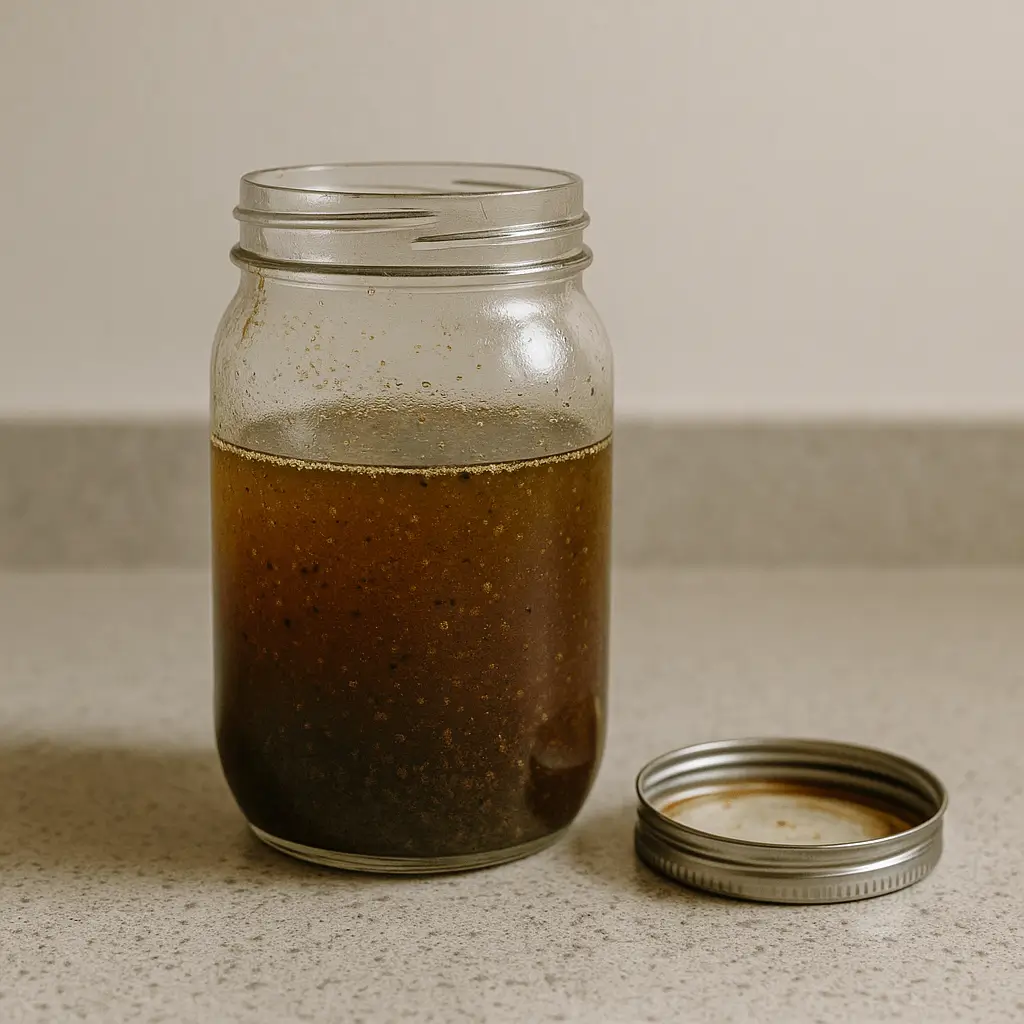
Last weekend, I walked into the kitchen and spotted something I’d somehow ignored for days – a mason jar filled with old cooking oil, just sitting there on the counter. It looked cloudy, with tiny bits floating around and a darker layer sinking toward the bottom. My roommate said he saved it after frying, planning to reuse it. But something about it looked… off.
I didn’t want to be the dramatic one, but I also didn’t want our food to taste like old grease or risk getting sick. So I did what I always do when I’m unsure – I looked into it. Let’s explore this together, in case you’ve ever been in the same spot.
1. Is It Safe to Reuse Old Cooking Oil?
Let’s start with the basics: yes, you can reuse cooking oil – but only if it’s been stored and handled properly.
Oil starts to break down the moment you heat it. The more times it’s used, the more likely it is to develop a bitter smell, a sticky texture, or smoky behavior – all signs that it’s gone bad. If your oil looks murky, has food particles, smells sour or fishy, or feels sticky between your fingers, it’s time to toss it.
In our case, that oil had been sitting out, uncovered, for a few days. Between the air exposure and food crumbs inside, it had definitely started to degrade. Not worth the risk.
2. How to Tell If Used Oil Has Gone Bad
If you’re unsure whether that old jar of oil is still good, here’s what to look (and smell) for:
- Appearance: Is the oil clear or cloudy? Does it have particles floating or sediment at the bottom?
- Smell: Does it smell fresh or sharp, like something’s turning?
- Texture: Sticky or gooey oil is a red flag.
- Color: Oil naturally darkens with each use. But if it’s almost brown-black and super thick, that’s a no-go.
Even if it passed the sniff and sight test, old oil that’s been sitting out uncovered can collect dust, odors, and moisture or food particles that lower its quality and may introduce food-safety risks. That might not make you sick right away, but it can mess with the flavor and feel of your food.
3. When Reusing Oil Is (Actually) Okay
Now, not all reused oil is bad. If you’ve just finished frying and want to save the oil for another round, here’s how you can do it safely:
- Strain it: Once the oil cools down, use a fine mesh strainer or cheesecloth to remove all crumbs and burnt bits.
- Use a clean, dry container: A glass jar with a lid works great. Just make sure there’s no water or residue inside.
- Label it: Note the date and what you used it for. Different foods can change how fast the oil breaks down.
- Store in an airtight, opaque container in a cool, dark spot; refrigeration can help slow rancidity if you’ll keep it longer.
Many home cooks get 2–3 uses, sometimes more, with ‘clean’ frying (e.g., fries), but always go by smell, appearance, foaming/smoking, or sticky feel.
4. What You Can Do with Old Cooking Oil
If the oil’s not safe to cook with, don’t pour it down the drain! It can clog your pipes and mess with the local water system. Here are a few safer, smarter ideas:
- Let it solidify: If it’s a small amount, let it cool completely, then pour it into a container with a lid (like an empty can or takeout container). Toss it in the trash.
- Use it for non-food things: Old oil can be used for oiling squeaky hinges, conditioning garden tools, or even making homemade oil lamps (if you’re feeling crafty).
- Recycle it: Some areas have collection points for used cooking oil. Check if your town has a drop-off for grease recycling.
Bottom line: don’t dump it, but don’t cook with it if it’s past its prime.
5. Avoiding the “Mason Jar Mystery” in the Future
Let’s be honest – we’ve all kept something longer than we should. But if you want to avoid the mystery oil jar situation:
- Set a reminder: If you’re planning to reuse oil, write the date on a piece of tape and stick it to the lid.
- Store it properly: Always cover and refrigerate when possible.
- Communicate: Living with roommates or family? Decide together on a “save it or toss it” rule.
When in doubt, it’s always better to be safe – especially when it comes to food and health.
So, What Did I Do?
I tossed the oil. Politely, of course. I showed my roommate the cloudy bits and explained what I found. He actually appreciated it – said he didn’t realize oil could go bad like that.
Final Thoughts
That jar of used oil might seem harmless at first glance, but it’s worth taking a second look. We all want to be thrifty and avoid waste, but not at the cost of flavor or safety.
Trust your senses, store it smartly, and when it looks like something from a science lab? Just let it go.
Cooking should be joyful – not risky. So embrace the little lessons, and keep your kitchen feeling fresh, safe, and confident.