
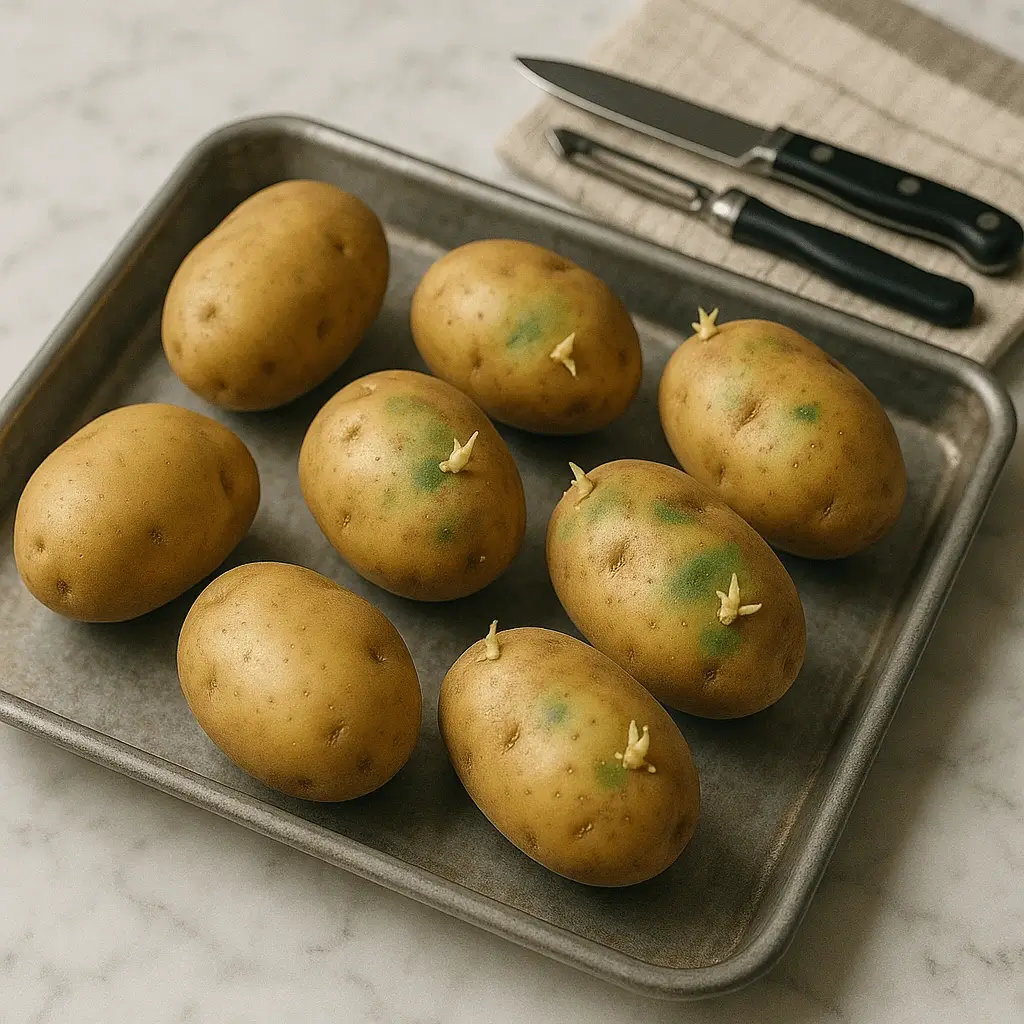
Last night, I pulled out a baking sheet full of potatoes, thinking I’d roast them for dinner. But as I looked closer, I noticed something weird. A few were totally fine. But most? Some had little pale sprouts poking out like tiny fingers. Others had blotchy green patches on the skin. A couple had both.
I froze. I remembered my grandmother used to say, “Don’t throw food away unless it’s walking!” But I wasn’t sure if these were still safe to eat or if I was about to poison my family. So I did what any curious (and slightly grossed-out) home cook would do, I looked into it.
If you’ve ever opened your pantry and found a few rebellious potatoes going green and sprouting, don’t panic. Let’s explore together what this means, what’s safe, and what you can actually do with them.
1. What’s Going On With These Potatoes Anyway?
Potatoes are living things, even after harvest. When they sit too long in a warm or bright place, they start to sprout. Those tiny white or pale yellow shoots? That’s the potato trying to grow a new plant.
The green spots are something else. They form when potatoes are exposed to light for too long, and it’s not just about color – those green patches may contain a chemical called solanine. In large amounts, solanine can make you feel pretty awful (think nausea or stomach cramps). But before you toss the whole batch, keep reading.
2. Can You Still Eat Them? Depends on a Few Things
Here’s the good news: not all sprouted or green potatoes are destined for the trash. If the sprouts are small (what you might see after a week or two of storage) and the potato is firm, not mushy or wrinkled, you can usually save it.
For sprouted ones:
- Snap off or cut away the sprouts and the “eyes.”
- If the potato feels solid and looks normal under the peel, it’s okay to use.
For green patches:
- Peel generously to remove all green areas and any eyes.
- If greening goes deep, keeps showing up under the peel, or covers a large portion, it’s safer to discard.
What to avoid:
- Wrinkled, soft, or shriveled potatoes.
- Extensive greening (including green that runs beneath the peel).
- Heavily sprouted potatoes or ones with long, thick sprouts.
- Bitter taste at any point (while cooking or eating) – that’s a red flag; discard. (Don’t taste-test if the potato is clearly green throughout, just toss it.)
Bottom line: If a potato is firm, not excessively green, and cleans up well with a good peel, it’s usually fine to use. When in doubt, play it safe and throw it out.
3. Best Ways to Use “On-the-Edge” Potatoes
Once you’ve removed the sprouts and any green bits, these potatoes are best used in recipes that involve peeling and thorough cooking – not because cooking “fixes” greening (it doesn’t), but because these methods let you trim away questionable spots and control texture. If a potato tastes bitter or still looks green beneath the peel, skip it.
Here are a few safe and tasty ideas:
- Creamy mashed potatoes – Peel generously, cut out any eyes/green areas, then boil until tender and mash.
- Chunky roasted wedges – Trim anything doubtful, peel as needed, and roast until deep golden.
- Potato soup or chowder – Peel and dice; a long simmer yields a silky finish.
- Home fries or hash – Peel, cut small, and cook through until crisp and browned.
Avoid using these potatoes in recipes where the skin must stay on (like baked potatoes or skin-on fries) unless you’re 100% sure the peel looks normal – no green, no sprouts, no off taste. If in doubt, toss it.
4. How to Store Potatoes So This Doesn’t Keep Happening
This part is simple but important. Sprouts and green patches are usually signs your potatoes have been stored too warm or too bright.
Here’s what you can do:
- Store them in a cool, dark, and dry place.
- A pantry or cupboard away from heat and light is ideal.
- Keep them in a paper or mesh bag, not plastic (which traps moisture and speeds spoilage).
- Don’t store them near onions – that can make them sprout faster!
If you live in a warmer climate or your home is toasty year-round, you might want to buy smaller amounts more frequently to avoid waste.
5. When to Toss and Move On
Sometimes, you’ve got to let go. If your potatoes are soft, moldy, smell weird, or are covered in big green spots and sprouts, it’s better to say goodbye.
Food waste isn’t fun, but eating something that makes you sick is worse. If you’re feeling unsure and the potato gives you bad vibes? Trust that instinct.
6. What If You Already Cooked and Ate One with Sprouts or Green Patches?
Don’t panic. If you didn’t notice a sprout or patch until after dinner, most likely it’s no big deal – especially if it was cooked thoroughly.
If you ate a lot of green potato (like skin-on, and it tasted bitter), and you start feeling queasy or get a stomachache, it’s okay to call your doctor just to be safe. But most of the time, small amounts won’t hurt you.
Still, it’s a good reminder to give potatoes a once-over before cooking next time.
Conclusion: Use What You Can, Toss What You Can’t, and Store Smart
Potatoes are humble, hardy, and surprisingly forgiving – but even they have their limits. With a little care and attention, you can rescue most slightly sprouting or mildly green potatoes and give them a second chance at dinner.
So next time you spot those tiny sprouts or faint green spots, don’t panic. Just peel smart, cook well, and remember: we’ve all been there. Sometimes the best meals start with “Wait… can I still use this?”
Let’s embrace the creativity that comes with using what we’ve got – safely.