
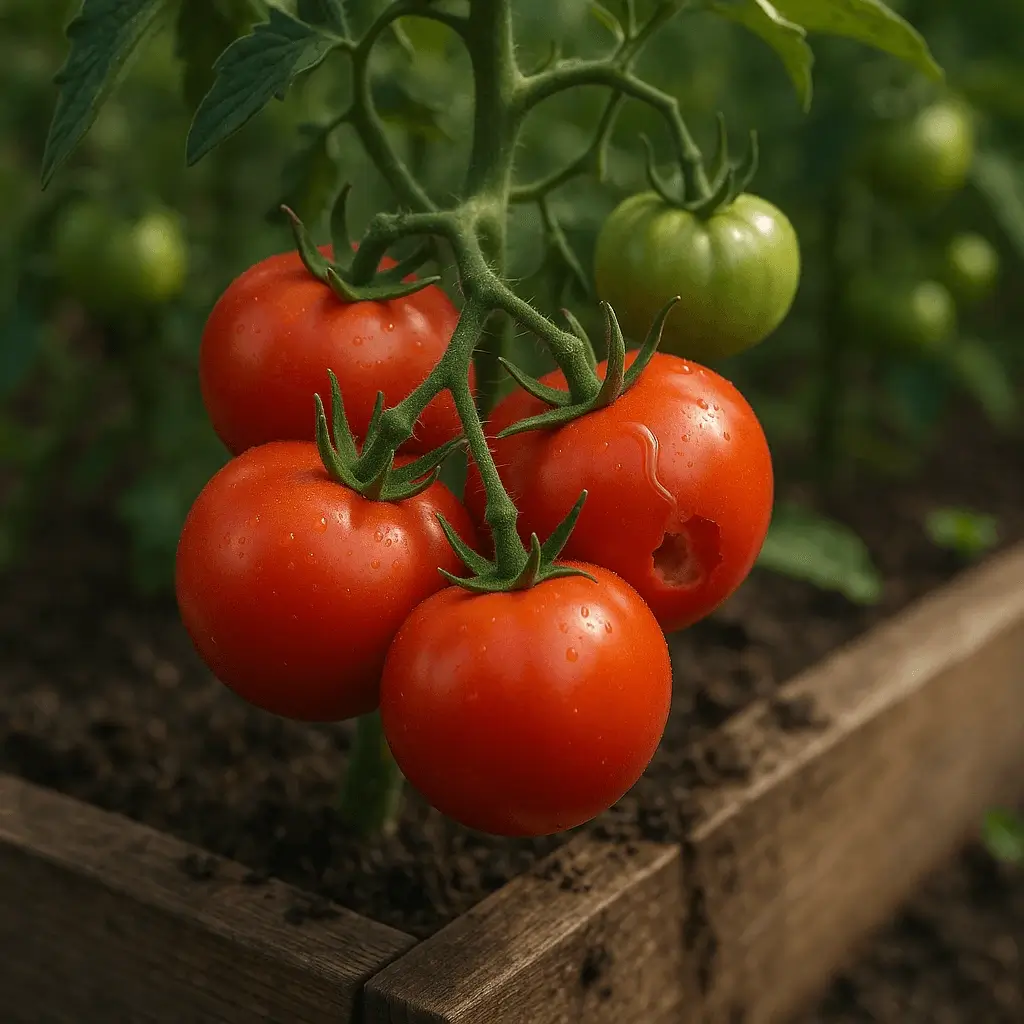
This morning, I was so excited to check the raised garden bed in our backyard. Our little tomato plant had been doing so well, and today, five plump, red beauties were finally ready to pick. But then I saw it – one of them had a deep, rounded chunk missing. Just sitting there, damaged and oozing a little juice. Right next to the bite mark was a faint slimy trail. Ugh.
My partner shrugged and said, “It’s probably a slug. Just cut that part off.” But honestly? I wasn’t so sure. Could the whole tomato still be safe to eat? Was my whole garden at risk?
Let’s explore what’s really going on when you find a half-eaten tomato with a slimy trail – and what you can do about it.
1. Who’s Really Eating Your Tomatoes?
So, let’s start with the obvious mystery: What caused that bite?
If your tomato has a clean, deep, rounded scoop missing – and there’s a faint, shiny trail nearby – you’re probably dealing with slugs or snails. They come out at night or early morning, especially after rain or watering. The slime trail is a pretty solid giveaway.
You might not see the critter itself, but the signs are usually pretty clear. Unlike squirrels or birds that might peck or tear, slugs leave that smooth-edged damage and ghostly shimmer behind.
It’s annoying, yes – but it’s also pretty common.
2. Is the Rest of the Tomato Still Safe to Eat?
Now, this is the tricky part. Your instinct might be to toss it straight into the compost. But let’s pause.
If the damage looks fresh, you can salvage some of the tomato – just do it safely. Cut at least an inch around and beneath the bite, then wash the remaining piece well. If you decide to keep it, cook it thoroughly (think sauce, soup, or a quick sauté). Skip eating it raw. Slugs don’t inject toxins, but they do travel through soil and decaying matter, so a good cook is your safety net.
Trust your senses, too: if it’s soft, slimy, moldy, or smells off, it’s compost time. And when in doubt – especially for young kids, older adults, pregnant people, or anyone immunocompromised – play it safe and compost the whole thing.
Sometimes peace of mind is more important than saving a tomato.
3. Why Slugs Love Tomatoes (And How to Make Them Hate Yours)
Let’s be real – your tomatoes are delicious. Juicy, tender, sweet. What’s not to love?
Slugs are drawn to the moisture and the scent, especially if tomatoes are touching the ground or hidden behind thick leaves. Mulch, shade, and nighttime watering can make things even more inviting for them.
Here are a few friendly ways to keep them away:
- Raise your game: Try staking or caging your plants to lift tomatoes off the soil.
- Water early: Slugs love damp evenings. Water in the morning instead so things dry out before dark.
- Remove hiding spots: Old boards, stones, and thick mulch give slugs cozy daytime homes. Clear them out.
- Try a barrier: Crushed eggshells, diatomaceous earth, or even rough sand around your plants can make it tough for slugs to glide in.
You don’t have to go nuclear to protect your garden. A few small changes go a long way.
4. Should You Be Worried About the Rest of the Plant?
A single slug bite might not seem like a big deal. But if you’re spotting it often or on multiple tomatoes, your plant could be under real pressure.
Slugs don’t just take a nibble and leave – they’ll work through flowers, tender stems, and young fruit if they can. That stress slows ripening and can invite other pests and diseases.
Start with a quick check: look under leaves, around the base of the plant, and in cool, damp hiding spots (thick mulch, boards, stones). If the problem’s ongoing, try a few gentle, effective steps:
- Hand-pick at night or pre-dawn with a flashlight (your best hit rate).
- Yeast-water traps can help, but place them where kids and pets can’t reach.
- Lift fruit off the soil with stakes or cages and prune lightly for airflow.
- Barriers: copper tape/collars are consistently reliable; rough sand or crushed eggshells may help a bit; diatomaceous earth works when dry—use sparingly and avoid flowers to protect beneficial insects.
- If needed, use iron phosphate baits labeled for gardens; follow the label and keep them away from children, pets, and wildlife.
Remember: the goal isn’t perfection – it’s making your garden feel less like a slug buffet and more like a place where your tomatoes can ripen in peace.
5. When to Toss, and When to Trust Your Gut
Okay, so you’ve got a bitten tomato. Now what?
If the damage is small, fresh, and there’s no mold or weird smell, you can probably salvage most of it. If it’s soft, leaking, or just gives you bad vibes – no shame in tossing it. You grew that tomato. You make the call.
Don’t let one bad bite ruin the pride of your garden.
And next time, check tomatoes as they ripen and harvest a little early if you need to. Slugs tend to hit the ripest ones first.
Conclusion: It’s Not Just a Tomato
Finding a bite mark on your homegrown tomato might feel disappointing, like something snuck into your little harvest celebration. But it’s also a gentle reminder: your garden is alive. Things happen. And now you know what to do.
Cut away the damage. Protect the rest. And keep growing.
Even a slug-snatched tomato has something to teach us.
When in doubt, compost the tomato – peace of mind matters more than salvaging a few bites.