
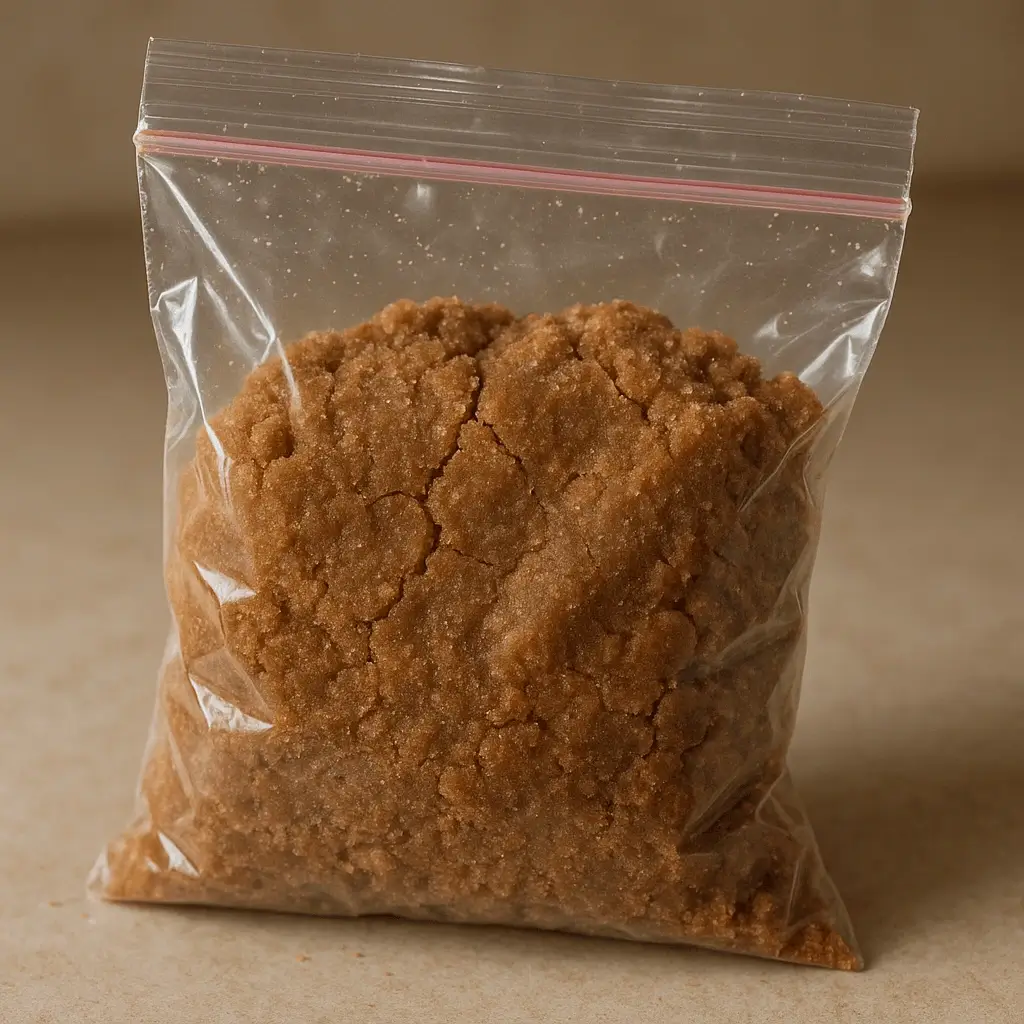
Last weekend, I pulled out my bag of brown sugar to bake a batch of soft oatmeal cookies. But instead of that rich, crumbly texture I was expecting, I was met with a giant, rock-hard lump sealed inside the bag. I tapped it against the counter. Nothing. I even tried breaking it up with a spoon – no luck. The thing was solid.
I immediately thought of my cousin Sarah, who insists brown sugar should be stored in a clay pot. I never listened… until now.
If you’ve found yourself in the same crunchy, brick-like situation, don’t worry – you’re not alone, and you don’t have to throw it away. Let’s explore why this happens and how to fix it (and prevent it) so you can get back to those chewy cookies, cinnamon oatmeal, or whatever cozy dish you had in mind.
Why Brown Sugar Gets Hard in the First Place
Brown sugar is basically white sugar with molasses added back in. That molasses gives it that soft, moist, scoopable texture – and that familiar smell and deep flavor.
But when brown sugar is exposed to air, the moisture in the molasses slowly evaporates. Over time, the sugar crystals dry out and clump together. What’s left behind is a hardened block that feels more like a sculpture than a pantry staple.
Sometimes, even if the bag is sealed, it wasn’t sealed tight enough, or maybe the sugar sat in the back of the cabinet a bit too long. Either way, the result is the same: rock-solid sugar.
So… Is Hardened Brown Sugar Still Safe to Use?
Absolutely. As long as there’s no mold, odd smell, or signs of bugs, it’s totally fine. Brown sugar doesn’t spoil the way fresh produce or dairy does. It just gets hard and loses moisture.
If your sugar looks clean and just feels like it could break your spoon, that’s fixable.
3 Easy Ways to Soften Hardened Brown Sugar
Let’s bring that brown sugar back to life. You’ve got a few options, depending on how soon you need it.
1. The Apple Slice or Bread Trick (Overnight Fix)
This one’s great if you’re not in a rush.
- Place the hardened brown sugar in an airtight container.
- Add a slice of fresh apple or a slice of soft sandwich bread on top.
- Seal the container and let it sit overnight (or at least 12 hours).
The sugar will slowly absorb moisture from the apple or bread and soften up. Just remove the fruit or bread before using the sugar.
Tip: Don’t leave the apple or bread in too long, or it could mold.
2. The Damp Paper Towel Method (Faster Option)
Need your sugar by this evening? This method usually works in a few hours.
- Transfer the sugar to an airtight container.
- Drape a slightly damp (not soaking!) paper towel over the top.
- Close the lid and check after a few hours.
You’ll see the sugar start to loosen and crumble again. Fluff it with a fork when it softens.
3. The Microwave Shortcut (For Immediate Use)
Baking now and need brown sugar right this minute? This is your best bet.
- Place the hard sugar in a microwave-safe bowl.
- Cover it with a damp paper towel.
- Microwave in 20-second bursts, checking and stirring between each round.
In about 40–60 seconds total, it should soften enough to measure and mix. Use it right away – once it cools again, it’ll likely harden back up.
Watch closely so you don’t melt it into syrup!
How to Keep Brown Sugar Soft in the Future
Now that you’ve revived your sugar, let’s keep it from turning into a brick again.
Store it Airtight – Really Airtight
Zip-top bags are helpful, but a second layer makes a difference. Try placing the bag inside a tight-lidded plastic or glass container.
Use a Brown Sugar Saver
These are small, food-safe terracotta disks. Soak one in water for about 15 minutes, pat it dry, and tuck it into your sugar container. It’ll help keep the sugar soft for weeks.
Keep It Out of Extreme Temperatures
Don’t store brown sugar near the oven or stove, where heat can dry it out faster. A cool, dark pantry is perfect.
Can You Still Use Brown Sugar That’s a Little Hard?
Definitely. Even if it’s a bit stiff, you can usually break it up with a fork or spoon. If it’s just clumpy (not a full-on brick), toss it in your mixing bowl and let your electric mixer handle the rest.
If a recipe calls for packed brown sugar and yours won’t pack, you can weigh it instead. One cup of packed brown sugar weighs about 7 ounces (200 grams), if you want to be precise.
A Quick Note on Moisture and Mold
If your brown sugar ever smells sour, has white spots, or feels damp in a weird way, toss it. That’s not dryness, that’s spoilage. But this is super rare if it’s stored correctly.
Most of the time, it’s just dry and needs a little TLC.
In the End, It’s All About Love (and Airtight Containers)
We all forget about things in the pantry. A bag of brown sugar that’s turned into a rock might feel like a tiny kitchen fail, but it’s actually an easy fix – and a great reminder to check in on your baking supplies now and then.
So next time you reach for that sweet, molasses-kissed sugar and find it’s gone rogue, don’t stress. You’ve got options. Give it a little time, a little moisture, and it’ll bounce back like new.
And hey, maybe this weekend’s the perfect time for those cookies after all.