
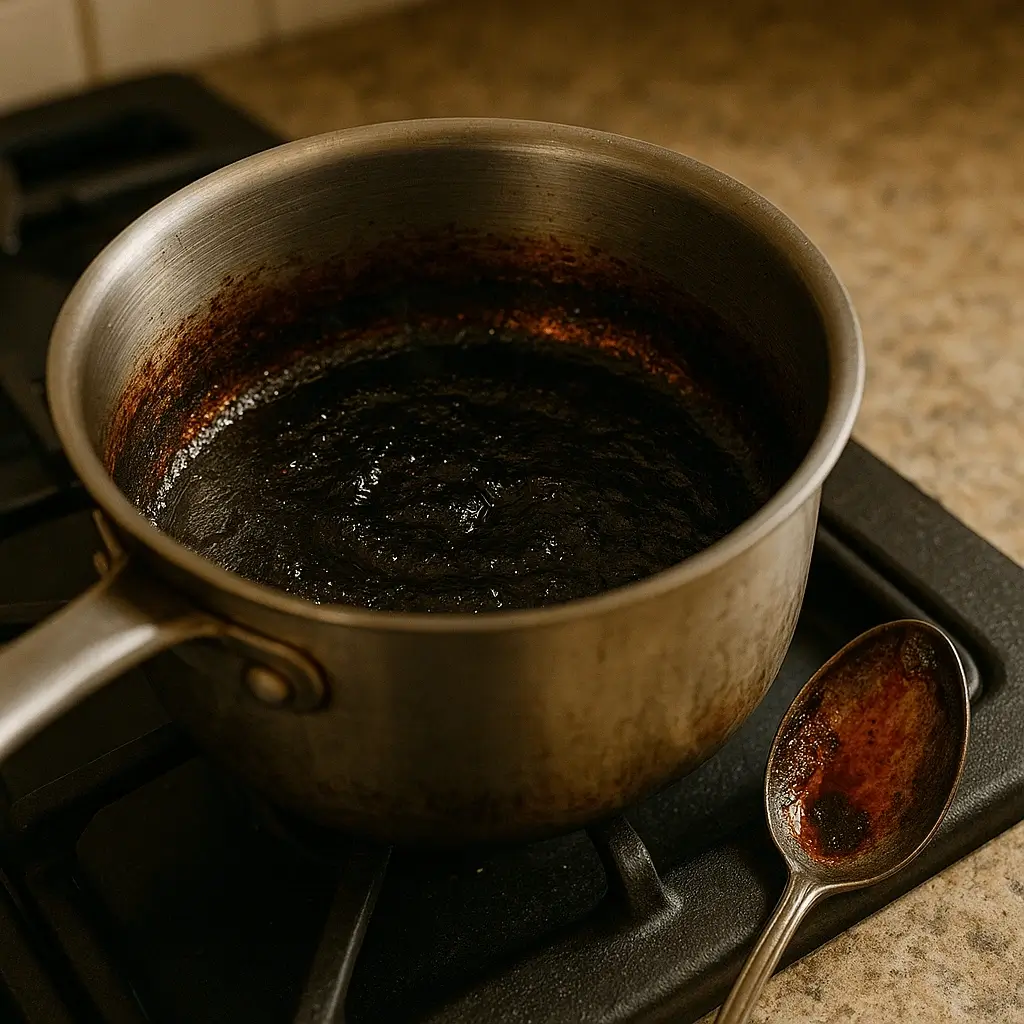
Last weekend, I decided to make caramel for the first time in ages. I was feeling pretty confident – just sugar and a little heat, right? Well… I got distracted. By the time I remembered the pan, the kitchen smelled like a smoky candy shop gone wrong, and the caramel had turned into a black, sticky crust welded to the bottom of my favorite saucepan.
I texted a photo to my sister. She replied, “Oh no. That looks like it’s part of the pan now.”
But I wasn’t ready to give up. I loved that pan. So, I did some digging, and guess what? You don’t have to toss your pan just yet. Let’s explore why caramel burns like that, what you can do to save your cookware, and how to make cleanup a little easier next time.
1. Why Burned Caramel Feels Welded to the Pan
Caramel is basically melted sugar. When it’s cooked too long – or left alone on high heat – it goes past the golden stage and straight into burnt bitterness. What’s worse, it doesn’t just sit on the bottom of the pan. It bonds. Like, really bonds.
That thick, black layer you’re looking at? It’s not just scorched sugar. It’s caramelized sugar that hardened as it cooled, sticking to every little groove in the metal. It feels like the pan is ruined, but it’s not.
You just need the right approach and a little patience.
2. Start with Hot Water and Time
Before you reach for any scrubbers or cleaners, fill the pan with hot water. Not warm, really hot. Then let it soak.
You can even bring the water to a gentle simmer right on the stove. The heat helps loosen the caramel’s grip, especially around the edges. After 15 to 20 minutes, turn off the burner and let it sit for another hour or so.
This alone might soften things enough to scrape off the top layer with a wooden spoon or spatula (never metal – metal can scratch your pan!).
3. Try a Baking Soda Paste
Still stuck? Let’s bring in the big helper: baking soda.
Once the pan has soaked, drain the water and sprinkle a thick layer of baking soda directly over the burned area. Add just enough warm water to form a paste, then let it sit for another 15 minutes.
Now, using a soft sponge or a nylon brush, gently scrub in circles. The baking soda works like a soft abrasive – it won’t damage the pan but can help lift off the stubborn bits.
It might take a few rounds, so don’t be discouraged if you don’t get it all on the first try.
4. Use Vinegar (Only If Your Pan Can Handle It)
If the caramel really baked in, a vinegar soak can help. But check your pan first – do not use vinegar on cast iron or certain nonstick coatings. Use this only on stainless steel or enamel pans – not on cast iron, not on nonstick, and not on aluminum.
Add one part vinegar to two parts water and simmer for about 10 minutes. The acidity helps break down the caramelized sugar. After it cools, scrub again with baking soda and a sponge.
Don’t worry about the smell – it fades fast, and your pan will thank you.
5. Avoid Metal Scrubbers – They Can Do More Harm Than Good
It’s tempting, I know. That burnt layer feels like it needs something tough to break it off. But harsh steel wool can leave deep scratches that only make the pan harder to clean next time, and ruin its surface.
Stick with soft scrubbers or a dedicated pan brush. If you really need a boost, look for non-scratch scouring pads. They’re strong but gentle, and way safer for your cookware.
6. Next Time, Stay Low and Watch Closely
Once you rescue your pan, let’s try to avoid this mess again.
Caramel is fussy. It can go from perfect to burned in seconds. So, next time:
- Use low to medium heat
- Don’t walk away once the sugar starts bubbling
- Keep a bowl of cold water nearby for quick testing (dip a spoon in the caramel, then into the cold water – it should harden without burning)
And maybe set a timer, just in case. Even a 30-second distraction can turn into a cleanup marathon.
7. When to Let It Go (Yes, Sometimes It’s Just Done)
If your pan has warped from the heat or if there’s a funky smell that just won’t quit, it might be time to say goodbye. Some burned layers go deep, especially if they’ve been reheated or ignored for a while.
But in most cases – especially with burned sugar – you can bring it back with time, patience, and a bit of elbow grease.
In the End, It’s Just Sugar (and a Lesson Learned)
We’ve all been there – one moment you’re making dessert, and the next you’re searching online for “Is my saucepan toast?”
The good news? You’re not alone, and your pan probably isn’t beyond saving. With some heat, a few kitchen basics, and a little determination, you can get it clean again. And next time, you’ll know the signs before things go from golden to smoky.
Sometimes the mess teaches us more than the recipe ever did.
So go ahead – clean it up, try again, and maybe keep a closer eye on the sugar next time.