
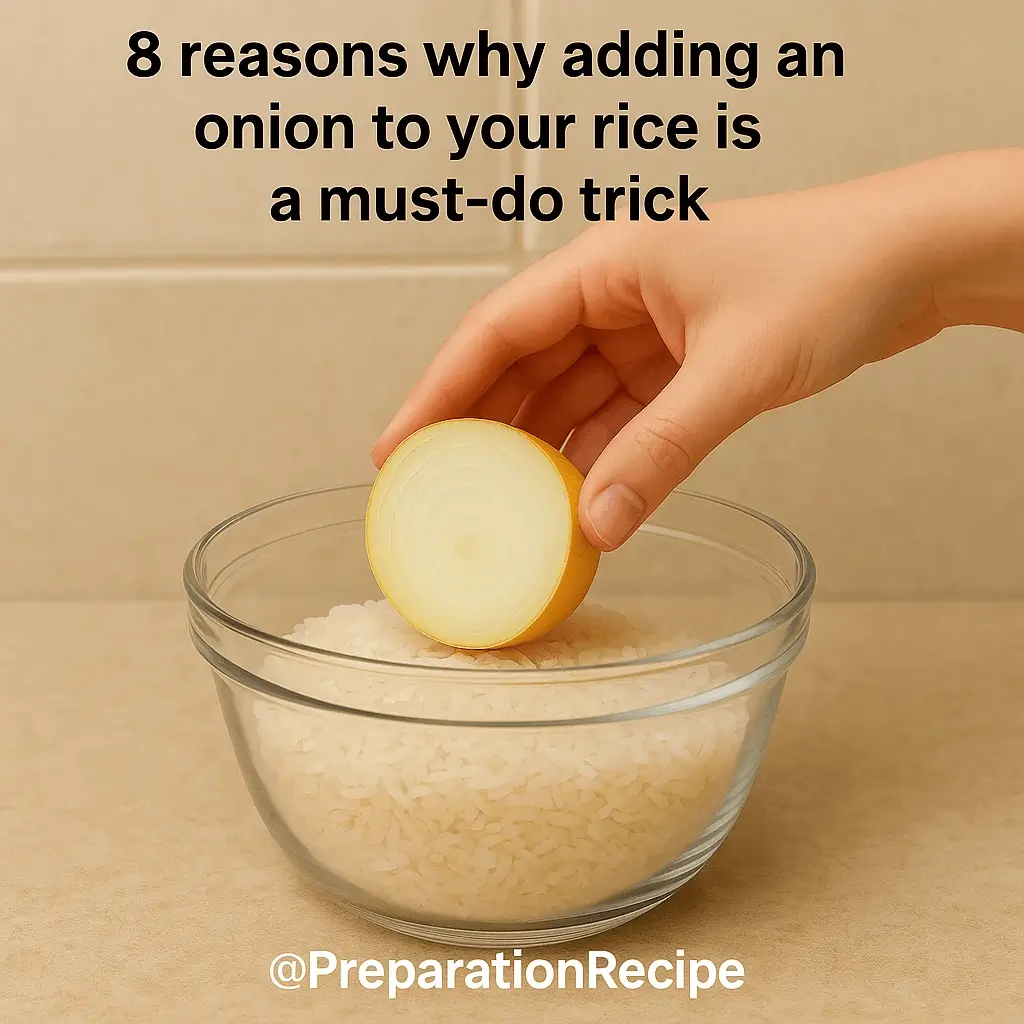
It’s just an onion… and yet it changed my rice game forever.
It started with a visit from my aunt – she’s one of those people who doesn’t use cookbooks, just instincts and passed-down wisdom. I was making plain white rice for dinner, and she gave me this look. You know the one. Then she pulled a yellow onion from my basket, sliced it in half, and said, “Trust me.” She placed it, raw and whole, right on top of the rice before I turned the stove on.
That little trick? It completely transformed the way I cook rice – and honestly, the way I think about small kitchen habits.
So let’s explore it together. This article walks through 8 surprisingly helpful reasons why tossing an onion into your rice pot might just become your new favorite ritual. Spoiler: it’s not just about flavor.
1. It Adds Subtle, Savory Depth (Without Overpowering Anything)
You know that comforting, cozy smell when onions hit a warm pan? Imagine that, but infused gently into every bite of your rice.
By placing a halved onion (no chopping needed!) on top of the rice before cooking, you let it slowly release its essence into the steam. The result? A light, rounded savory note that doesn’t scream “onion” – it just makes your rice feel fuller, richer, and somehow more comforting.
It’s perfect for folks who want flavor without fuss. No peeling, no crying, no fine dicing.
2. It Makes Basic Rice Feel Thoughtful
We’ve all had those “just rice” dinners. Maybe it’s a busy night or a last-minute side dish. And while plain rice works fine, it doesn’t always feel special.
Adding an onion – even if that’s all you do – turns a plain pot of grains into something that feels intentional. It says, “Hey, I cared a little extra today.” And honestly, people notice. My family asked what I did differently the first time I tried it.
It’s a small effort that adds a warm, homemade touch.
3. It Softens Harsh Smells from Certain Grains
Not all rice smells sweet and fluffy right out of the pot. Some varieties (especially older white rice or certain long grains) can have a slightly musty or starchy aroma when they cook.
Onions help mellow that out. As they steam, they neutralize sharp or overly earthy scents, replacing them with something gentler and more inviting.
If you’ve ever cooked rice that made you wrinkle your nose, this little hack is worth a try.
4. It Gives You a Built-In Flavor Base (If You Want to Keep Cooking)
Once the rice is done, you can remove the onion or mash it in. Either way, that soft, sweet allium becomes a flavor anchor for whatever you’re serving next.
You can stir it into the rice, mash it with a fork for a rustic touch, or save it as a soft topping. I’ve even chopped it up after cooking and mixed it with a pat of butter or a spoonful of broth to drizzle over the rice.
It’s like having a built-in bonus ingredient waiting for you.
5. It’s a Trick That Spans Cultures (and Memories)
When I shared this on the phone with my neighbor, who grew up in a different country, she laughed and said her grandmother did the same thing. Only in her case, it was an onion with a bay leaf tucked inside.
Turns out, variations of this technique exist all over the world. Some people add cloves or a cinnamon stick. Others use shallots or green onions. But the core idea is the same: let the rice absorb flavor gently as it cooks.
It’s one of those quiet kitchen traditions that makes you feel part of something bigger.
6. It Helps Soften Hard Water Effects
If your rice often turns out a bit dry or uneven, your tap water might be part of the story. Hard water can definitely influence texture as the rice cooks.
Adding an onion won’t solve everything, but many home cooks find that it seems to create a slightly kinder cooking environment for the grains. The result can be rice that feels a bit fluffier and more evenly cooked – especially if you’ve struggled with odd texture before.
Give it a try and pay attention to the difference in texture. It’s subtle, but you may really notice it.
7. It Encourages Less Salt Without Losing Flavor
If you’re trying to cut back on salt – or you’re cooking for someone who is – onions can help bridge the gap.
A whole onion brings its own soft sweetness and savory depth. You can add less salt than usual and still end up with a bowl of rice that feels warm and balanced.
I started doing this when my partner wanted to ease up on salt, and we didn’t miss it one bit.
8. It’s Budget-Friendly and Zero-Waste Friendly
The best part? You don’t need to sacrifice your good onions. That one slightly sprouting bulb or rough-looking half hiding in your fridge? This is the perfect place to use it.
You’re not eating it raw or relying on it for crunch – it’s flavor, not presentation. So it’s a great way to avoid throwing out an onion that’s a little past its prime but still good inside.
Smart, simple, and satisfying.
Final Thoughts: A Little Onion, A Lot of Comfort
It’s funny how such a small tweak – just placing half an onion on your rice – can shift your whole relationship with an everyday dish. It adds comfort, a hint of nostalgia, and just enough curiosity to keep things interesting.
So the next time you make a pot of rice, try it. Let that humble onion work its quiet charm. Whether you mash it in, toss it out, or turn it into a topping, you’ll notice the warmth it brings.
Because sometimes, the coziest cooking tricks are the simplest ones.