
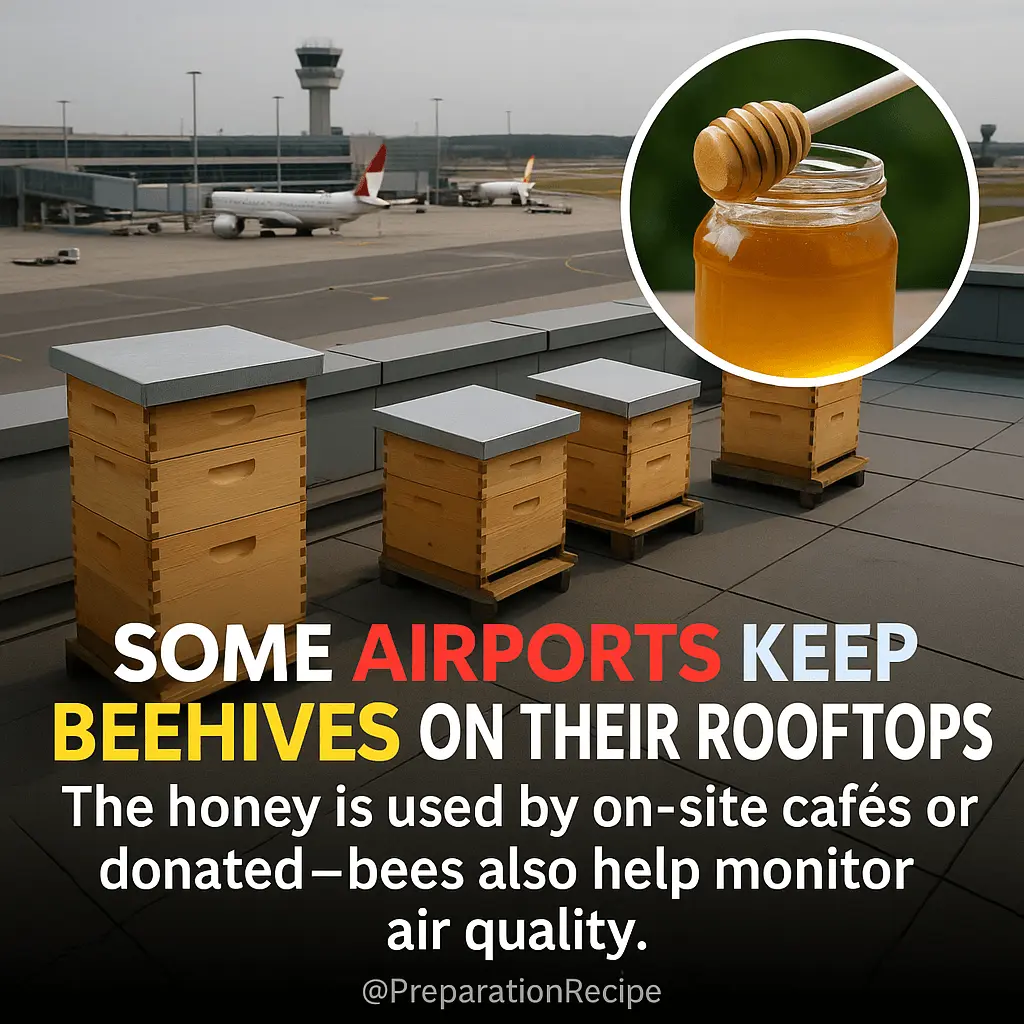
When I First Heard About Bees at Airports, I Thought It Was a Joke
Seriously – my cousin sent me a picture of honey jars labeled “airport honey,” and I thought it was just a cute name. But then I looked it up and… turns out, some airports really do keep beehives on their rooftops. Not for show. For actual, real-deal honey.
So I did what any curious, mildly honey-obsessed person would do – I fell down the rabbit hole. And now, here we are.
This article explores what’s really going on with these airport bees, why it matters, and what it means for the future of food, sustainability, and even your next airport café croissant.
What’s the Buzz About?
Let’s start with the basics. Yes, some major airports around the world, especially in the U.S. and Europe, actually manage beehives on their rooftops or nearby green zones. You might never notice them from your gate, but they’re up there – quietly doing their thing.
It started as a small sustainability idea. But soon, these rooftop bees became symbols of something much bigger. Cities like Chicago, Seattle, and even airports in Germany and France have joined the trend.
And it’s not just about honey (though that part is delicious).
Why Would an Airport Want Bees?
At first glance, it sounds like an odd pairing – buzzing bees and roaring jets. But when you think about it, airports have something bees love: wide, open green areas that are often pesticide-free. Plus, roofs don’t get a lot of human foot traffic, so it’s a calm spot for a hive.
But there’s another surprising reason: air quality monitoring.
Bees are natural indicators of a healthy environment. If their honey and wax contain certain particles or pollutants, it can help scientists understand what’s floating around in the air nearby. Some airports work with local universities to track exactly that.
So while these little pollinators are busy collecting nectar, they’re also quietly helping us understand pollution patterns – like nature’s tiny lab techs.
Wait, Do They Really Use the Honey?
Yes, and it’s delightful.
Some airports collect the honey and jar it for employee gifts or public sale. Others provide it to on-site cafés or restaurants. A few even sell the honey locally to help fund sustainability programs.
One airport café served honey-glazed pastries made from their very own rooftop batch. Imagine biting into a croissant that came straight from the skies – literally.
And don’t worry: the bees aren’t flying into terminals or swarming baggage claim. These rooftop hives are managed by trained local beekeepers, and most travelers never even know they’re there.
What Does This Have to Do with You?
So glad you asked.
If you care about where your food comes from – even just a little – this matters. These bees remind us that even huge, industrial places like airports can play a role in sustainable food systems.
And for those of us who enjoy simple pleasures (like stirring a bit of local honey into tea), this is a sweet example of how cities can get creative and thoughtful with space.
It also shows how unexpected places can contribute to environmental care. Not everything has to be perfect or polished – sometimes it’s about finding little opportunities to support nature, even on a rooftop covered in solar panels and jet noise.
How You Can Join the Buzz
You don’t need an airport to support bees. Here are a few fun, low-key ideas to get inspired:
- Buy local honey from small farms or markets. It often tastes richer and helps keep pollinators thriving.
- Grow bee-friendly plants like lavender, mint, or sunflowers – even in a windowsill pot.
- Skip the sprays. Avoiding harsh pesticides helps bees stay strong and healthy.
- Support public green spaces. Bees love them, and so do we.
Even learning about projects like this is a step in the right direction. Sharing good news matters.
A Sweet Reminder From the Skies
Finding out that airports are home to beehives reminded me that sustainability doesn’t always look like big dramatic changes. Sometimes it’s quiet, clever, and tucked away on a roof you’ve never seen.
And maybe that’s the beauty of it.
Next time you’re waiting at the gate, sipping a latte, just think: there might be a team of tiny workers on the roof above you, making honey, monitoring air, and reminding us how nature still finds a way – even at 30,000 feet.