
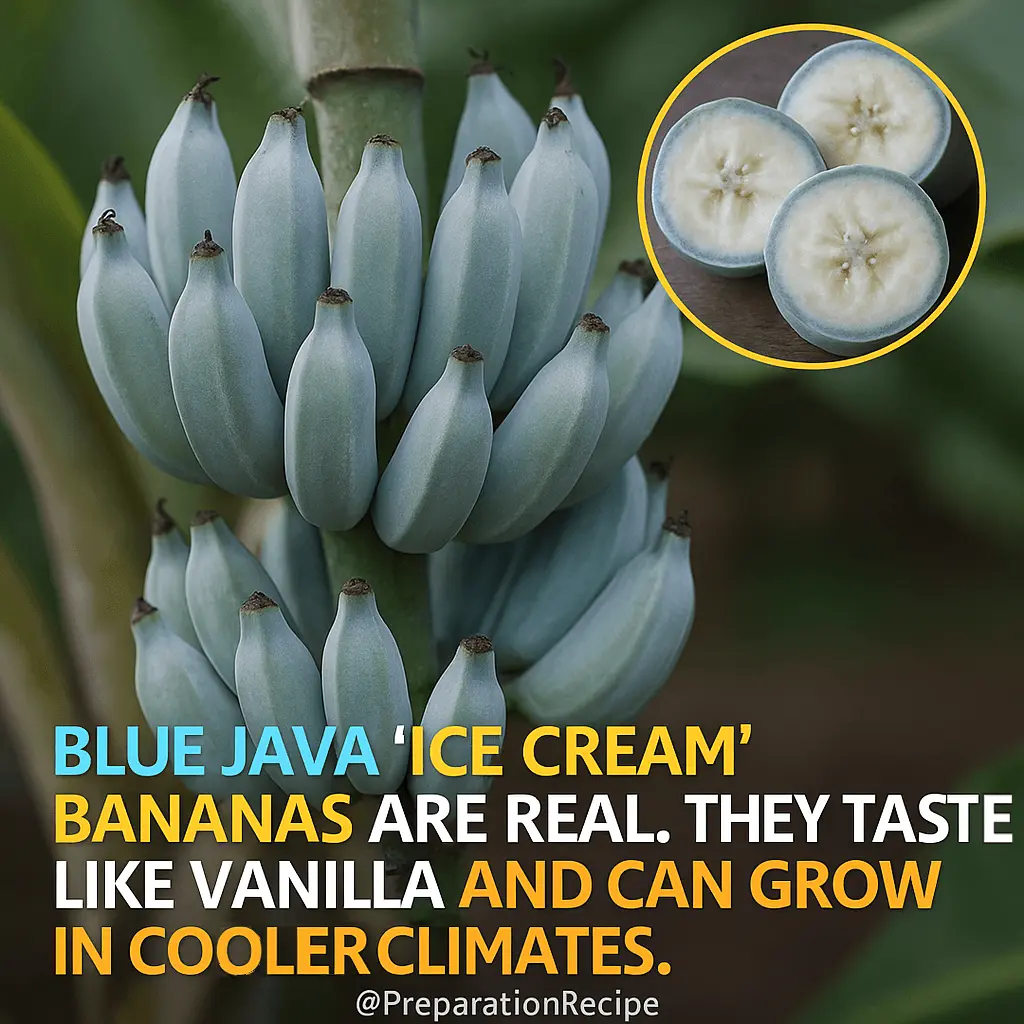
I still remember the first time someone handed me a strange-looking banana with a silver-blue peel and said, “Try this, it tastes like ice cream.” I laughed, assuming it was a joke. But when I took a bite, I blinked twice. It really did taste like vanilla – sweet, creamy, and so different from the regular bananas I toss into smoothies. That was my first encounter with the Blue Java banana.
If you’re hearing about this for the first time too, you’re not alone. These rare bananas aren’t something you’ll usually spot at your local grocery store. But they’re real, and they’re delightful.
Let’s explore what makes them so unique – and why you might want to keep an eye out for them.
1. What Are Blue Java Bananas, Anyway?
Blue Java bananas (sometimes called ice cream bananas) get their nickname from their unusually creamy texture and soft vanilla-like flavor. But let’s start with the look.
Before they ripen, these bananas have a bluish-silver tint. It’s almost icy, which makes them look like something from a sci-fi movie. Once they ripen, they turn pale yellow and get soft – very soft, in fact, almost like custard inside.
They’re not a new invention or a trend. These bananas have been grown for generations in places like Southeast Asia, Hawaii, and parts of Central America.
And get this: they can even grow in cooler climates where regular bananas struggle.
2. Why Do They Taste Like Vanilla Ice Cream?
This is the fun part.
The flavor comes from a unique combo of natural sugars and textures. Blue Java bananas are softer, denser, and creamier than the Cavendish bananas most of us eat daily. So when you bite into one, it doesn’t just taste sweet – it feels like a dessert.
People often describe the flavor as a blend of banana and vanilla pudding. Some even say it reminds them of soft serve or a milkshake.
No added flavor. No tricks. It’s just how they grow.
3. Can You Grow Them at Home?
If you live in the southern United States – think Florida, parts of Texas, or even Southern California – you might be in luck.
Blue Java bananas grow best in warm, slightly humid areas, but they’re surprisingly cold-tolerant. Unlike other banana varieties, these plants can handle temperatures as low as 20°F for short periods. That makes them one of the most cold-hardy banana varieties around.
You’ll need space though. The trees can grow up to 15 feet tall and may need support once the heavy fruit clusters start to form. But if you love a backyard project with delicious rewards, it might be worth planting a few.
4. Where Can You Find Them?
Here’s the catch – they’re not easy to find at regular supermarkets.
Since they bruise easily and don’t ship well, Blue Java bananas are usually sold locally or through specialty farms. Some farmers’ markets in warm regions might have them. You can also order the plants or small trees online from fruit nurseries if you’re interested in growing your own.
Pro tip: If you’re traveling through Hawaii or certain parts of Southeast Asia, ask the locals. You might just get to try one straight off the tree.
5. How to Use Blue Java Bananas in the Kitchen
Once you have a few ripe Blue Javas, there’s no shortage of ways to enjoy them.
- Eat them fresh: Peel and bite. Honestly, that might be the best way to appreciate the flavor.
- Make banana ice cream: Freeze the bananas, blend them until smooth, and you’ve got a naturally sweet frozen treat – no dairy, no fuss.
- Add to oatmeal or pancakes: They melt in and create a creamy texture that’s hard to beat.
- Smoothies: Toss a few slices in with some almond milk and cinnamon for a dreamy drink.
They’re also perfect for kids (or adults) who like a sweet snack but want something a little more exciting than a regular banana.
6. Why Haven’t More People Heard of Them?
Blue Java bananas aren’t a secret – but they’re definitely rare.
The reason mostly comes down to shipping and shelf life. Their soft texture makes them tricky to transport long distances without damage. And because they don’t last as long as firmer varieties, grocery stores don’t often stock them.
But with more people growing their own food and exploring interesting fruits, Blue Javas are starting to show up in online conversations and niche farm markets.
So if you spot them, consider it your lucky day.
A Sweet Surprise Worth Trying
If you’ve ever wished bananas were a little more dessert-like, Blue Java bananas might be your dream come true. They’re creamy, naturally sweet, and full of charm – from their frosty-blue skin to their pudding-soft center.
Whether you grow them yourself or find them on a travel adventure, they’re one of those “hidden gems” of the fruit world that actually live up to the hype.
Go ahead – embrace the surprise. You might just find your new favorite fruit.