
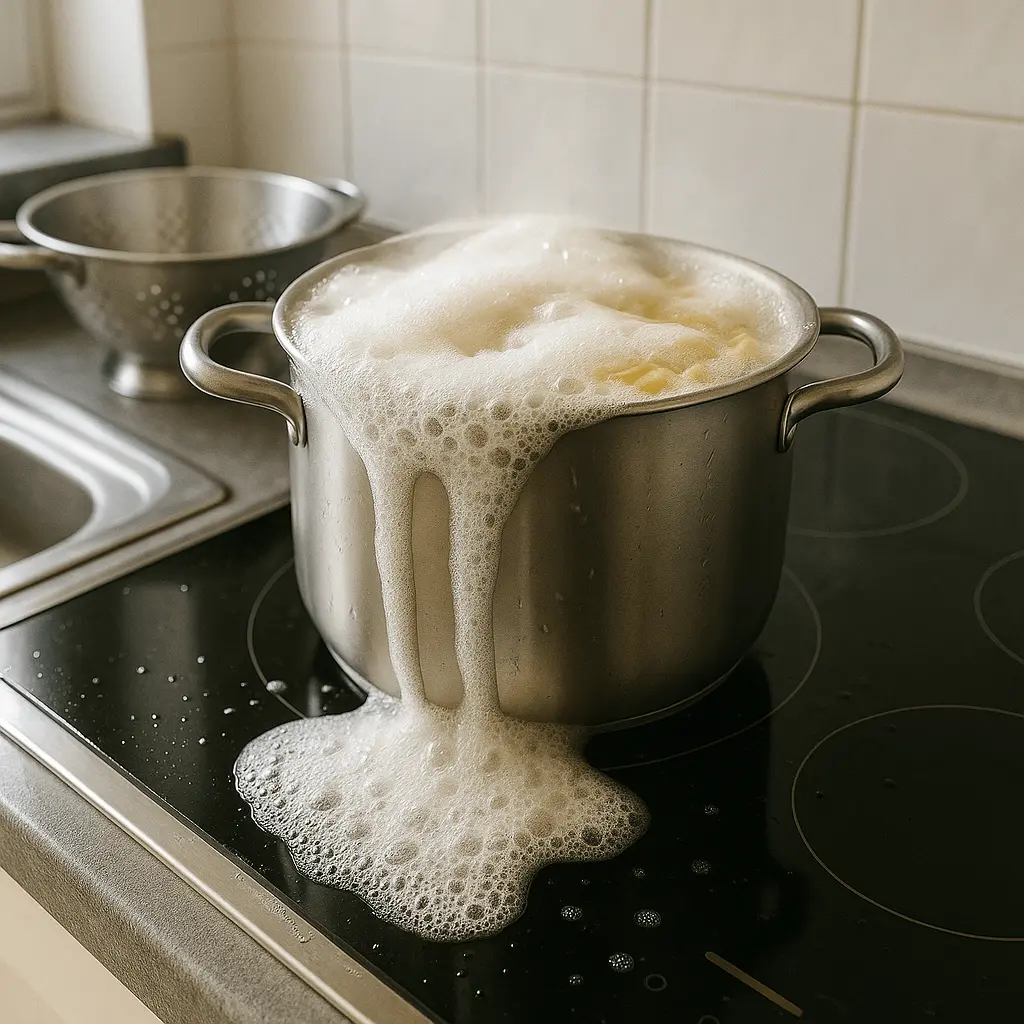
Last night, I did what a lot of us have done: I turned on the burner to boil pasta, got distracted by a message on my phone, and by the time I looked up, it was too late. The pot had bubbled over. Thick, foamy water was sliding down the sides of the pot like lava, puddling onto my black stovetop and leaving behind a starchy, sticky mess.
My first thought was, “Ugh. I ruined dinner.” But my second thought was, “How do I even clean this up properly? And can I stop it from happening again?”
If you’ve ever been in this situation, don’t worry. It’s a common kitchen hiccup, and thankfully, it’s easy to manage with a few tricks. Let’s explore why this happens, how to clean it up without damaging your stovetop, and what simple things you can do to prevent it in the future.
Why Does Pasta Water Boil Over So Easily?
Let’s start with a quick explanation – no science degree required.
When you boil pasta, the starch in the noodles leaches out into the water. As the water bubbles, the starch forms a layer of foam on top. If the heat is too high or the pot is too full, those bubbles don’t have anywhere to go but out – right over the edge.
The foam keeps rising until it spills over like a tiny volcano. And that mess? It’s not just water. It’s gluey, sticky, and can leave marks on your cooktop if left to dry.
But the good news? You’ve got options.
1. Cleaning the Mess Without Scratching Your Glass Cooktop
Let’s start with cleanup. Whether it’s a ceramic or induction glass cooktop, the key is to be gentle but thorough.
Start with a damp cloth right away if the stove is still warm (but not hot).
If it’s safe to touch, you can lift the foam while it’s still soft. Use a microfiber cloth or paper towel to blot the mess – don’t rub yet. Get most of the liquid up first.
If it’s dried on, don’t panic.
Let the stovetop cool completely. Then, sprinkle a bit of baking soda over the area and add a few drops of white vinegar. You’ll hear a light fizz. Let it sit for 10–15 minutes. This softens the starchy residue.
Use a soft cloth or non-scratch scraper to gently lift it away. Avoid anything rough like steel wool – it can leave permanent marks.
Wipe everything down with warm, soapy water, then dry with a soft towel to prevent streaks.
You’ll be amazedat how clean it gets without using harsh chemicals.
2. Should You Still Eat the Pasta?
Honestly? It depends.
If the pasta is still in the pot and didn’t get contaminated, you’re probably okay. Just make sure there’s enough water left in the pot to keep cooking it properly.
But if you saw pasta water dripping onto your stovetop, and you’re unsure if the foam sucked in any dust or grime on the way back down into the pot, maybe don’t risk it. Especially if you have allergies or a sensitive stomach.
You can always scoop out the top few inches and rinse, but sometimes, starting fresh gives you peace of mind.
3. How to Prevent Pasta from Boiling Over Next Time
This part is actually easier than you might think.
Use a Bigger Pot
Even if you’re only cooking for one or two people, use a pot that’s larger than you think you need. More space gives those starchy bubbles room to rise without escaping.
Don’t Fill the Pot to the Top
Aim for about two-thirds full. This leaves a “safety zone” for bubbling.
Lower the Heat Slightly
Once the water reaches a rolling boil and you’ve added the pasta, turn the heat down just a bit. Keep it at a gentle boil – not a violent one.
Stir the Pasta in the First 1–2 Minutes
Stirring early helps prevent noodles from sticking and releasing too much starch at once.
Try the Wooden Spoon Trick
Some people swear by laying a wooden spoon across the top of the pot. The idea is that it pops the bubbles before they get too high. It doesn’t always work – but when it does, it can buy you time.
4. What If You Have an Electric Stove or Induction Cooktop?
Both types can handle a little spill, but they need care.
For electric coil cooktops, turn the stove off and let everything cool completely. If your model has removable coils and drip pans, lift them out once cool and wipe up any residue underneath.
For induction cooktops, the flat ceramic-glass surface makes wipe-ups easier – but don’t wait too long. Starch can bake on if it dries while the surface is hot, so clean promptly once it’s safe to touch.
When in doubt, always let the surface cool before you start cleaning.
5. Let’s Talk About the Smell (Yes, That Weird Burnt Smell)
Burnt starch has a distinct odor – kind of toasty, but not in a good way. If your pot boiled over and kept cooking, it may leave behind a faint scorched smell.
Here’s how to get rid of it:
- Boil a small pot of water with lemon slices and let the steam freshen the air.
- Place a bowl of baking soda on the counter overnight to absorb odors.
- Wipe the stovetop with a little diluted vinegar to cut through lingering smells.
Your kitchen will smell like home again by morning.
6. Bonus: Quick Pasta Recovery Ideas
If your pasta survived the spill, here’s how to turn things around:
- Add a splash of olive oil and grated cheese and call it a day.
- Toss it with frozen veggies and a store-bought sauce for a fast weeknight meal.
- Mix in cooked chicken or beans from the fridge and season well.
It doesn’t have to be complicated to be comforting.
You’re Not Alone – We’ve All Been There
These little kitchen mishaps happen. We get distracted, answer the door, or check a text, and suddenly things bubble over. It doesn’t mean you’re a bad cook – it just means you’re human.
The real win? Knowing how to handle it, clean it up without stress, and maybe even save dinner in the process.
Next time you boil pasta, you’ll be armed with a few more tricks and a lot less mess. And if you ever forget again (hey, it happens), just breathe, grab a cloth, and move on.
Sometimes, a little chaos in the kitchen makes the best stories.