
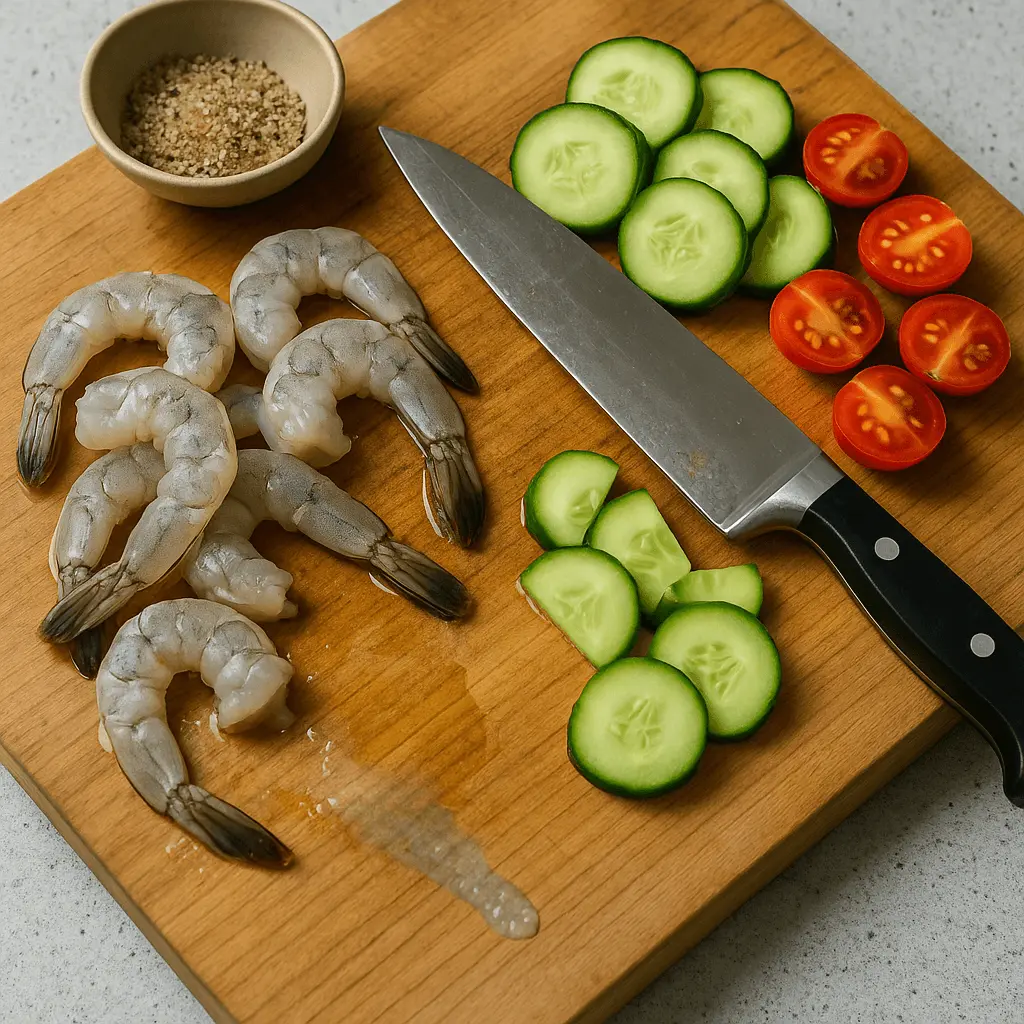
The other night, I was rushing to get dinner started after a long day. I’d just finished peeling raw shrimp and, without thinking, sliced up some fresh cucumbers and tomatoes on the same cutting board. I didn’t rinse anything in between – not the board, not the knife, not even my hands. My friend glanced over and raised an eyebrow. “Aren’t you supposed to keep those separate?” she asked.
Suddenly, I was second-guessing everything.
This article explores what can go wrong when raw seafood meets fresh produce, what we can do if it happens, and how to keep our kitchen safer without overcomplicating dinner prep.
Why It Matters: Cross-Contamination Is Sneaky
Let’s start with the basics. Shrimp, like other raw seafood, can carry bacteria such as Vibrio, Salmonella, and Listeria. These aren’t always visible or smelly, but they can make you very sick, especially if the bacteria sneak onto foods you don’t cook afterward.
Fresh veggies like cucumbers and tomatoes are often eaten raw. If they’ve been cut with a knife that just touched raw shrimp, or if they sat in shrimp juices on a board, there’s a chance they’ve picked up harmful germs – and there’s no heat later to kill them off.
It doesn’t mean every case will cause illness, but the risk is real enough that food safety experts advise against it. It’s one of those things you may not notice until someone gets sick a day or two later.
So… What Should You Do If It Already Happened?
If you realize the mistake right away – like in the moment or just minutes after chopping – you’ve got a few options.
1. Rewash and Recut
If the veggies haven’t been out long and they never touched the shrimp or any liquid from it, set them aside on a clean plate and switch to a clean board and knife. If any cut produce contact with raw shrimp or their juices, the safest choice is to discard it and start fresh. A rinse won’t always remove bacteria that have seeped into cut surfaces..
Best move: When in doubt, toss the veggies and start fresh. It’s not fun to waste food, but getting sick isn’t worth it either.
2. Can You Cook the Veggies?
If the veggies are going into a cooked dish, like stir-fry, soup, or a sauce, where they’ll be fully heated through, that’s a different story. High enough heat can kill harmful bacteria.
So, if your shrimp and veggies were all going into the same hot pan anyway, the mistake might not be a problem this time. Cook everything thoroughly: shrimp until firm, pearly, and opaque (about 145°F / 63°C), and ensure the vegetables in that dish are fully heated through.
What To Do Next Time (It’s Easier Than You Think)
We’ve all had those moments in the kitchen where we get distracted or cut corners to save time. The good news? Avoiding cross-contamination is pretty easy once it becomes a habit.
1. Use Two Cutting Boards
Keep one board for raw meat and seafood, and another for fruits, veggies, and bread. Color-coded ones help if you’re forgetful (many sets come with a red one for meat and green for veggies).
Even a small extra board from the dollar store can save you trouble.
2. Clean As You Go
If you need to reuse the same board or knife, wash it with hot soapy water right after it touches raw shrimp (or chicken, or beef). After washing, sanitize cutting boards/knives (e.g., 1 Tbsp unscented bleach per 1 gal water), then air-dry. Rinsing alone isn’t enough – you want that grease and bacteria gone.
The same goes for your hands. A quick scrub can stop the spread from your fingers to everything else in your kitchen. Scrub with soap and water for ~20 seconds after touching raw seafood and before handling produce.
3. Chop Veggies First
One of the simplest fixes? Just cut your produce before you handle the raw protein. That way, even if you forget to clean the board later, the raw stuff is last in line – not contaminating your lettuce, peppers, or whatever you’re snacking on raw.
The Smarter Way to Think About Food Safety
It’s easy to feel overwhelmed by rules in the kitchen – especially when so many of us grew up watching people cook “their way” without worrying too much.
But food safety doesn’t have to be fussy. It’s about building a few small habits that give us peace of mind, especially when feeding kids, older family members, or anyone with a more sensitive immune system.
No one wants to waste food. But we also don’t want to end up curled up with a stomach ache, wondering if that one shortcut was the problem.
Final Thoughts: It’s Not About Perfection, It’s About Progress
So, if you ever catch yourself chopping cherry tomatoes next to raw shrimp again – pause, clean up, and reset. It’s not the end of the world, and now you know what to do next time.
The kitchen should feel like a safe, creative place – not a minefield. So embrace the learning curve, keep things clean, and let dinner be something you feel good about.