
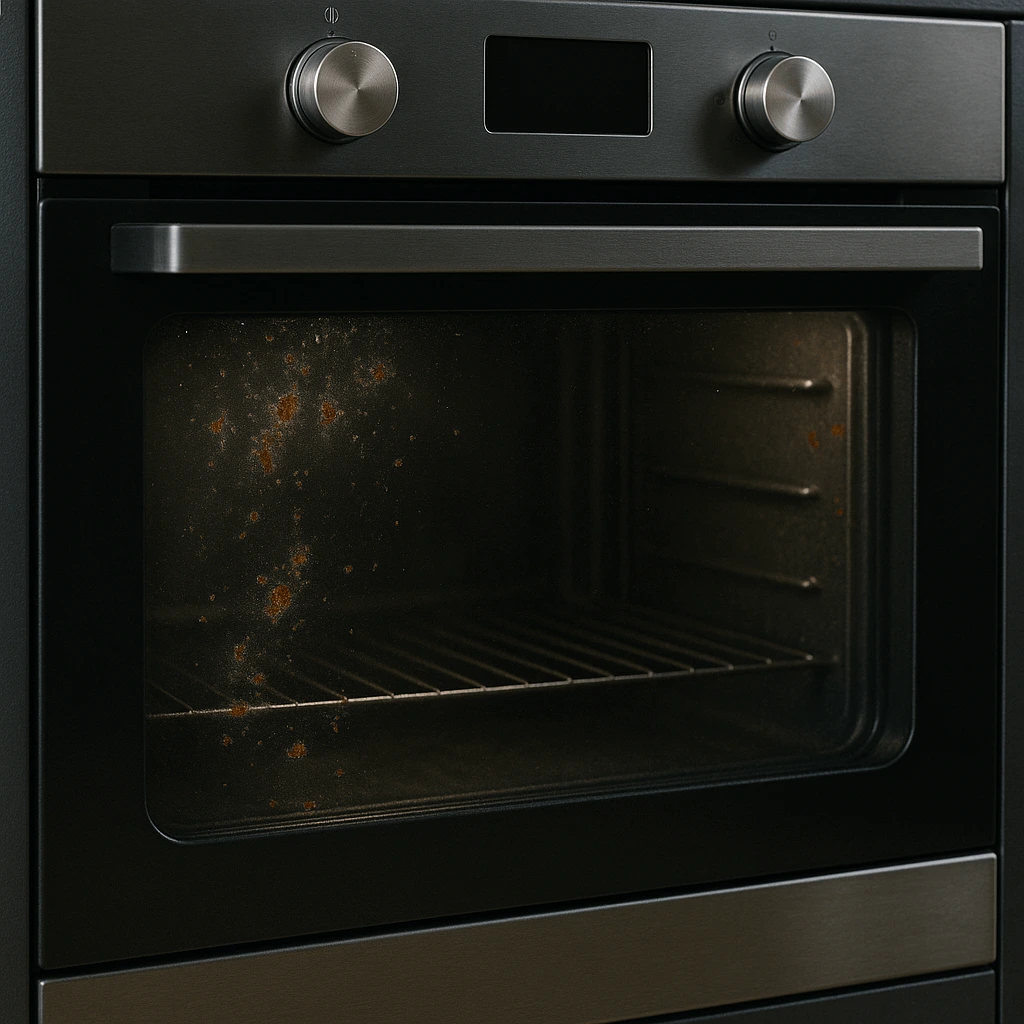
Last weekend, I was on one of those cleaning sprees. You know the kind – windows open, upbeat playlist on, and me feeling unstoppable with my rubber gloves and all-purpose spray. I’d wiped down the counters, scrubbed the fridge shelves, even organized the spice rack (finally!). But then I turned around and caught a glimpse of the oven. The light hit the glass door just right, and there they were: greasy little splatters baked into the corners of the window and smudged along the walls. Gross.
Of course, I had wiped the outside dozens of times. But the inside? That was another story. I texted a photo to my sister and got back a simple: “Girl. That thing’s seen stuff.” Fair.
So, I decided to figure it out – for real this time. If your oven window or walls are looking a little too ‘seasoned,’ let’s explore what causes these crusty stains and, more importantly, how you can safely get rid of them without scratching up the inside.
What Are Those Greasy Oven Splatters, Anyway?
At first, I thought they were just food bits. But turns out, it’s usually a mix of oils and sugars from sauces, roasts, and drips that spatter during baking. When those splashes hit a hot surface (especially glass or steel), they basically bake themselves into place. Over time, they turn sticky, dark, and stubborn.
You might not notice them right away. They often blend into the glass or hide on the edges of the walls. But once you see them, you can’t unsee them – and no regular wipe-down will budge them.
1. Don’t Panic – Start Simple
Before you bring out the heavy-duty cleaners, try this: warm water, dish soap, and a soft sponge. I know it sounds too basic, but you’d be surprised how much a little soaking can do, especially on newer grease spots.
Dampen a cloth or sponge with warm, soapy water and press it gently on the stained areas for about 10–15 minutes. The warmth helps loosen the grease without harming the oven’s surface.
Wipe with a microfiber cloth. If nothing comes off? No worries, we’ve got more tricks coming.
2. Use the Baking Soda Paste Trick (It’s a Classic for a Reason)
Baking soda is one of those old-school fixes that still works. Here’s how I used it:
Mix:
- ½ cup baking soda
- A few tablespoons of water (just enough to make a spreadable paste)
Apply the paste to the greasy areas (especially corners or patches on the window) and let it sit for a few hours – or overnight if your oven’s in serious need of love.
The next day, I wiped it with a damp cloth, and a good chunk of that grime came off easily. For the tougher spots, I gently used a soft-bristle brush. It felt oddly satisfying.
3. Vinegar to the Rescue – But Be Gentle
Once you’ve scrubbed off the paste, you’ll likely still see some cloudy haze or streaks left behind. This is where vinegar comes in.
Spray a 1:1 mix of white vinegar and water onto the glass or walls, and wipe it with a lint-free cloth. Vinegar cuts through any leftover residue and helps bring back the shine.
Just don’t use vinegar on aluminum or delicate oven parts. If you’re not sure what material your oven walls are made of, double-check the manual – or skip the vinegar and stick to baking soda.
4. Avoid These Tools (They Seem Helpful, But They’ll Scratch Your Oven)
Tempted to grab that metal scraper or scouring pad? I get it. I’ve stood there holding a metal spatula thinking, “Just a little nudge…”
But modern ovens – especially ones with stainless steel or glass interiors – scratch easily. And once the surface is damaged, it’s way harder to clean next time.
So here’s what to avoid:
- Steel wool
- Metal scrapers
- Harsh chemical oven sprays (unless the manual says it’s safe)
- melamine foam sponge (use very light pressure; test a corner first)
Stick with microfiber cloths, plastic scrapers, or soft sponges instead.
5. Try the “Steam Bath” Method for Stubborn Grime
This trick is perfect if your oven hasn’t been cleaned in a while and has layers of baked-on mess.
Do this:
- Preheat your oven to 200°F (just enough to warm it up).
- Place a heat-safe dish filled with water and a few tablespoons of lemon juice or vinegar inside.
- Let it sit for 20–30 minutes, then turn the oven off and leave the door closed for another 15 minutes.
- Open carefully (it’s steamy!) and wipe down the walls and window.
The steam loosens up gunk and makes everything easier to wipe. It also smells way fresher.
6. What If You Have a Self-Cleaning Oven?
If your oven has a self-clean mode, that can help – but it’s not a cure-all.
Self-cleaning cycles use super high heat to burn off food particles. But baked-on grease splatters? They don’t always fully disappear. Plus, the cycle takes hours and can make your kitchen smell… let’s say “bold.”
Here’s my tip: Use the self-cleaning cycle as a deep reset, then follow up with baking soda paste and vinegar spray to spot clean anything left behind.
Just never apply baking soda before starting a self-clean mode. That combo doesn’t mix well.
7. How to Keep It From Getting Gross Again
Now that your oven’s clean (or at least cleaner), let’s talk maintenance.
You don’t need to deep clean every week. Just:
- Wipe the glass after big cooking sessions
- Suggest a rimmed baking sheet or a manufacturer-approved oven liner placed on a lower rack, and never cover vents or the oven floor.
- Use lids or oven-safe covers when roasting messy dishes
- Do a quick steam bath once a month
It’s like brushing your teeth – you don’t wait until it’s unbearable. Just a few minutes now saves you hours later.
Final Thoughts: A Little Effort, A Lot of Satisfaction
Honestly, I used to ignore those greasy oven splatters. It felt like too much work for something “out of sight.” But now that it’s clean, I notice the difference every time I bake something. It’s like getting new glasses – you didn’t realize how blurry things were until they’re suddenly clear.
So if you’re standing in front of a grimy oven door wondering where to even start, just pick one method and go from there. You’ve got this.
And hey, if nothing else, it’s a great excuse to bake cookies afterward. Your clean oven deserves a warm welcome back.