
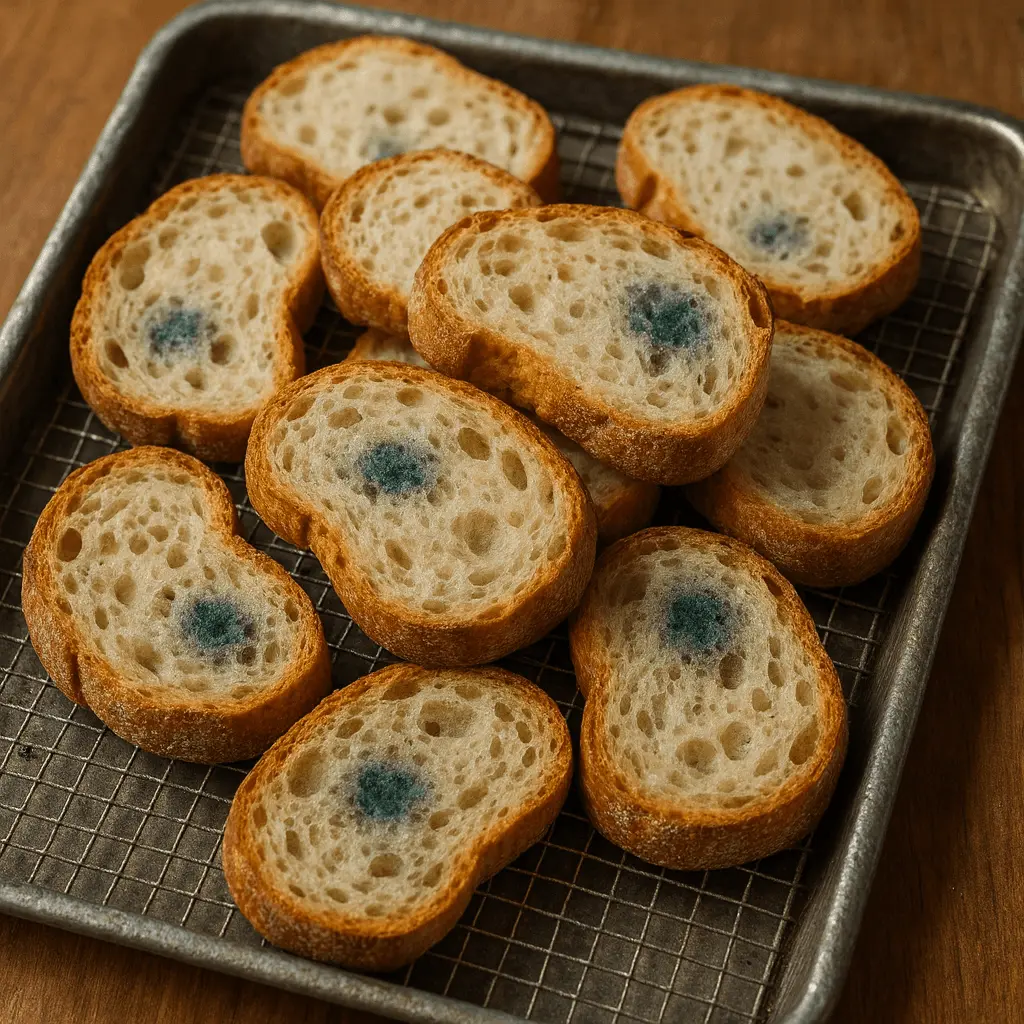
I was getting ready to make some toast the other morning when I grabbed a tray of sliced bread from the pantry. It looked fine at first, but then I noticed faint blue-green spots on a few pieces. Mold. My stomach turned a little. I texted a photo to a family group chat. My cousin replied, “Just cut around it and toast the clean parts.” But my gut said otherwise.
So I started reading, asking around, and digging into what mold on bread really means. If you’ve ever stood in your kitchen, holding a slice and wondering, “Is this okay to eat?” – you’re not alone.
Let’s explore what moldy bread actually means, what you can do about it, and how to avoid ending up in the same spot again.
1. So… Can You Just Cut Off the Mold?
It’s tempting, right? Just slice off the moldy corner and use the rest. But with bread, it’s not that simple.
Mold grows in threads – kind of like roots – and while you may only see one fuzzy green dot on the surface, the roots could be stretching deeper into the bread where you can’t see them. Especially with something as soft and porous as sliced bread, those mold roots can spread quickly and quietly.
Experts generally say if you see mold on bread, the whole piece – or even the entire batch – should go. That’s not just being overly cautious. Some molds produce toxins that can be harmful, even if you can’t smell or taste them. So yeah, unfortunately, it’s not worth the risk.
If there’s mold on one slice in the bag, assume it’s party time for the rest, too. The best move? Toss it.
2. Is Moldy Bread Dangerous?
Not all mold is harmful, but the tricky part is… You don’t know which kind you’re dealing with.
Some molds can cause allergic reactions or respiratory problems, especially for people with sensitivities. Others might produce invisible toxins called mycotoxins – and while a few crumbs won’t make most people sick, it’s not something you want in your body regularly.
For healthy adults, eating a tiny bit of moldy bread might just result in a queasy stomach. But for young kids, older folks, or anyone with a weakened immune system, it’s better to play it safe.
So if you accidentally took a bite before noticing the mold? Don’t panic. Just stop eating and monitor how you feel. But if you see the mold before eating, no need to be a hero. Just throw it away.
3. What About Toasting It or Cooking with It?
This is a common idea – and I wondered the same thing. Can heat kill the mold?
Well, yes and no. High heat can destroy some mold spores, but it won’t necessarily get rid of the toxins the mold may have already produced. And unless you’re burning it to a crisp (not recommended), your toaster probably won’t get hot enough to make the bread safe again.
So, unfortunately, toasting moldy bread doesn’t magically make it clean or edible. Cooking with it in something like stuffing or breadcrumbs isn’t a safe workaround either.
If mold is present, it’s already too late to save it through cooking.
4. Can You Compost Moldy Bread?
Okay, so if you can’t eat it… can you compost it?
Yes – in many cases, moldy bread is totally fine for your compost pile. Mold is part of nature’s cleanup crew, after all. If you have a backyard compost bin, just toss the slices in and mix them with dry material like leaves or shredded paper.
If you use an indoor compost system or live somewhere with a city compost program, check the rules. Some places are stricter about what you can toss in.
Just don’t feed moldy bread to pets or backyard animals. What’s risky for you is often risky for them, too.
5. How to Keep Bread from Getting Moldy Next Time
After my moldy morning surprise, I started thinking about storage. Bread goes bad fast in warm, damp spaces. So here are a few friendly tips to help it last longer:
- Store in a cool, dry place. A bread box or a cupboard away from the stove works well.
- Use the freezer. If you don’t eat bread quickly, slice it and freeze it. Pull out what you need and toast straight from frozen.
- Don’t keep it in the fridge. It sounds logical, but cold temps actually make bread stale faster – and mold can still grow.
- Check the air. Humid kitchens are mold magnets. Using a fan or opening a window can help.
A little prep now can save you from another sad toss later.
6. Is It Ever Okay to Salvage Just Part of the Bread?
Here’s the honest answer: only if it’s a very firm bread, and you can clearly isolate the mold.
If it’s something like a hard-crusted artisan loaf and the mold is only on the surface of one spot, some folks do cut away at least an inch around the mold and use the rest. But even then, experts still urge caution. And with soft sliced bread like in my tray? It’s a no-go.
The mold’s just too sneaky.
7. What If It Looks Fine But Smells a Bit Off?
Trust your nose. If your bread smells sour, musty, or just “not right,” it may be in the early stages of mold – even if you don’t see it yet.
Toss it. Bread isn’t meant to smell weird, and your sandwich deserves better.
That said, don’t confuse the natural scent of certain hearty whole grains or sourdough breads with spoilage. Some strong-smelling breads are just… well, intense. But if there’s doubt, toss it out.
Wrapping It Up: Better Safe Than Sorry
In the end, it’s not just about food waste – it’s about health and peace of mind. If your bread has mold, it’s not worth the gamble. Toss it, compost it, and move on.
It’s okay to feel a little guilty about throwing food away. But you’re not being wasteful – you’re being careful. And hey, maybe this is your sign to freeze your bread next time or try smaller batches.
Let’s make the most of our food – safely and smartly.