
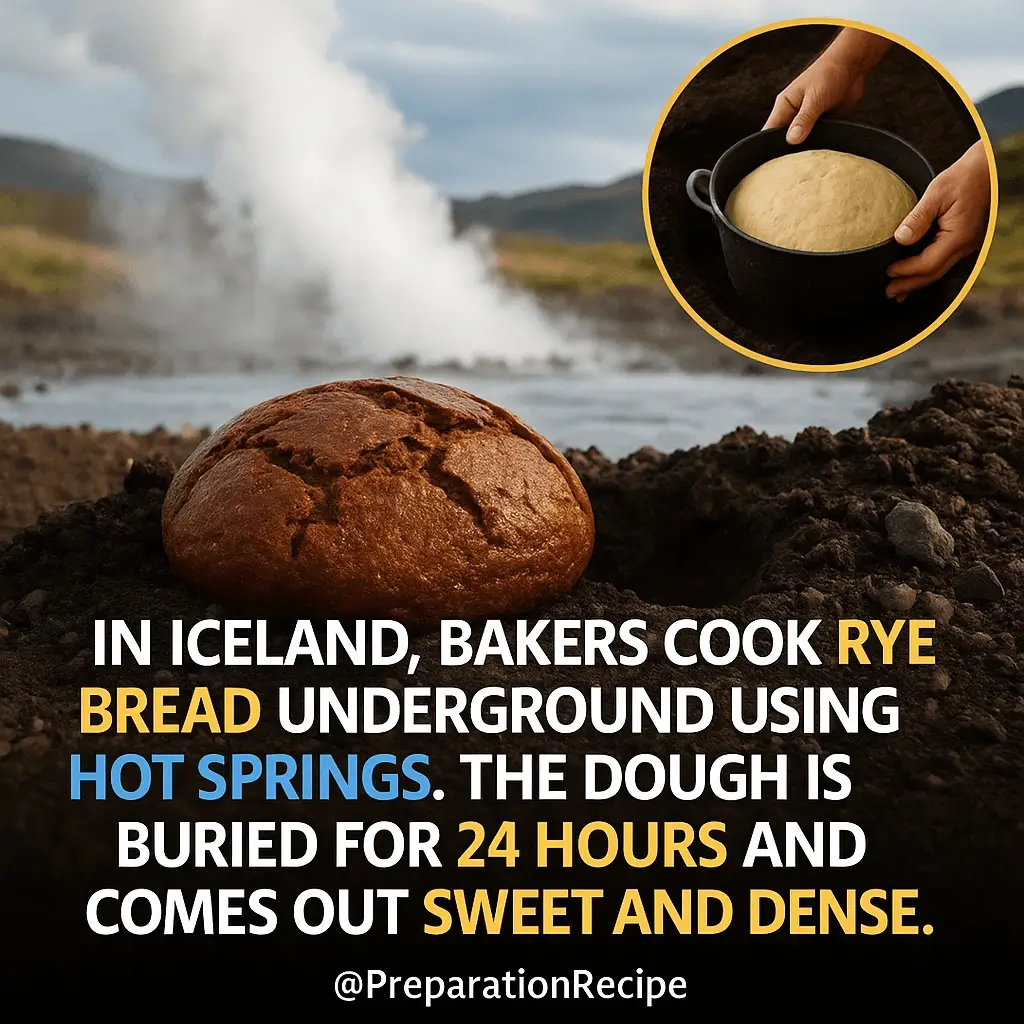
I was scrolling through food stories one evening when I stumbled on something wild – people in Iceland actually bake rye bread by burying it in the earth. Yes, literally underground. I couldn’t believe it at first. The bread cooks for 24 hours using nothing but the natural heat from geothermal hot springs. That’s when I remembered my brother once brought back a loaf from a trip to Iceland – dense, slightly sweet, and unlike anything I’d tasted. Now I finally get how it was made!
That little discovery sent me down a rabbit hole. So, let’s explore this earthy, steam-powered bread together – how it works, what it tastes like, and maybe even how you can give it a try at home (or at least dream about it!).
What is Icelandic Hot Spring Rye Bread?
Imagine waking up, walking outside with a pot of dough, digging a hole in the soil next to a steaming hot spring, and burying it. That’s the real process used to bake what locals call hverabrauð (which means “hot spring bread”).
The dough is made mostly from rye flour, a touch of wheat flour, brown sugar, baking powder, and buttermilk. After mixing it all together, it’s poured into a pot, sealed tightly, and buried underground for an entire day.
Because the temperature is low and steady (thanks to Iceland’s volcanic energy), it cooks slowly and evenly – a bit like a super slow-cooker but powered by the earth itself. No oven, no electricity, just steam and soil.
What Does It Taste Like?
If you’ve ever had Boston brown bread, it’s sort of similar – but with more character. Icelandic rye bread comes out of the earth:
- Dense but tender
- Slightly sweet (from the brown sugar and slow caramelization)
- Moist and a little sticky
- With a deep, almost smoky flavor – no smoke involved, just steam magic
Locals often enjoy it with butter or alongside fresh fish and boiled eggs. But honestly, it’s the kind of bread that tastes great all on its own.
How Do They Actually Cook It in the Ground?
Let’s break down the baking ritual:
- Dough is poured into a lidded pot (often metal or ceramic).
- The pot is wrapped in cloth or plastic to protect it.
- It’s buried near a geothermal hot spring, where the ground temperature is just right.
- A little wooden stick or sign marks the spot (you don’t want to lose your bread!).
- After 24 hours, it’s dug up and unwrapped – fully baked, warm, and ready to eat.
It’s not just baking – it’s a tradition. In places like Laugarvatn, a village famous for this method, bakers have passed the technique down for generations. It’s part of Iceland’s culture of sustainability and connection to the land.
Can You Try This at Home?
Well… unless you have a steaming hot spring in your backyard, probably not exactly like they do. But you can try making a close version in your kitchen with a low and slow oven bake, or even in a slow cooker. The results might not be identical, but they’ll still be hearty, rich, and full of rustic charm.
Here’s the basic idea to get you started:
- Use a mix of rye flour and wheat flour
- Add brown sugar, baking powder, and buttermilk
- Bake it in a tightly sealed loaf pan or pot
- Low heat, around 225°F (107°C), for 8–10 hours
That long baking time helps develop the dense, rich texture that makes this bread so comforting. And the smell? Incredible.
Why This Tradition Matters
There’s something heartwarming about this – bread that comes from the earth, made with patience, using nothing but natural heat. It reminds us:
- To slow down
- To use what’s already around us
- That food can be deeply tied to place and people
In a world of quick fixes and fast food, this Icelandic method is a quiet celebration of slowness, simplicity, and letting nature do the work.
Final Thought
We may not all have hot springs in our backyard, but we can bring a little of that spirit into our lives – the curiosity, the creativity, and the joy of letting something take its time. Whether you’re trying your hand at slow-baked rye or just reading this with a warm cup of tea, I hope this story inspires a little wonder.
Let’s keep exploring what food can be – and where it can take us.