
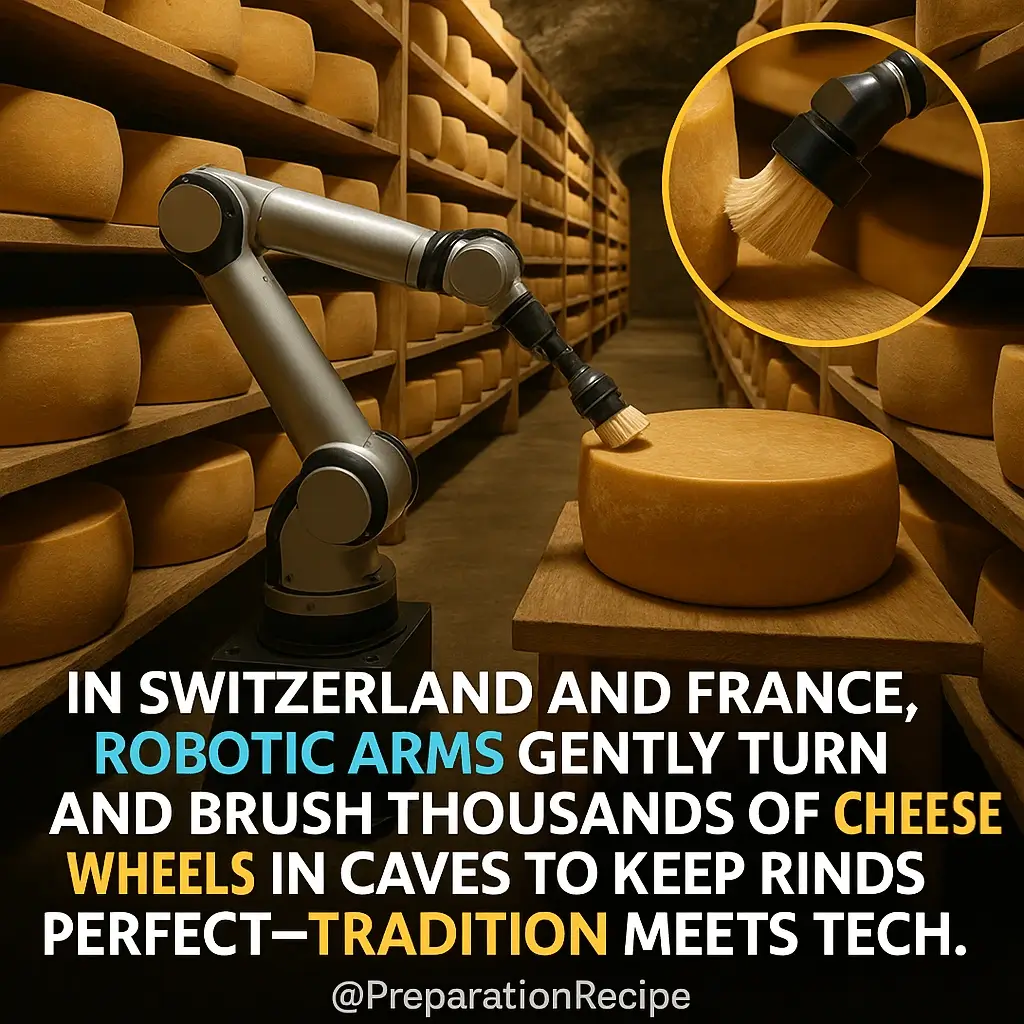
If you ever thought robots were just for cars and computers, imagine this: a cave full of cheese wheels… and robot arms brushing them like they’re being pampered at a spa.
The first time I heard about this, it was from my friend Sam, who came back from a trip to Switzerland raving about a cheese cave. Yes, a real cave. “You won’t believe it,” he said, “They had robots massaging cheese.” At first, I thought he was kidding – but it turns out, he wasn’t.
That got me curious, so I looked into it. And wow, this strange combo of old-school cheese and high-tech robots is more fascinating (and kind of heartwarming) than you might think. Let’s explore how this works, why it’s happening, and what it actually means for the cheese on your table.
Cave-Aged Cheese: More Than Just a Fancy Label
If you’ve ever picked up a wedge of cheese labeled “cave-aged”, you probably imagined some ancient stone room with spiderwebs and candlelight. The truth? You’re not far off – minus the spiders.
In places like Switzerland and France, wheels of cheese are still aged in cool, slightly damp caves. These caves naturally regulate temperature and humidity, giving cheese that smooth texture and complex, earthy flavor. It’s where some of the richest, creamiest cheeses in the world come to life.
But here’s the twist: those cheeses don’t just sit there. They need to be turned and brushed regularly so they age evenly and don’t grow the wrong kinds of mold. And that’s where the robots roll in.
Meet the Cheese-Brushing Bots
So, how exactly does a robot brush cheese? Picture a long row of golden cheese wheels, stacked on wooden shelves. A robotic arm moves slowly down the line, gently turning each wheel and brushing its surface with soft bristles.
The brushing isn’t just for looks – it helps keep the rind (the outer layer of the cheese) healthy and dry. Some wheels even get a light saltwater solution called brine, applied with robotic precision to keep bad bacteria away while letting the good stuff thrive.
Before robots came into the picture, this job was done by hand. And honestly, it’s still done that way in smaller creameries. But when you’re aging thousands of wheels at once, automation becomes a lifesaver – for the workers and the cheese.
Why Use Robots? It’s About Respecting the Cheese (and the People)
It might seem odd to mix high-tech robotics with a food so steeped in tradition, but there’s actually a lot of thought behind it.
For one, turning and brushing cheese is heavy, repetitive work. Some wheels can weigh up to 80 pounds. Doing that day after day can wear a person out – especially in cold, damp caves. So the robots are there to help, not replace. They take over the repetitive parts, while humans still monitor quality, taste, and the aging process.
In a way, it’s a beautiful mix: the science of machinery paired with the art of cheese making. And because robots can brush each wheel the exact same way, the results are incredibly consistent. That means the cheese you buy is just as delicious as the one before it.
What This Means for You (and Your Cheese Board)
Here’s the fun part – this actually matters to you, the cheese lover. Thanks to this combo of cave-aging and robotics, you can now get high-quality, evenly-aged cheese more easily and more affordably.
So next time you’re shopping for cheese, keep an eye out for labels like “cave-aged,” “affiné en cave,” or even “aged in natural cellars.” If it comes from a region known for using this technology – like the Jura region in France or certain parts of Switzerland – you might be enjoying the results of one very hardworking robot arm.
That cheese is likely to have a more complex flavor, with nutty, earthy, or even slightly smoky notes depending on how it was aged. It’ll also be beautifully textured – with a rind that’s not too tough, not too soft.
And honestly, there’s something kind of special about knowing that your snack was part of this quiet, cave-like world where tradition and tech come together.
Final Thoughts
So yes – robots really are brushing cheese in caves, and weirdly, it’s kind of heartwarming. It’s not about replacing people. It’s about making room for better care, more consistency, and a future where even ancient traditions can evolve.
Whether you’re making grilled cheese, building a beautiful charcuterie board, or just sneaking a slice from the fridge at midnight, that wheel of cave-aged cheese now comes with a bit of extra wonder.
Let’s raise a cracker (with cheese on top, of course) to the quiet little robots making it all possible.
– And next time you’re at the store? Give cave-aged a try. You might just taste the difference.