
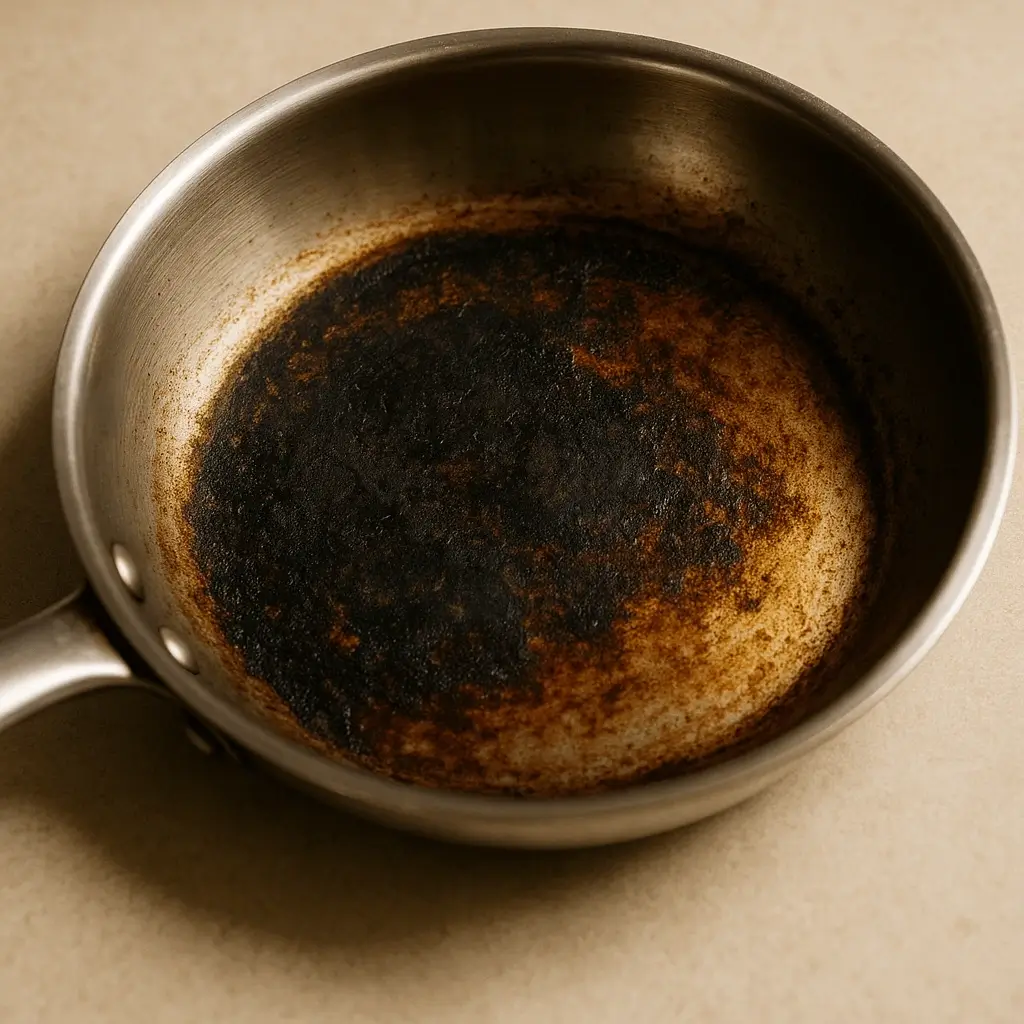
Last night, I burned dinner. Not just the food – the entire bottom of my stainless steel pan turned pitch black. I scrubbed. I soaked. I even tried the old vinegar-and-baking-soda trick my cousin swears by. Nothing. The pan looked like it had been through a wildfire and lost.
I texted a photo to my sister, who said, “Yikes… toss it?” But it’s a good pan. It was a gift from my mom, and I really didn’t want to give up on it. So I did what we all do – I spiraled through every kitchen forum and blog until I figured out what actually works.
Let’s explore what causes those gnarly burn marks, what you can try to clean them off, and whether your pan is truly ruined (spoiler: probably not).
Why Stainless Steel Pans Burn So Easily
You might think stainless steel is invincible. After all, it’s shiny, heavy-duty, and sounds kind of fancy. But it’s also a little fussy.
When food or oil gets too hot, especially if the pan is dry, it can stick and burn quickly. This isn’t a flaw in the pan. It’s just how steel behaves without a non-stick coating. High heat and sugary sauces (like marinades or glazes) are usually the main culprits. Once burned, that residue clings to the metal like it’s glued on.
So if your pan is scorched, don’t feel bad. It happens to the best of us – even the ones who swear they’re careful cooks.
1. Start with Soaking and Scraping (No Shame in the Basics)
First, don’t underestimate a good soak.
Fill your pan with hot water and a few drops of dish soap. Let it sit for at least an hour, or even overnight. The warm water helps loosen some of the stuck-on bits. Once it’s had a good soak, grab a wooden or silicone spatula (not metal – you don’t want to scratch it) and gently scrape what you can.
You might not see a huge difference yet, but this step makes all the others way easier.
2. Bring on the Baking Soda Paste
This one’s simple and usually pretty satisfying.
Make a thick paste using baking soda and a little water. It should feel like wet sand. Smear it all over the burned area and let it sit for 15–20 minutes.
Then use a non-abrasive sponge or scrubber to rub it in circles. The baking soda works like a gentle scrub without damaging the metal. You’ll probably see brown or black residue lifting off slowly. It might take a few rounds, so be patient.
And yes, it might get messy – but in that oddly satisfying way.
3. Boil It Clean (Surprisingly Effective)
Still stuck? Time to turn up the heat, literally.
Fill the pan with just enough water to cover the burned part. Add a few tablespoons of white vinegar. Bring it to a boil and let it simmer for about 5 minutes. You’ll probably see little flecks of food or brown film start to float up.
Turn off the heat, let it cool a bit, then sprinkle baking soda into the warm vinegar water. It’ll fizz like a mini volcano. That’s a good sign.
Once it settles, pour it out and go in with your sponge again. You’ll likely find the stuck-on bits much easier to remove now.
4. For the Stubborn Stuff: Bar Keepers Friend or Bon Ami
If you’ve tried all the home methods and the pan still looks like it’s been charred in battle, you can bring in the reinforcements.
Look for a non-abrasive powdered cleanser made for stainless steel. These products are designed to lift stains and scorch marks without scratching the surface or dulling the finish.
Just follow the instructions on the package: usually, you sprinkle a little on, add a bit of water to make a paste, and scrub gently with a soft sponge. It’s oddly satisfying watching the pan slowly come back to silver.
5. Prevention Tips So It Doesn’t Happen Again
Okay, so you rescued your pan. Let’s keep it that way.
- Always preheat with oil or butter – Never heat a dry stainless steel pan. The fat helps form a temporary nonstick layer.
- Cook on medium or low heat – High heat isn’t always better. In fact, it’s the quickest path to burn marks.
- Don’t walk away – We’ve all done it, but stainless steel doesn’t forgive distractions.
- Deglaze right after cooking – Adding a splash of water, broth, or even tomato sauce while the pan is still warm helps lift browned bits before they become a problem.
A little attention now means fewer scrubbing sessions later.
When to Say Goodbye (But Only If You Must)
Stainless steel pans are surprisingly tough. Burn marks are mostly cosmetic. If the bottom is still flat, the handle secure, and there’s no warping or flaking, it’s safe to use – even if it’s a little ugly.
But if it starts to show signs of damage beyond the surface (like the layers separating or a rattling handle), it might be time to retire it.
Just know that a stained pan doesn’t mean a bad pan. Some cooks even see those marks as signs of a pan well-used and well-loved.
You’re Not Alone in This
So, is your pan ruined? Most likely, no.
With a little elbow grease (and maybe a bit of baking soda magic), you can bring it back to life. And even if it never looks brand-new again, it can still cook up a delicious dinner.
Messy pans happen. Burn marks happen. What matters is you’re figuring it out – and that makes you a better cook than you were yesterday.
So grab your sponge, turn on some music, and give that pan a second chance. You’ve got this.