
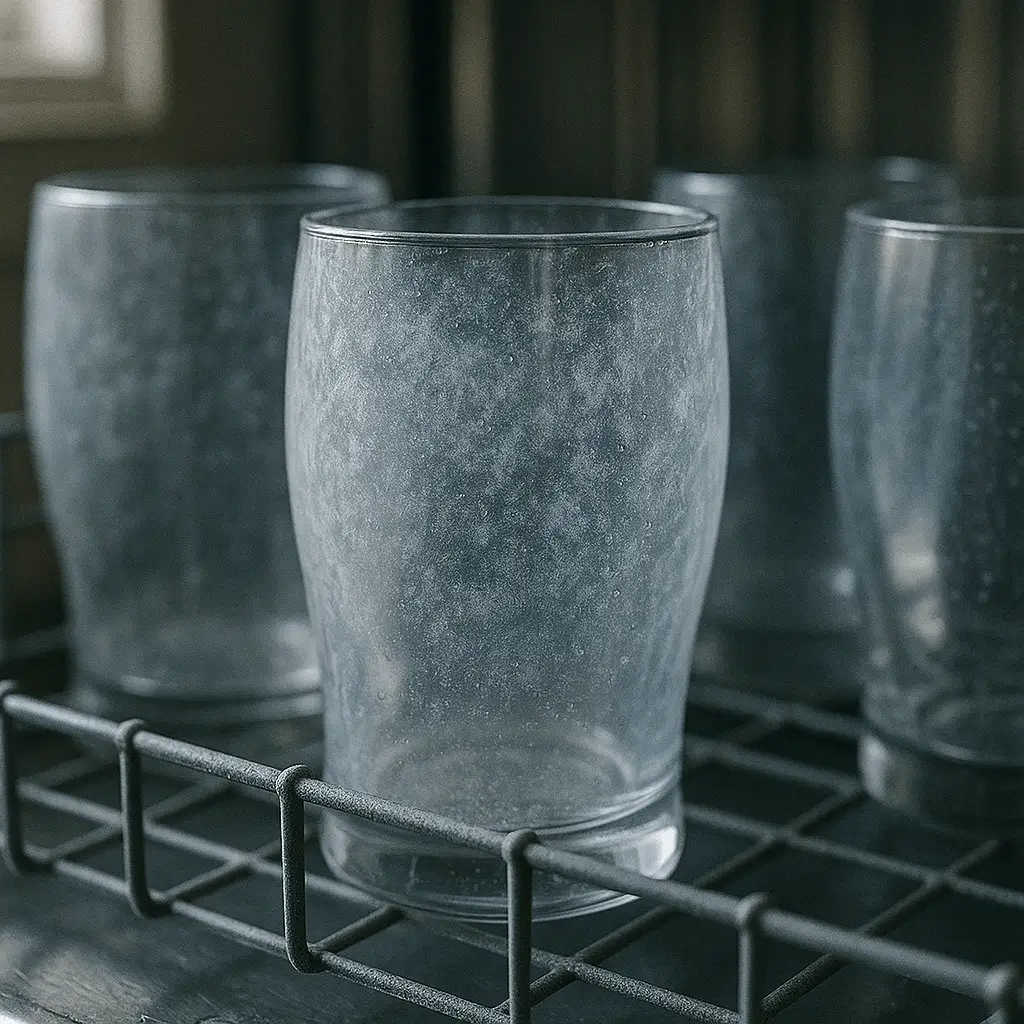
Last night, I ran a full dishwasher load after dinner and went to bed thinking I’d wake up to sparkling clean glasses. Instead, I opened the door this morning to find all the drinking glasses covered in a weird, cloudy film. Not exactly the fresh, clean vibe I was hoping for.
My cousin stopped by later, spotted one of the glasses on the counter, and said, “Oh, our dishwasher used to do that, too. We just got used to it.” Used to it? That can’t be the only option, right?
If you’ve pulled cloudy glasses out of the dishwasher and thought, “These don’t look clean,” you’re not alone. Let’s explore what causes this and what you can actually do to fix it – and maybe even prevent it from happening again.
First, What’s Causing the Cloudiness?
When glasses come out looking milky or foggy, it’s usually one of two things: hard water or etching.
If you live in an area with hard water (hello, minerals like calcium and magnesium), your dishwasher may be spreading those tiny deposits all over your glassware. It’s generally harmless, mainly annoying residue – and definitely not the clear shine you’re going for.
On the other hand, etching is a different story. That’s more of a permanent scratch in the glass caused by using too much detergent or high temperatures over time. If it’s etching, the damage is baked in. But don’t worry – we’ll walk through how to tell the difference and what you can try.
Try This Simple Test First
Here’s something you can do right now: take one of the cloudy glasses and rub a spot with plain white vinegar using a paper towel or soft cloth. If the film comes off, good news – it’s mineral build-up, and we can fix that.
If the cloudiness stays, no matter how hard you wipe, you may be dealing with etching. And while etched glass can’t be fully reversed, you can stop it from getting worse.
Solution #1: Use Vinegar for a Quick Rescue
Vinegar’s your best friend when it comes to hard water residue.
Here’s how you can do it:
- Fill a bowl with white vinegar.
- Place your cloudy glasses in the bowl (or pour the vinegar into each one).
- Let them soak for 5–10 minutes.
- Rinse well and dry with a soft cloth.
You’ll be amazed at how much clearer they look already. If they’re still a bit filmy, go one more round.
And if you’re not into hand-soaking each time, you can also place a dishwasher-safe cup of vinegar on the top rack during your next cycle. Don’t add detergent, just the vinegar. It can help loosen up those leftover minerals inside the machine too.
Solution #2: Try a Rinse Aid (They Actually Work)
I used to think rinse aids were just marketing fluff, but turns out – they do help, especially if you have hard water.
Rinse aids reduce water spots and help things dry faster. You can find them near dishwasher detergents in most stores. Some dishwashers even have a compartment for it (I didn’t know mine did until I checked).
If yours doesn’t, just splash a little white vinegar into the bottom of the machine before you run it. It’s not fancy, but it works in a pinch.
Solution #3: Use Less Detergent (Seriously)
Here’s a funny thing: more soap doesn’t mean more clean. In fact, using too much detergent can leave behind residue and might even cause etching over time.
Try cutting your detergent in half for your next load. See how it goes. You may not need as much as you think – especially if your dishwasher is newer or if you pre-rinse your dishes.
Tip: powder and pods often give you more control than liquids, which can get a bit… splashy.
Solution #4: Check Your Water Temperature
Dishwashers like hot water, usually around 120°F (49°C). But if your water heater is set much higher, it could be part of the etching issue.
Too hot, and it can wear down the surface of your glassware over time. Not hot enough, and you’ll end up with poor cleaning and cloudy residue. Just right, and your glasses stay safe and clean.
If you’re not sure what your water temp is, you can test it by running the hot tap and using a kitchen thermometer. Or just ask someone handy in your house to check the water heater settings.
Solution #5: Clean the Dishwasher (It’s Not Just the Glasses)
Sometimes it’s not your glasses, it’s your machine.
Food particles, soap scum, and hard water build-up can clog the spray arms and filters. That stuff gets recycled during the wash and ends up… yep, on your glasses.
Give your dishwasher a good clean:
- Check and clean the filter at the bottom.
- Wipe around the door seal.
- Run an empty hot cycle with a bowl of white vinegar on the top rack.
Do this once a month and your glasses (and your nose) will thank you.
What If It’s Etching After All?
If you’ve tried all the steps and your glasses still look cloudy, it might be etching, and unfortunately, that’s permanent.
But here’s the good news: you can stop it from spreading to your other glassware by:
- Using less detergent
- Skipping the heated dry setting
- Hand-washing more delicate glasses
- Rotating your everyday glasses so the same ones don’t get hit with the most wear
And next time you’re buying new glassware, look for dishwasher-safe or tempered options – they hold up better in the long run.
In the End, Clear Glasses Are Possible
That cloudy film might feel frustrating, but you’re not stuck with it. With a few small changes – like using vinegar, switching detergents, and giving your machine a quick refresh – you can get back to shiny glasses without replacing them all.
Let’s be real: nobody wants to drink lemonade out of a glass that looks like it came from a garage sale bin. But with a little care, your dishes can come out looking as fresh as they feel.
Next time you unload the dishwasher and see those streaks, you’ll know exactly what to do. And honestly? That feels kind of satisfying.