
I was in the kitchen last fall helping my friend prep for Thanksgiving when a cranberry slipped out of the bag and hit the floor. Instead of splatting, it bounced. We both stared at it and laughed. “Guess it passed the cranberry test!” she joked. That’s when I realized… I had no idea what she meant.
Later, curious (and slightly embarrassed I didn’t know), I looked into it. Turns out, there’s a whole history behind bouncing cranberries – and it’s more than just a fun fact. It tells us something cool about how we can spot fresh food, and it’s connected to a surprising bit of food science and tradition.
Let’s explore why that tiny bounce matters – and how you can use it to tell if your berries are the real deal.
What Makes a Cranberry Bounce?
Ever held a cranberry between your fingers and noticed how firm it feels? That’s no accident.
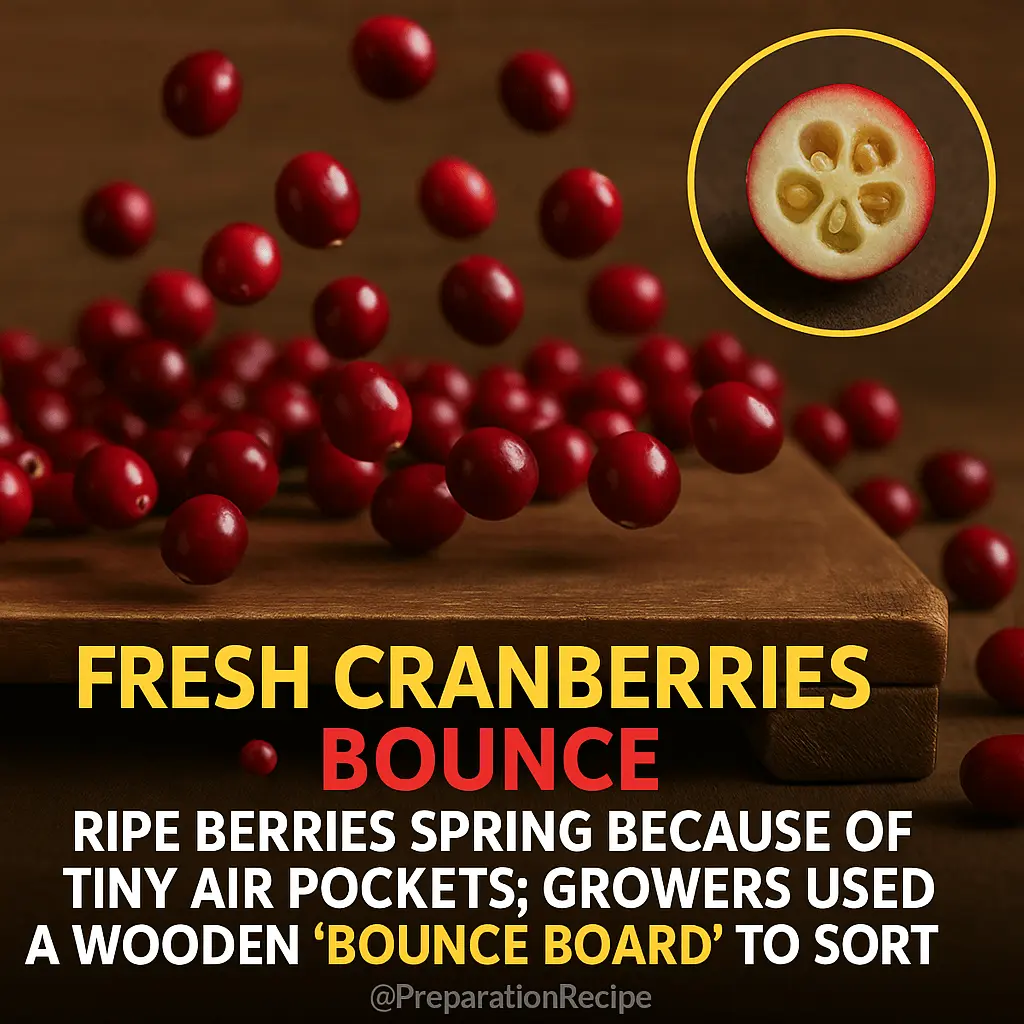
Cranberries have tiny air pockets inside them – kind of like little built-in cushions. When they’re ripe and fresh, those air pockets act like mini trampolines, giving the berry a bounce when it hits a hard surface. If a cranberry is too soft, overripe, or damaged, it’ll just land with a sad little thud.
The best part? This bounce isn’t just fun – it’s actually how cranberry farmers used to test them. Back in the day, growers built wooden chutes called “bounce boards.” Berries were rolled down, and only the springiest (and freshest) ones made the cut. The rest were sorted out for other uses.
So yes, your cranberry’s bounce can tell you a lot.
A Trick That’s Still Useful Today
Now, we may not have wooden berry-sorting contraptions in our kitchens, but the principle still holds.
Next time you’re prepping cranberries for a sauce or baking, you can give a few a gentle toss onto your counter. Do they bounce with a satisfying little hop? You’ve got some good ones. Do they just roll or land with no energy? You may want to pick through and remove any soft ones before cooking.
This little trick is great for:
- Homemade cranberry sauce
- Baking into muffins or breads
- Tossing into salads or stuffing
And let’s be honest – watching them bounce is kind of fun.
Why Air Pockets Matter for Flavor and Texture
Those airy chambers do more than just help berries bounce. They actually contribute to the cranberry’s signature pop when you bite into one.
Have you ever noticed that satisfying burst when a cranberry breaks open in your mouth or softens during cooking? That texture is part of what makes them unique among fruits. It also helps them absorb flavors when simmered in a sauce – soaking up cinnamon, citrus, or sugar beautifully.
So those little air pockets? They help turn tart berries into delicious side dishes.
A Nod to Tradition – and Ingenuity
What I love most about this “bounce test” is how it came from such a simple, hands-on solution. No tech, no gadgets – just a clever way farmers figured out how to spot the good stuff using gravity and observation.
It’s kind of beautiful, really. In a world where everything is scanned or labeled, this reminds us that sometimes, freshness is something you can see and feel.
Maybe even hear.
More Than Just a Holiday Fruit
Most of us only think about cranberries around November, but they deserve a little more attention year-round.
Cranberries are:
- Great in savory dishes – try them in grain bowls or roasted veggie medleys
- A surprise in smoothies – they add a sharp contrast to sweeter fruits
- Perfect for dried snacks – just check that ingredient list (some are sweetened a lot!)
And of course, if you’re grabbing fresh ones, give a few a little bounce on the counter first. You’ll feel like a cranberry whisperer.
What This Teaches Us About Food
Sometimes, food has a story – not just in how it tastes, but in how we know it’s good.
That bouncing cranberry on my floor? It reminded me that even small, humble fruits have history, science, and clever human solutions built into them. And it made me appreciate that we still get to use our senses to connect with what we eat.
So the next time you’re prepping a meal and one little red berry leaps across the kitchen, don’t be annoyed. Be curious. Smile. And maybe toss a few more.
They’ve got a story to tell – and they’re ready to bounce.