
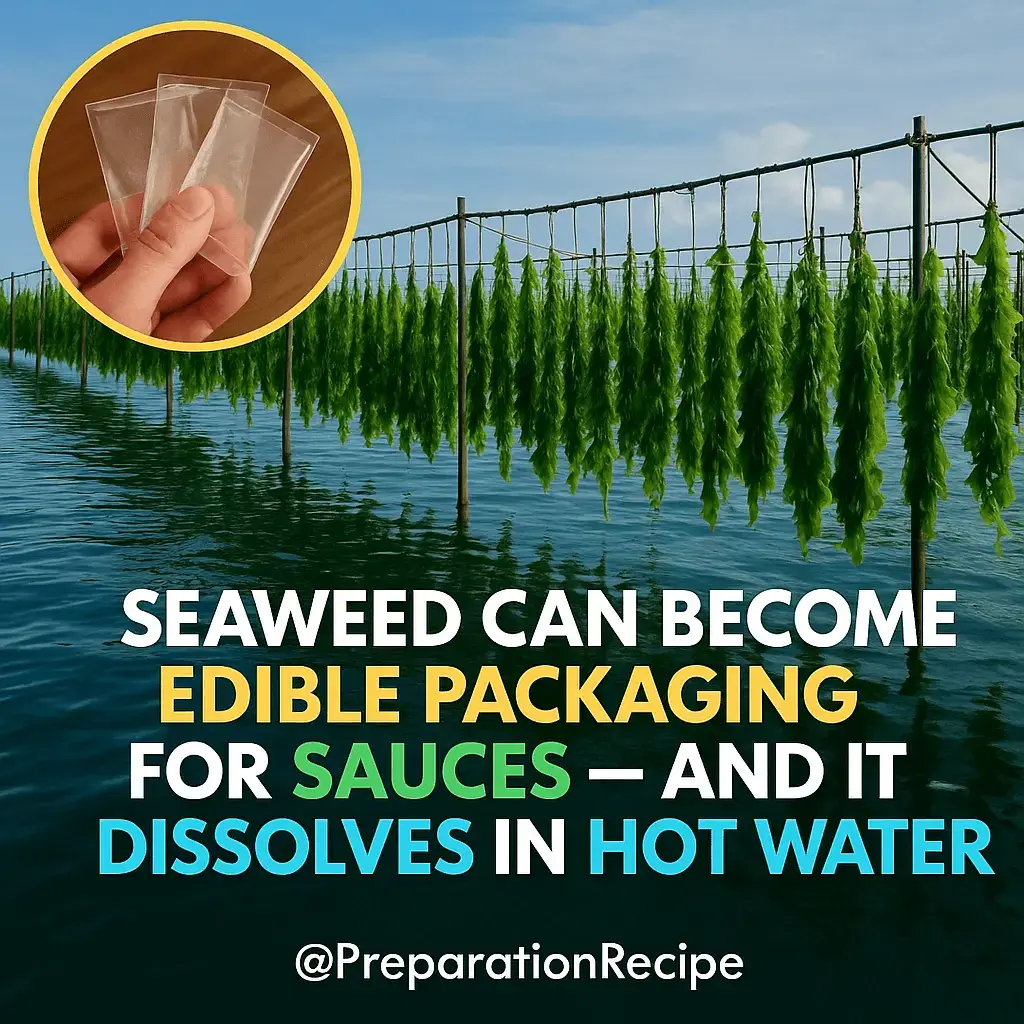
The idea of tossing the sauce packet into the pot felt a little weird at first. I mean, the packet itself? But a friend swore by it, so I gave it a shot – and to my surprise, it just melted away almost instantly. No waste, no mess, just flavor. And it got me thinking: why aren’t we doing this more often?
If you’ve ever felt guilty tossing away those little plastic sauce packets (I know I have), there’s something you’ll want to know. A new kind of edible packaging made from seaweed is quietly making its way into kitchens – and it might just be one of the most clever, earth-friendly food ideas out there.
So, let’s explore this curious little innovation, how it works, and why you might want to keep an eye out for it.
What Exactly Is Seaweed-Based Packaging?
Okay, so yes – it’s made from actual seaweed. But it doesn’t look like something you’d pull out of the ocean. It’s clear, smooth, and feels kind of like a thin sheet of gelatin. It’s totally edible and dissolves quickly when it touches hot water.
These seaweed wrappers are being used to hold things like soup bases, seasoning sauces, and broth cubes, replacing those small plastic or foil packs we usually toss. And because it’s plant-based, it breaks down naturally if you don’t eat it – no landfill needed.
Pretty smart, right?
Why Seaweed? It’s More Than Just a Sushi Wrapper
Seaweed has some amazing properties. First off, it’s abundant and grows fast – no need for fertilizer or fresh water. It even cleans the water around it as it grows, helping reduce carbon and nitrogen in the ocean.
But here’s where it gets cooler: seaweed contains natural gels and fibers that make it a great alternative to plastic. Once processed, it forms a film that holds liquids well, and best of all, it melts into your food like it was never there – leaving behind only flavor.
So, instead of unwrapping something, you’re just… using it.
How Do You Use It?
It’s honestly simple – and kind of fun. Let’s say you’re making a bowl of noodles. Instead of tearing open a little plastic sauce packet, you just drop the seaweed-wrapped sauce block into the pot. The hot water softens the wrapper, and within seconds, it’s gone.
The sauce mixes in, the wrapper dissolves, and you’re left with less cleanup – and zero waste.
I’ve used it in instant miso soup, ramen, and even broth cubes for cooking grains. You could also stir one into a cup of hot water for a quick soup on a cold day.
And the taste? No seaweed flavor unless the recipe calls for it. It’s just a clean delivery system.
What’s the Catch? Are There Any Downsides?
Like most things, it’s not perfect – yet. Right now, seaweed packaging is still pretty new, so it’s not as easy to find as your regular plastic-wrapped sauces.
You’ll most likely see it in eco-conscious brands, specialty food boxes, or innovative meal kits. And because the tech is still developing, the shelf life might be a bit shorter than plastic.
Also, since seaweed is water-soluble, you don’t want to get it wet before you’re ready to use it. Keep it in a dry spot and away from steam.
But those feel like small trade-offs for ditching single-use plastic, don’t they?
Why This Matters (More Than You Think)
Every time we toss out a tiny plastic wrapper, it adds to a massive problem. Those little bits can take hundreds of years to break down – and in the meantime, they pollute oceans and harm wildlife.
By switching to something as natural and harmless as seaweed, we’re not just reducing waste – we’re helping shift the way we think about packaging altogether.
Plus, it makes the act of cooking feel just a little more connected to nature. There’s something kind of poetic about your sauce wrapper melting into your meal.
Where Can You Find Seaweed Packaging?
You might need to hunt a little, but here are a few ideas to start:
- Eco-friendly meal kits – some brands are experimenting with zero-waste options.
- Asian grocery stores – look for specialty soup bases or sustainable cooking sections.
- Online food shops – search for seaweed-based packaging or edible wrappers.
- Local food innovators – some markets or start-ups might have small-batch products using this.
Keep an eye on labels or packaging styles that say “plant-based wrap” or “edible film.” If you’re not sure, just ask!
Small Change, Big Impact
Trying seaweed packaging was one of those little swaps that made me feel unexpectedly good. It’s a tiny thing, really. But it’s a reminder that small choices – like how we wrap our food – can open the door to smarter habits.
If you ever get the chance to use one of these clever seaweed packs, give it a try. You might be surprised at how satisfying it feels to not throw something away.