
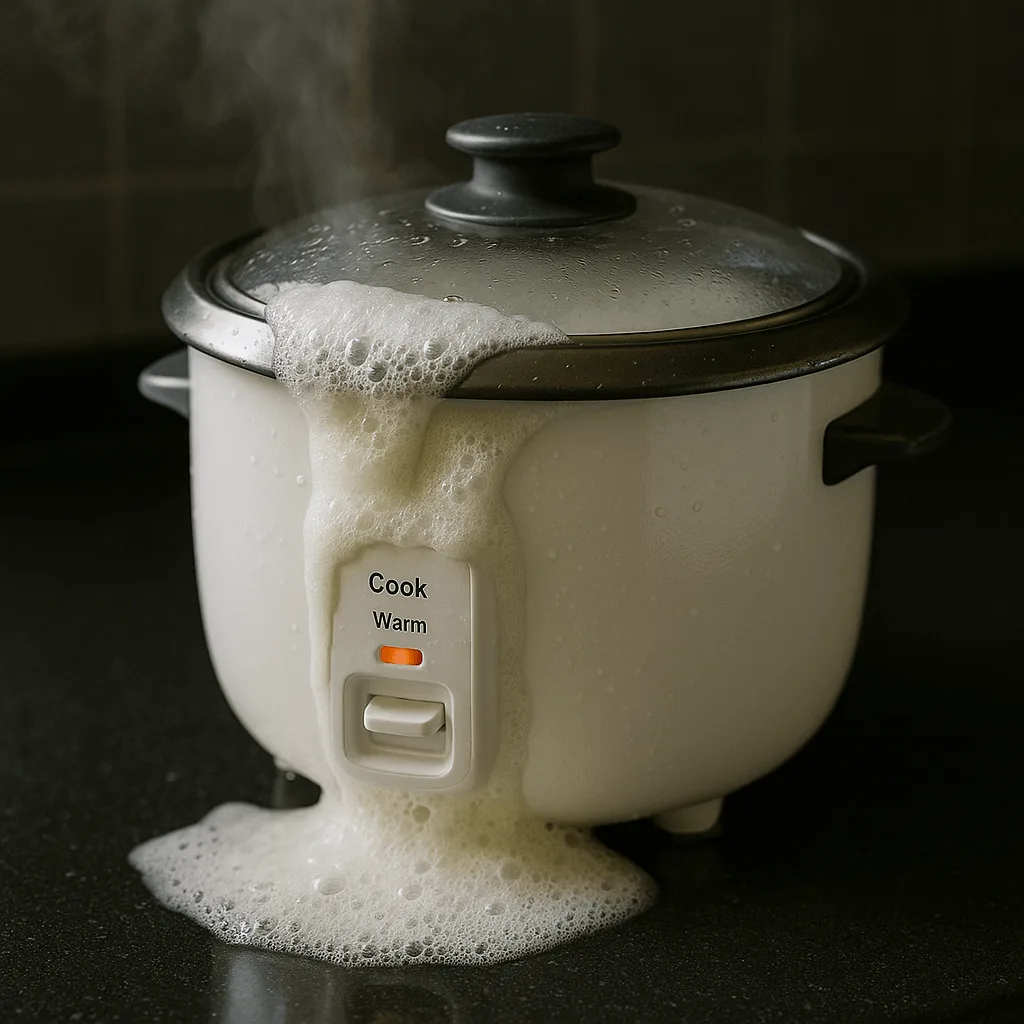
The other day, my kitchen looked like a soap bubble factory had exploded. All I did was cook rice, or so I thought. I had just stepped away for a minute, maybe two, and when I came back, there was foamy, starchy water bubbling out of the rice cooker like a mini volcano, dripping all over the counter and down the cabinets. Honestly, it felt like the rice cooker betrayed me.
My cousin, who swears by hers, told me, “That’s normal. Just wipe it up.” But it didn’t feel normal. And it definitely didn’t feel right to clean up all that mess every time I wanted some fluffy rice.
If you’ve ever had your rice cooker overflow or wondered how to stop it from happening, you’re not alone. Let’s explore what’s really going on – and what you can do to prevent it.
Why Does a Rice Cooker Boil Over?
Let’s start with the “why.” When rice boils, especially starchy varieties like jasmine or short grain, it releases a thick, foamy starch. That foam builds up fast in a closed space like a rice cooker. If there’s too much water or too much starch, it creates a bubbling mess that pushes the lid up and spills over.
Even if your rice is cooked just fine inside, the cooker’s lid and vent can’t always handle the pressure of that foam. The result? A sticky, starchy puddle and a messy countertop.
It’s not a defect in your appliance – it’s just a common kitchen hiccup.
1. Rinse Your Rice. Like, Really Rinse It.
This is the easiest and most effective thing you can do.
Rinse your rice in a bowl or under cool water until the water runs clear. Sometimes that takes two rinses. Sometimes it takes five. You’ll see the water go from milky to clean – that’s the starch washing away.
Starch is the main culprit in boil-overs. Less starch = less foam = less mess.
Even if you’re in a rush, just a quick rinse can help a lot.
2. Don’t Overfill the Cooker
We’ve all been there: trying to make just a little more rice for leftovers or meal prep. But rice expands when it cooks – sometimes more than double. If your cooker is too full, there’s not enough room for the water and steam to circulate, and that’s when the bubbling begins.
As a rule, fill your rice and water below the max line, especially if you’re cooking a high-starch variety.
Smaller batches cook cleaner, faster, and safer.
3. Use the Right Water-to-Rice Ratio
Too much water leads to extra foam, and that foam has to go somewhere. You want just enough to cook the rice, not drown it.
Most rice cookers recommend:
- 1 cup of rice to 1.25–1.5 cups of water for white rice
- Slightly more for brown or wild rice
But every rice is a little different, and so is every rice cooker. If you’re seeing overflow often, try reducing the water by just a little next time.
4. Add a Dab of Oil or Butter (Optional Trick)
This tip came from my grandma, who swore by it: adding a tiny bit of oil or butter to the water before cooking can cut down on foaming.
It doesn’t take much – just half a teaspoon per cup of rice. The fat helps break the surface tension of the starchy water, calming the foam before it reaches the lid.
Plus, it gives the rice a richer texture and flavor.
5. Clean the Lid and Steam Vent Often
Rice cookers have small steam vents that release pressure and moisture while cooking. But those vents can get clogged with old starch, especially if you’ve had a few boil-overs already.
If the vent is blocked, the pressure builds up, and that foam has nowhere to go but out.
Wipe down the lid and clean the vent after each use. Most lids either lift off or detach with a small clip. A damp cloth or old toothbrush works great for getting into the corners.
6. Try the Parchment Paper Hack
Here’s something I stumbled on in a cooking forum: place a small square of parchment paper under the lid (not over the vent!) before closing it.
It acts like a buffer for the foam. The paper soaks up some of the starch before it bubbles out, keeping the mess inside the cooker instead of on your counter.
Just make sure the parchment doesn’t block any parts of the heating mechanism or seal.
7. Choose the Right Type of Rice
Some rice types are just foamier than others. For example:
- Sushi rice and sticky rice are very high in starch.
- Basmati and jasmine are a little lighter.
- Brown rice has a bran layer that reduces foaming a bit.
If you’re making rice often and hate the cleanup, try experimenting with different varieties to see what works best in your cooker.
You might find a favorite that’s easier to handle.
8. Let It Sit Before Opening
Even if your rice looks done, resist the urge to open the lid right away.
Let the rice sit on “warm” for 5–10 minutes after the cooking cycle ends. This gives the foam a chance to settle and the steam to escape gently through the vent, not explosively through your countertop.
It also makes the rice fluffier – win-win.
What If It Already Boiled Over?
First, unplug the rice cooker and let it cool completely before cleaning. Wipe up the counter mess quickly so it doesn’t get sticky or crusty.
Then:
- Remove the inner pot and wash it with warm, soapy water.
- Clean the lid and vent gently.
- Check underneath the lid for hidden starch buildup.
- If foam got inside the base, tip it gently and wipe dry – but don’t submerge the cooker in water.
Most of the time, a quick rinse and wipe-down is all you need to get back on track.
Final Thoughts: Rice Cooker Mayhem Isn’t the End of the World
If your rice cooker boiled over, you’re not alone. It’s happened to more of us than we’d probably admit. But with a few small changes – rinsing the rice, adjusting the water, and giving your cooker a little TLC – you can make perfect rice without the mess.
Rice should be comforting, not chaotic. And now, we’ve got a few tricks up our sleeves to keep it that way.
So go ahead – make that fluffy bowl of rice, and enjoy the calm after the storm.