
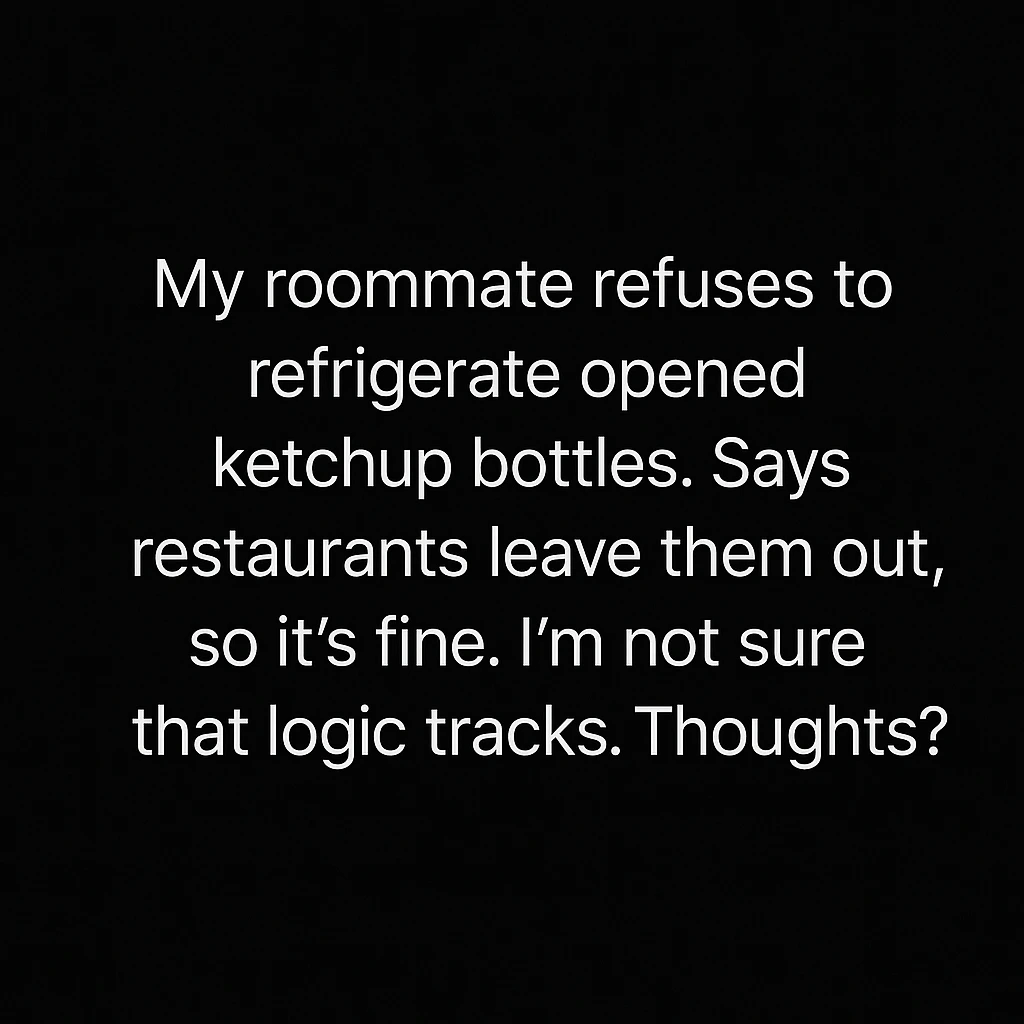
I never thought a condiment would cause drama in my kitchen – but here we are, side-eyeing a bottle of ketchup like it’s plotting something.
The other night, I noticed my roommate had left the open ketchup bottle sitting out on the counter again. When I asked about it, he just shrugged and said, “Restaurants don’t put theirs in the fridge, so it’s fine.” And honestly? That bugged me more than I expected. I mean… isn’t that stuff supposed to go in the fridge once it’s opened?
That little debate sent me down a rabbit hole. So let’s explore what’s really going on with ketchup, temperature, and food safety – and what you can do when fridge etiquette turns into a silent standoff.
Let’s Talk About What’s Actually in Ketchup
At its core, ketchup is a blend of tomatoes, vinegar, sugar, salt, and spices. That tangy, sweet, tomato-rich taste is what makes it perfect on fries, burgers, and sometimes even eggs (no judgment here).
Vinegar and sugar help act as natural preservatives, so ketchup is more stable than, say, creamy dressings or fresh salsa. That’s one reason some people feel okay leaving it out.
But once that bottle is opened, things get a little more… nuanced.
So Why Do Restaurants Leave Ketchup Out?
Here’s the thing – restaurants operate differently. They often go through entire bottles of ketchup in a day or two. Some places use special containers that get cleaned and refilled regularly. Others swap out bottles during shift changes.
That’s not exactly the same as your half-used bottle at home that sits on the table all week during breakfast, lunch, and midnight snacks.
At home, you’re probably not finishing a whole bottle that fast. And if the bottle stays open, exposed to light, heat, and air for long stretches of time? The flavor and texture can change – and not in a good way.
What the Experts Say (Don’t Worry, No Fancy Science)
Most ketchup bottles actually do say “Refrigerate after opening” on the label. That’s not just a casual suggestion – it’s there for a reason.
Room temperature speeds up oxidation, which can dull the color and make the ketchup taste less fresh. Even if it doesn’t “go bad” in a dangerous way right away, it just won’t taste the same after a while. And once it starts to smell weird or separate? It’s time to toss it.
Bottom line: refrigeration keeps that rich, tangy flavor right where you want it.
“But I’ve Always Left It Out!” (Okay, Let’s Talk About That)
If you’ve been leaving ketchup out and you’re still standing – no judgment. Lots of people grew up with ketchup on the counter or the table, and nothing terrible happened.
But that doesn’t mean it’s the best practice.
Think of it like this: putting it in the fridge just buys you more time. You won’t have to wonder if it still tastes good. You’ll cut down on waste. And hey, you won’t have to debate with your future self about whether it’s still okay to use.
It’s kind of like putting bread in a bread box vs. the fridge – both might work, but one gives you a little extra peace of mind.
A Chill Middle Ground (Literally)
If you and your roommate can’t agree, maybe it’s time for a ketchup compromise.
Here are a few easy ideas:
- Keep one bottle in the fridge for long-term use and flavor freshness.
- Use a small squeeze bottle on the table for quick meals – just refill it as needed and clean it regularly.
- Talk it out, not toss it out. Sometimes a calm convo beats a passive-aggressive sticky note.
Sharing a kitchen means finding little ways to make peace without giving up too much. And honestly, isn’t that what roommates are all about?
The Real Question: Does Cold Ketchup Taste Better?
Now this part’s personal.
Some people love the zing of cold ketchup on hot fries. Others say it dulls the flavor and prefer it at room temp.
There’s no right answer – just your taste. But keeping the bottle cold doesn’t mean you can’t leave a bit out for a few minutes if you prefer it that way. It’s all about flexibility.
So yes, your fries can be hot and happy.
What About Other Condiments?
While we’re here, ketchup isn’t the only one people debate about.
Here’s a quick, casual guide to a few popular ones:
- Mustard: Usually okay at room temp for a while, but refrigeration helps keep the zing.
- Mayonnaise: Definitely needs refrigeration once opened. No debate there.
- BBQ Sauce: Like ketchup, it can sit out short-term, but cooler is better for long-term flavor.
Basically, if you want your sauces to last and stay tasty, the fridge is your friend.
Final Thoughts: It’s Not Just About the Ketchup
This little bottle sparked a bigger thought for me – how tiny habits in shared spaces can turn into bigger conversations. It’s not really about ketchup, is it?
It’s about respecting each other’s preferences, knowing when to stand your ground, and when to say, “Hey, want to look this up together?”
So next time something small feels off – whether it’s about ketchup, leftovers, or who keeps using the good pan – maybe take a breath and chat about it. You might find out you’re not the only one wondering.
And hey, whether your ketchup lives in the fridge or out – at least now you’ve got the facts to back it up.