
I remember the first time I saw the price tag on a tiny jar of saffron at a grocery store – I actually laughed out loud. Twenty bucks for what looked like a pinch of red threads? No thanks.
But then my neighbor made a rice dish for a potluck – golden, fragrant, and unlike anything I’d tasted before. It had this deep, warm flavor with just a hint of something floral. I asked her what the key ingredient was, and she smiled and said, “It’s saffron.”
That moment sent me down a rabbit hole of research. And let me tell you – once you understand what goes into producing even a single gram of saffron, it all starts to make sense.
So let’s explore why saffron is so special, how it’s made, and how you can use it in your own kitchen without breaking the bank.
1. Saffron Starts as a Flower That Blooms for Just a Few Weeks
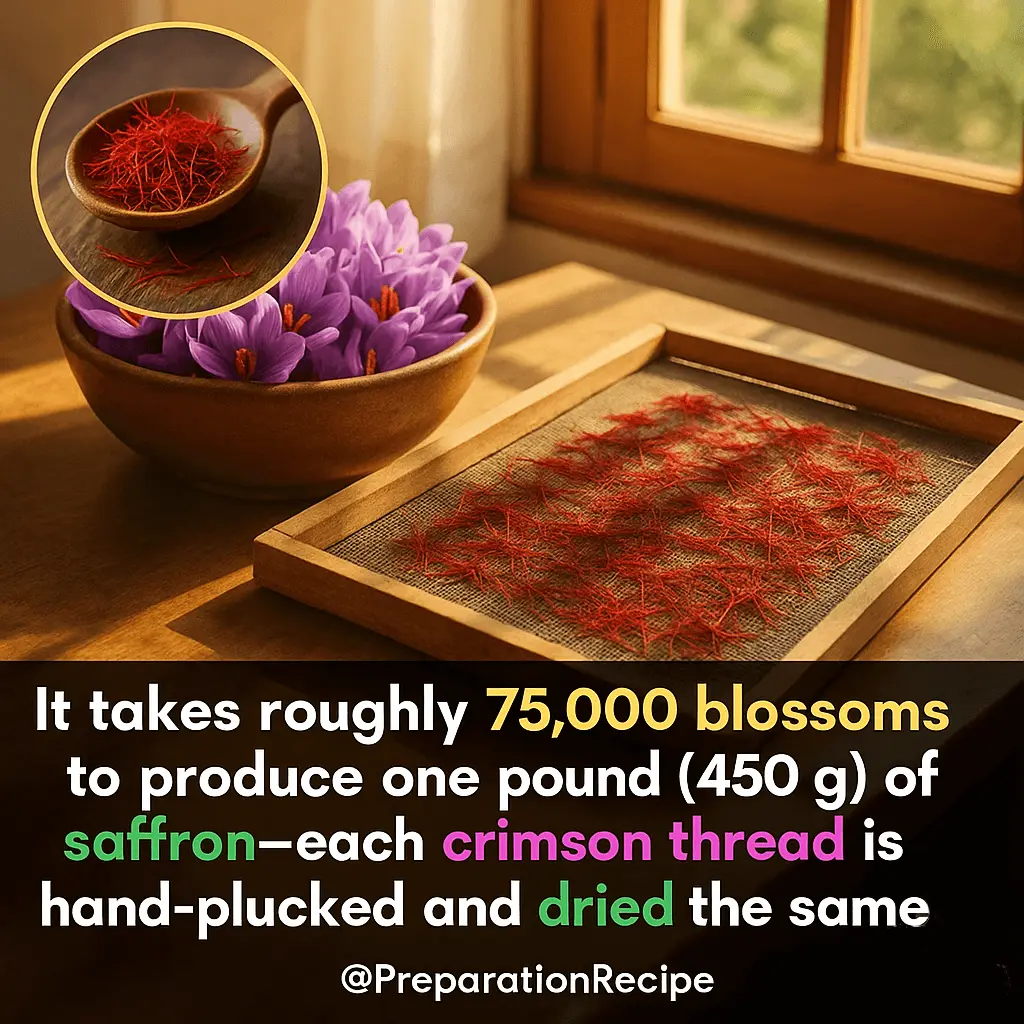
Saffron comes from the flower Crocus sativus, which only blooms for a short time each fall. Each blossom produces just three tiny red threads, called stigmas – that’s the part we use as saffron.
But here’s the tricky part: these flowers don’t grow on their own in the wild – they need careful planting, weeding, and attention. They don’t like too much moisture, they need sunshine, and they’re really sensitive to their environment.
Imagine having to babysit a whole field of these delicate little flowers – that’s already a huge job.
2. Everything Is Done by Hand – Yes, Everything
This is where it gets wild: harvesting saffron can’t be done with machines. Workers pick each flower by hand, right at dawn before the petals open up fully. Then they carefully pluck out the three red threads from each flower – also by hand – and lay them out to dry.
To make just one ounce of saffron, workers have to pluck around 14,000–16,000 of those tiny threads. That’s about 4,500–5,000 flowers – all picked, trimmed, and dried one by one.
No wonder it’s expensive, right?
3. Drying Saffron Is Like Roasting Coffee – It Takes Skill
Once the threads are collected, they’re gently dried to bring out their full flavor and aroma. This step is super important – too much heat and you lose the delicate notes; not enough and the saffron won’t last.
The goal is to lock in that unmistakable earthy, floral, and slightly honey-like scent saffron is famous for. It’s a bit like roasting coffee beans – part science, part art.
That careful drying process also helps saffron last longer in your pantry (a little goes a long way!).
4. Saffron Has Been Treasured for Thousands of Years
Saffron isn’t new. It’s been prized for centuries – from royal kitchens in Persia to ancient trade routes stretching across Europe and Asia.
Back then, it wasn’t just used in food. People used it to dye fabric, scent bathwater, and even as part of celebrations. That rich red color? It was considered a luxury, and still kind of is.
So when you use saffron today, you’re sprinkling a little history into your meal. Kind of amazing when you think about it.
5. Yes, It’s Expensive – But You Don’t Need Much
Here’s the good news: even a small pinch of saffron goes a long way.
You only need a few threads to flavor a whole pot of rice, soup, or even a dessert. Steeping it in warm water, milk, or broth for 10–15 minutes before adding it to your dish helps bring out the flavor even more.
So that tiny jar? It might actually last you a good while – especially if you store it somewhere cool and dark, away from light and moisture.
6. How to Use Saffron Without Feeling Intimidated
If you’re curious to try saffron but don’t know where to start, here are some friendly ideas:
- Golden rice: Add a few threads to hot broth before stirring it into cooked rice. It turns beautifully yellow and tastes warm and fragrant.
- Saffron milk: Steep a couple of threads in warm milk with a little honey – a cozy bedtime drink.
- Saffron bread or buns: Add saffron water to sweet bread dough for a gorgeous golden color and gentle floral note.
- Saffron soup: Just a few threads in a veggie broth can transform the whole pot.
Don’t stress about perfection – the fun is in exploring.
7. How to Know You’re Getting Real Saffron
Since saffron is so valuable, some sellers mix it with cheaper stuff or dye it to fake the look.
Here’s how you can spot the real deal:
- The threads should be deep red or reddish-orange, never bright red or yellow.
- It should smell slightly sweet and earthy, not musty or sour.
- When you soak it in warm water, it should turn golden yellow, not bright red.
Buying from a trusted source, especially if it’s labeled as pure saffron, is worth the peace of mind.
Saffron Isn’t Just a Spice – It’s a Story
When you cook with saffron, you’re not just adding flavor – you’re adding care, patience, and a touch of something ancient. It connects you to a long line of cooks and cultures that have treasured it for thousands of years.
So next time you see that little jar on the shelf, don’t just look at the price. Think about the flowers, the hands that harvested it, and the meals it can turn into something special.
You don’t need a lot. Just enough to make your next dish feel like something worth slowing down for.