
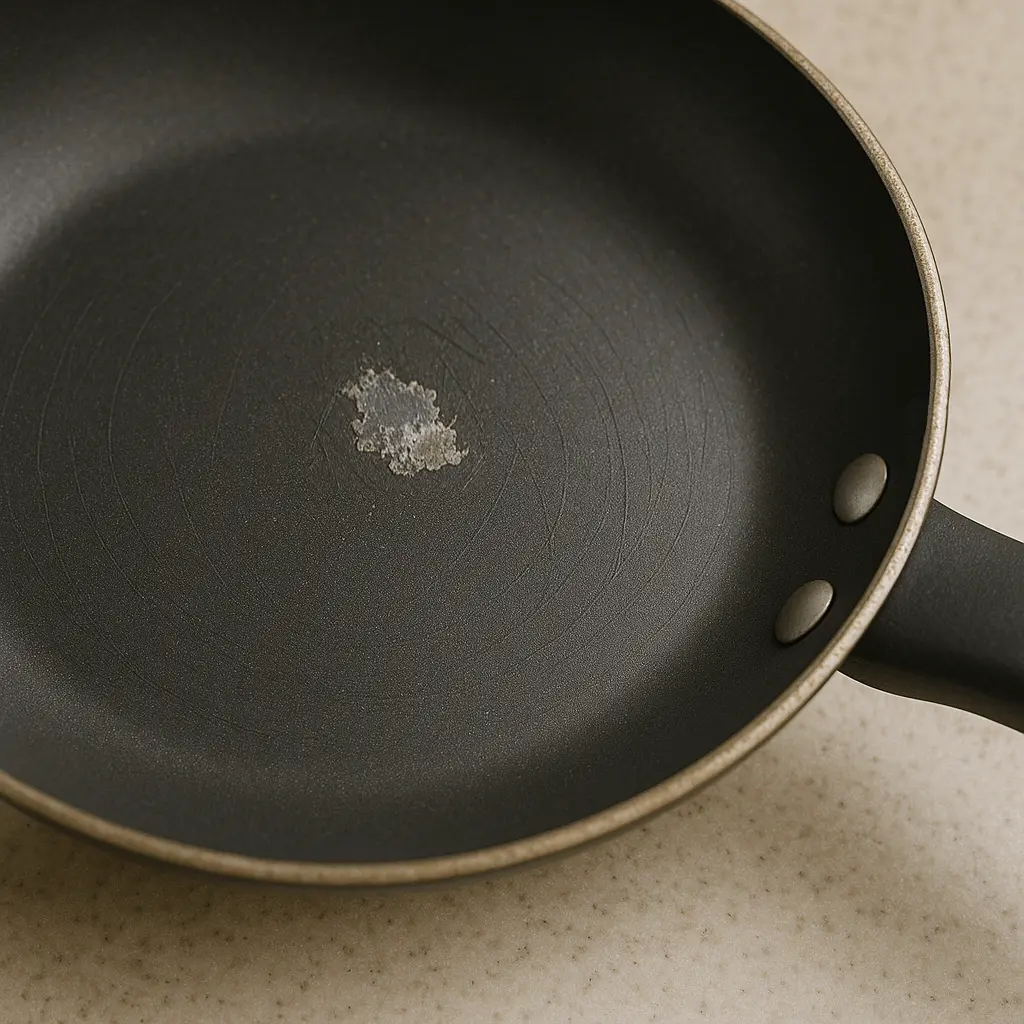
Last week, I pulled out my old nonstick pan to make eggs – nothing fancy, just a quick breakfast. But as I looked at the surface, I noticed a little patch in the center where the coating was starting to wear off. It wasn’t flaking badly, just a slight spot where the dark coating had faded and a silvery patch showed through. My roommate shrugged and said, “Just add some oil – it’s fine.” But something about it made me hesitate.
We all have those go-to kitchen tools that have been with us forever. But when they start showing signs of wear, especially with something like peeling nonstick coating, it’s fair to wonder: Is it still okay to cook with this?
Let’s explore what’s really going on with peeling pans, whether they’re safe to keep using, and what your options are if you’re not ready to toss it just yet.
Why Does the Coating Peel in the First Place?
It usually doesn’t happen overnight. Nonstick pans wear down over time, especially if we use metal utensils, high heat, or put them through the dishwasher (even when the label says it’s okay). That black coating that once made everything slide off so easily starts to scratch, bubble, or even flake away.
Most nonstick coatings are made from PTFE (a common nonstick coating). While it’s heat-resistant and great for cooking, it’s not indestructible. The coating can start to separate from the base – especially in the center, where we cook the most.
Over time, that once smooth surface just can’t hold up the same way. A little scratch might not seem like a big deal, but it can grow and turn into peeling.
Is It Still Safe to Cook With?
This is where things get a little tricky. A pan with light wear isn’t likely to harm you right away. If a small spot has worn thin and you’re not scraping at it, the immediate risk is low.
But once the coating starts to lift, flakes can end up in your food. Those bits are generally considered inert, but a damaged nonstick surface is easier to overheat, and nonstick coatings can release fumes at high temperatures. That, plus the fact that worn pans heat less evenly (so food doesn’t cook as well), is your real red flag.
Under the coating, most pans are aluminum or stainless steel. The issue isn’t that everyday cooking will suddenly make metals leach; it’s that a breached coating can shed more particles and make overheating more likely.
So even if it “seems fine,” treat peeling as the beginning of the end. Keep the heat moderate in the short term, and plan to replace the pan sooner rather than later.
What You Can Do If You’re Not Ready to Toss It
If your budget is tight, or you just love this particular pan, here are a few things you can try before replacing it:
1. Use It Only for Non-Stick-Dependent Recipes
Skip the eggs or pancakes, and use the pan for things that don’t rely on the nonstick coating – like dry-toasting nuts or warming tortillas. Just avoid using it for anything that might stick or need even heat.
2. Always Use Oil or Butter
Even if the coating is failing, a good slick of oil can help reduce sticking and protect the surface a bit. Just keep the heat low to medium – you don’t want to stress the pan further.
3. Never Use Metal Utensils
Even if the damage is already done, you don’t want to make it worse. Stick with wooden, silicone, or plastic utensils from now on. They’re gentler and won’t scrape more of the coating off.
When It’s Time to Say Goodbye
Let’s be honest – sometimes we just have to let go. If your pan has deep scratches, flaking patches, or food sticks no matter what you do, it’s time.
Pans aren’t meant to last forever. Most nonstick pans start to wear out after about 3 to 5 years, even with careful use. If yours has lasted longer, it’s probably earned its retirement.
Luckily, you don’t have to spend a fortune to replace it. There are many solid budget-friendly pans out there that work great and last a while if treated kindly.
Disposal/recycling options vary – many curbside programs don’t take PTFE-coated pans. Call your local scrap metal recycler to ask if they accept nonstick cookware or provide special handling.
How to Make Your Next Pan Last Longer
Let’s say you do replace it – how do you keep the next one from ending up the same way? A few quick tips:
- Use medium heat or lower. High heat can break down coatings fast.
- Never preheat an empty pan. This can damage the coating before you even start cooking.
- Wash by hand. A quick wipe with a sponge goes a long way. Avoid steel wool or the dishwasher.
- Store it gently. Don’t stack heavy pots on top of it. If you do, slide a paper towel or cloth between them.
These little habits can stretch your new pan’s life – and keep it cooking smoothly for years.
So… What Should You Do?
If the coating on your pan is starting to peel, even just a little, it’s best to stop using it for everyday cooking – especially for sticky foods. You don’t need to panic, but it’s smart to treat it as the beginning of the end.
We all want to get the most out of what we own. But when it comes to cookware, safety and performance really matter. So if it’s time to move on, embrace it – you might be surprised how good a fresh pan feels.
And hey, now’s your chance to try out that new recipe you’ve been eyeing – with a pan that won’t make it harder than it needs to be.