
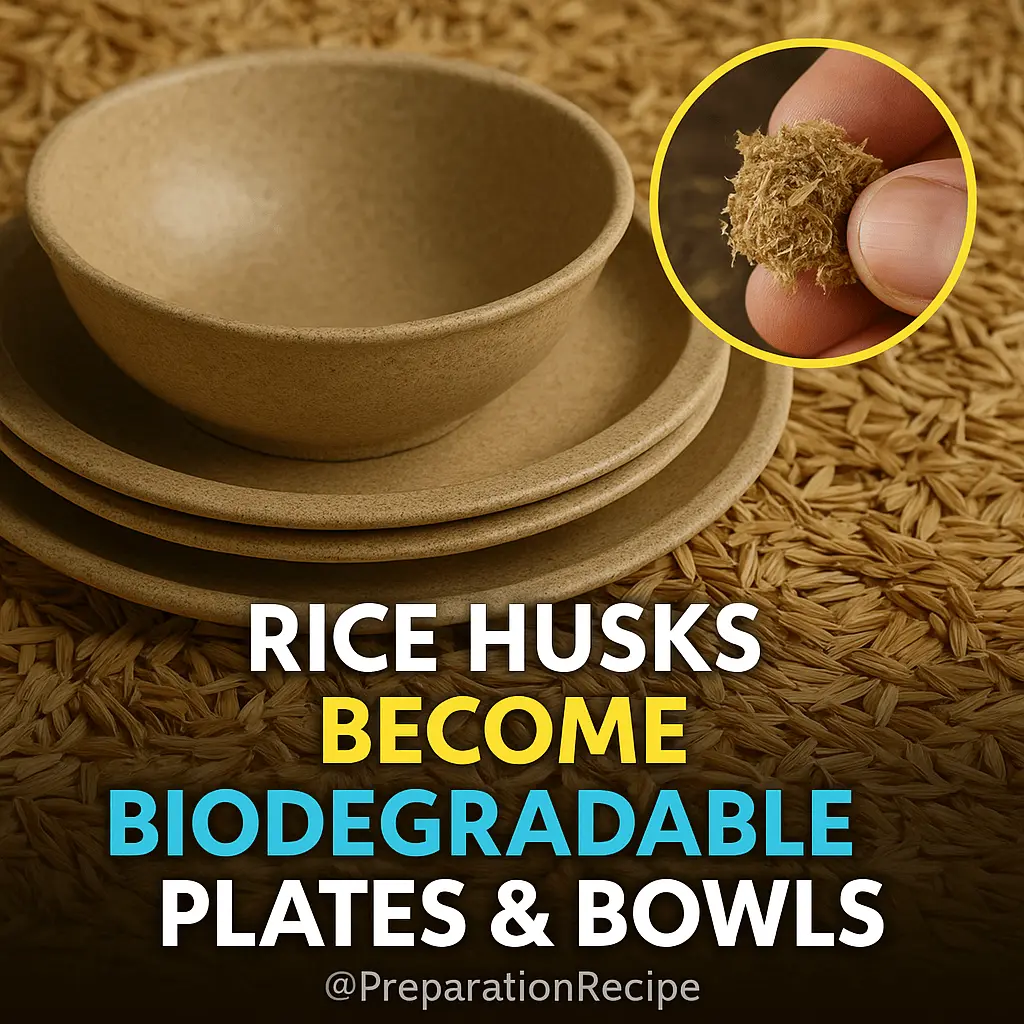
Last week, my friend brought over a beautiful set of dinnerware that looked rustic, earthy, and oddly elegant. When I asked where she got it, she smiled and said, “Believe it or not, these are made from rice husks.”
Rice husks? The stuff I usually sweep off the kitchen counter after repackaging a bag of rice? That threw me.
Turns out, this overlooked byproduct is quietly becoming a hero in the world of eco-friendly tableware. Let’s explore how that’s possible – and why you might want to consider it the next time you’re thinking about your kitchen setup, takeout containers, or picnic gear.
What Exactly Are Rice Husks?
If you’ve ever handled raw rice straight from the field, you’ve seen those light, papery shells that cover each grain. That’s the husk – nature’s protective layer.
For decades, rice husks were mostly tossed or burned. But they’re actually packed with potential: fibrous, durable, and surprisingly moldable when treated the right way. These husks make up roughly 20% of the rice harvest by volume, and now, they’re getting a second life.
So instead of ending up in piles of agricultural waste, these husks are being turned into something useful. And beautiful.
How Are They Made Into Tableware?
This part fascinated me. The process is surprisingly low-tech and clever.
Once the husks are cleaned and dried, they’re crushed into a fine, fibrous powder. Then, they’re mixed with natural binders and pressed into molds – just like how clay becomes a bowl in pottery. The result? Lightweight plates, bowls, and even cups that look smooth, warm-toned, and organic.
Some manufacturers even add a touch of natural resin or starch to boost durability. Made without added plastic coatings and designed to minimize additives. Just a solid, compostable item you can actually use again and again.
Are They Safe for Food?
Yes, and that’s what makes them so special.
Rice husk tableware is typically made without plastic coatings, and reputable makers test for food-contact safety. Always check the product details for your specific set. Most are heat-resistant and microwave-safe, though it’s always smart to double-check with the brand you’re using.
They’re also water-resistant and durable enough to hold a hot soup or a fresh pasta dish without softening or warping. They don’t smell like anything either – so your creamy mushroom risotto won’t taste like a barnyard, I promise.
Why It’s a Smart Alternative to Plastic
You already know the problem with disposable plastics. Even those so-called compostable ones don’t always break down properly unless they’re sent to specific facilities.
But rice husk plates and bowls? These break down in home compost bins. In fact, under the right conditions, some start decomposing in just a couple of months. That’s a far cry from the 500 years a plastic fork might take.
Plus, since rice is grown in massive quantities around the world, there’s no shortage of husks. We’re basically turning a common byproduct into a smart, sustainable solution.
Where You Might See These in Real Life
Keep your eyes open – these are popping up more and more.
- Farmers markets and local cafés are switching to them for takeout packaging.
- Eco-friendly restaurants use them for their in-house dining ware.
- Picnic gear brands are selling sets made entirely from rice husks – durable enough for rough use, yet fully compostable.
- Even some grocery stores now stock biodegradable utensil kits made with rice husks.
And yes, you can find them online if you want to try them at home.
Do They Last Long?
They’re not meant to last forever, and that’s kind of the point.
You’ll get a good amount of use out of them – many are reusable for months or even a couple of years if you treat them gently. But when they’ve served their time, they don’t sit in landfills forever. They return to the earth.
It’s a quiet kind of sustainability. No flashy branding. Just smart design.
Bonus: They Look Really Good
One thing I didn’t expect was how pretty these things are.
They have a soft matte finish, often in shades of tan, wheat, or cocoa brown. The texture feels slightly sandy but not rough – like holding a handcrafted ceramic dish. Every piece has a little bit of uniqueness, which makes your table feel cozy, warm, and intentional.
They don’t scream “eco-friendly” – they just are.
Final Thoughts
It’s easy to overlook something as simple as a rice husk. But once you realize that this humble little shell can be transformed into useful, compostable kitchenware, it changes how you see everyday waste.
So next time you’re reaching for a plastic plate – or even shopping for a gift set for a friend – consider going with rice husk tableware. You’re not just making a smart choice for the environment. You’re giving something a second chance.
Turns out, the future of your kitchen might be hiding in your rice bag.