
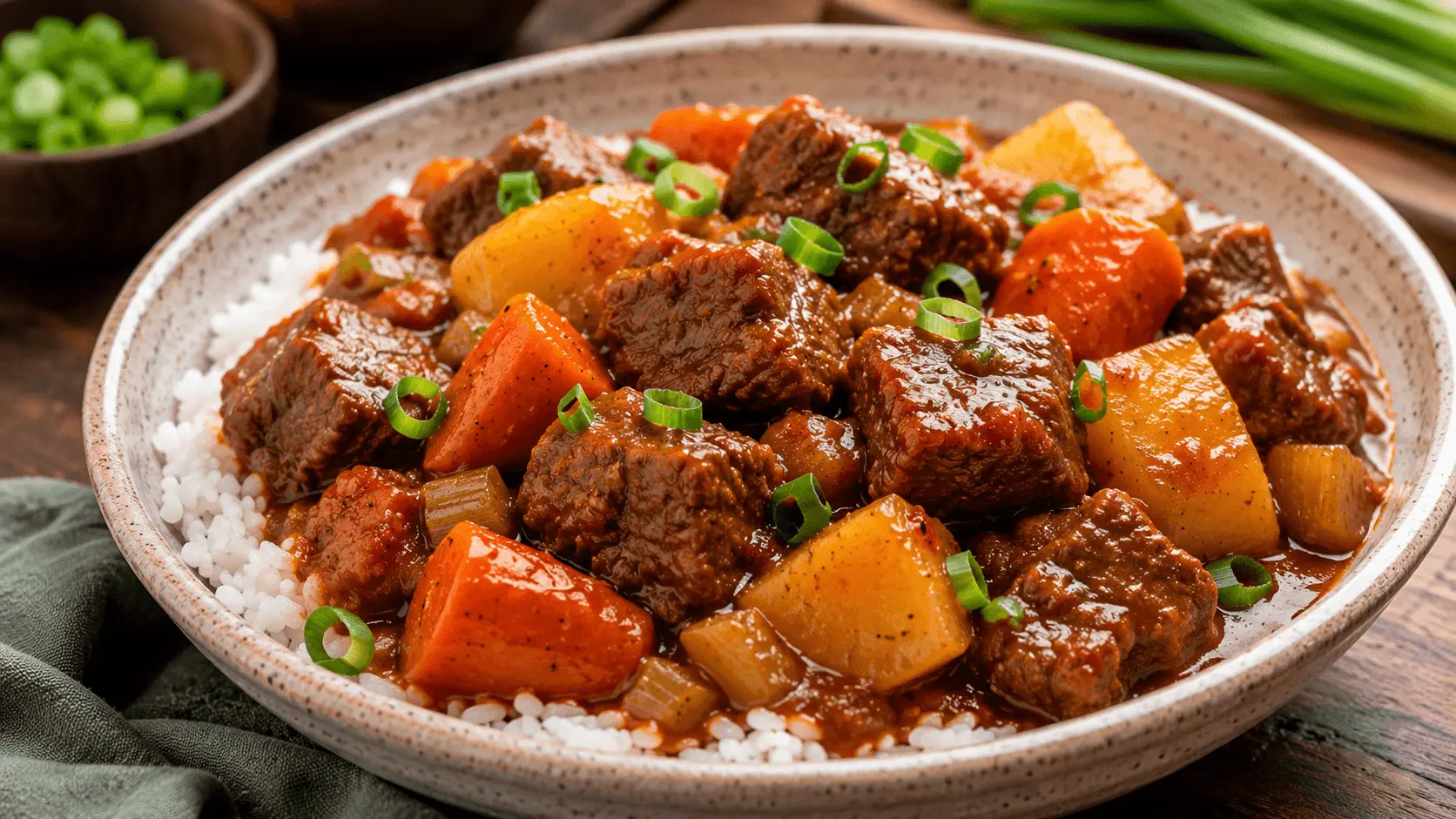
beef stew recipe Hawaiian style combines tender beef, potatoes, carrots, celery, and a rich tomato-based gravy in one comforting pot. Served over warm rice, it delivers the savory, slightly sweet flavor and hearty texture that make local-style stew such a satisfying family meal.
A good pot of stew should give you fork-tender beef, vegetables that hold their shape, and a glossy gravy that tastes as though it simmered all day. This beef stew recipe delivers exactly that with simple ingredients and a practical stovetop method. Browning the beef builds deep flavor, tomato paste gives the broth its signature color, and a gentle simmer turns everything rich and comforting. You will learn how to prepare the ingredients, thicken the gravy, avoid tough meat, and serve the finished stew Hawaiian style over rice.
Why You’ll Love Beef Stew Recipe
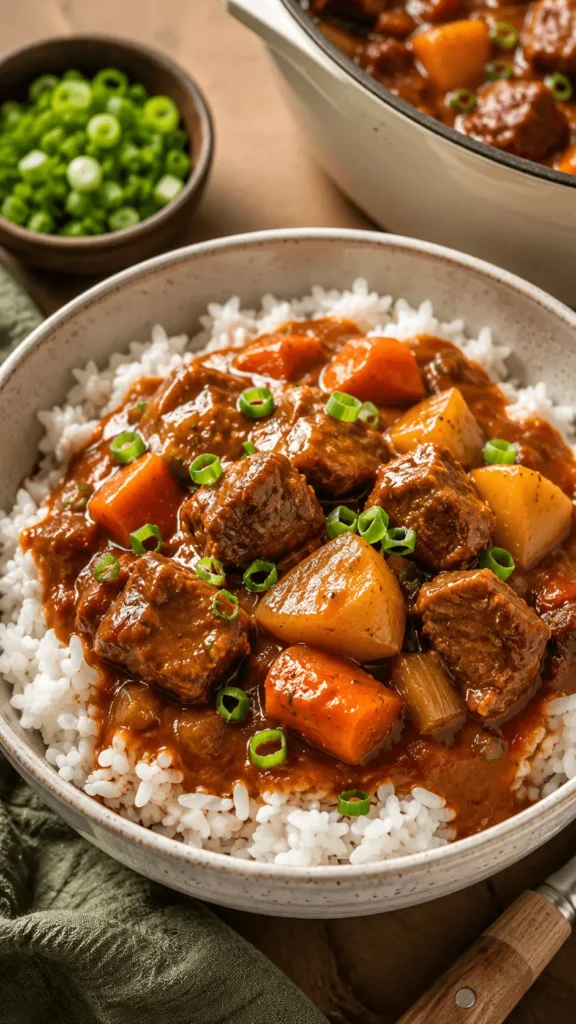
This beef stew recipe is the kind of meal that fills your kitchen with a warm, savory aroma and brings everyone toward the stove. It is hearty enough for a relaxed weekend dinner but simple enough to prepare for a weeknight.
Deep, comforting flavor: Browning the beef and tomato paste creates a savory base with gentle sweetness.
One-pot preparation: Most of the cooking happens in one heavy pot, which keeps cleanup manageable.
Family-friendly ingredients: Potatoes, carrots, celery, tomatoes, and tender beef make this an approachable meal.
Excellent for leftovers: The gravy becomes even more flavorful after resting overnight.
Easy to adjust: You can make the stew thicker, add more vegetables, or change the serving size without changing the basic method.
Perfect over rice: The rich gravy soaks into fluffy rice for classic Hawaiian beef stew over rice.
Now, gather the ingredients that give this stew its bold color, tender texture, and cozy flavor.
Ingredients
The ingredients in this beef stew recipe work in layers. Beef provides richness, aromatic vegetables build the base, tomato adds bright depth, and potatoes help make the stew feel substantial.
Beef chuck — 2 pounds: Cut into 1½-inch cubes; its marbling becomes tender during slow simmering.
Salt — 1½ teaspoons, divided: Seasons the beef, vegetables, and gravy throughout cooking.
Ground black pepper — ¾ teaspoon, divided: Adds gentle warmth without overpowering the tomato base.
All-purpose flour — 3 tablespoons: Coats the beef lightly and helps thicken the gravy.
Neutral cooking oil — 2 tablespoons, plus more as needed: Helps the beef develop a dark brown crust.
Yellow onion — 1 large, diced: Adds sweetness and body to the stew.
Garlic — 4 cloves, minced: Brings a warm, savory aroma.
Tomato paste — 3 tablespoons: Deepens the red color and concentrates the tomato flavor.
Crushed tomatoes — 1 can, 14.5 ounces: Creates the smooth foundation of this tomato-based beef stew.
Beef broth — 4 cups: Provides enough liquid for simmering while building a rich gravy.
Soy sauce — 2 tablespoons: Adds salty, savory depth associated with local-style cooking.
Brown sugar — 1 tablespoon: Softens the acidity of the tomatoes without making the stew noticeably sweet.
Dried thyme — 1 teaspoon: Adds a mild earthy note.
Bay leaves — 2: Give the simmering broth a subtle herbal flavor.
Carrots — 3 medium, cut into 1-inch pieces: Add color, gentle sweetness, and a tender bite.
Celery — 3 stalks, cut into ½-inch pieces: Adds freshness and balances the rich gravy.
Yukon-style or yellow potatoes — 1½ pounds, cut into 1½-inch chunks: Hold their shape while becoming creamy inside.
Cornstarch — 1 tablespoon: Provides optional extra thickening at the end.
Cold water — 1 tablespoon: Mixes with the cornstarch to prevent lumps.
Chopped green onions — 3 tablespoons: Add fresh color and a mild onion finish.
Cooked white rice — for serving: Catches every spoonful of the savory tomato gravy.
Optional Add-Ins
Frozen peas — 1 cup: Stir them in near the end for extra color and sweetness.
Fresh ginger — 1 teaspoon, finely grated: Adds a light aromatic warmth.
Mushrooms — 8 ounces, quartered: Bring extra savory flavor and a tender, meaty texture.
Pro Tip: Pat the beef dry before seasoning it. Moisture on the surface creates steam, while dry beef develops the browned crust that gives the best Hawaiian beef stew its deep flavor.
With everything measured and chopped, you are ready to build the stew one flavorful layer at a time.
How to Make Beef Stew Recipe
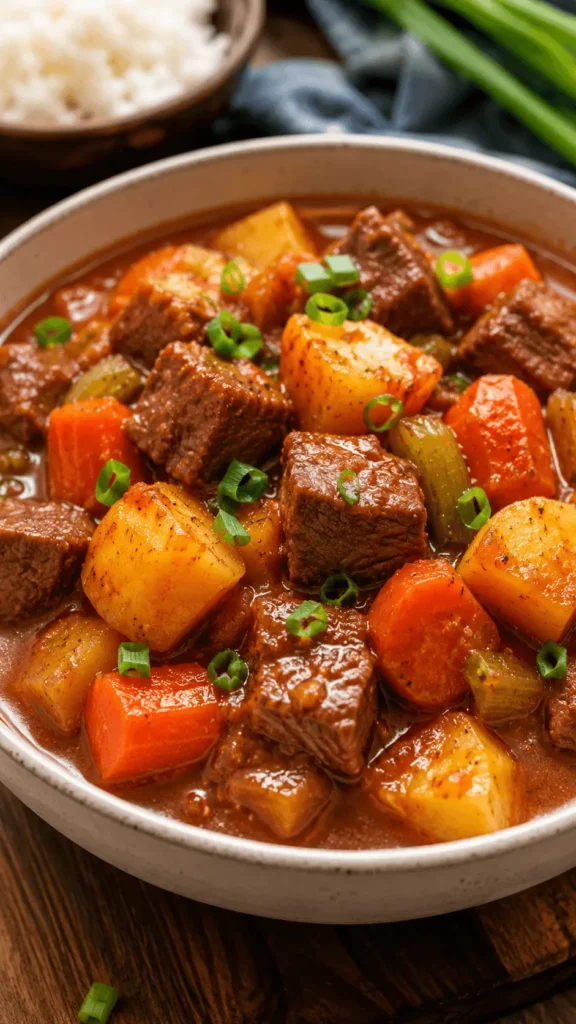
This beef stew recipe follows a steady, simple rhythm: season, brown, sauté, simmer, and thicken. Give the beef enough space in the pot and keep the simmer gentle for the most tender result.
Prepare and season the beef.
Pat the beef cubes dry with paper towels. Place them in a large bowl and season with 1 teaspoon salt and ½ teaspoon black pepper. Sprinkle the flour over the beef and toss until every piece has a thin, even coating. Shake off any loose flour so it does not burn in the pot.
Brown the first batch.
Heat 1 tablespoon oil in a large, heavy pot over medium-high heat. When the oil looks shimmering, add half of the beef in a single layer. Leave space between the pieces. Cook for 2 to 3 minutes per side, turning until several surfaces develop a deep brown crust. Transfer the browned beef to a plate.
Brown the remaining beef.
Add the remaining tablespoon of oil if the pot looks dry. Brown the second batch using the same method, then transfer it to the plate. Do not worry if browned bits stick to the bottom; they will dissolve into the broth and enrich the gravy.
Cook the onion and celery.
Reduce the heat to medium. Add the onion and celery to the pot with a small splash of broth if needed. Cook for 5 minutes, stirring and scraping the bottom, until the onion looks soft and lightly golden around the edges.
Add the garlic and tomato paste.
Stir in the garlic and cook for about 30 seconds, just until fragrant. Add the tomato paste and cook for 1 to 2 minutes. Stir constantly until the paste darkens slightly and begins leaving a reddish coating on the bottom of the pot. This brief cooking step removes the raw tomato taste.
Build the tomato broth.
Pour in about 1 cup of the beef broth. Scrape the bottom of the pot with a wooden spoon until all the flavorful browned pieces release. Add the remaining broth, crushed tomatoes, soy sauce, brown sugar, thyme, bay leaves, remaining salt, and remaining pepper. Stir until evenly combined.
Begin simmering the beef.
Return the beef and any juices from the plate to the pot. Bring the liquid to a gentle boil, then immediately reduce the heat to low. Partially cover the pot and simmer for 60 minutes. The surface should show small, lazy bubbles rather than a vigorous boil. Stir every 15 to 20 minutes.
Add the carrots and potatoes.
Stir the carrots and potatoes into the stew. Make sure most of the vegetables are covered by liquid. Continue simmering partially covered for 35 to 45 minutes. The stew is ready for thickening when the beef separates easily with a fork and the potatoes are tender but not falling apart.
Adjust the gravy.
Remove the bay leaves. For a thicker gravy, mix the cornstarch and cold water in a small bowl until smooth. Slowly stir the mixture into the bubbling stew. Simmer uncovered for 2 to 3 minutes, stirring gently, until the sauce looks glossy and coats the back of a spoon. Skip the slurry when the natural gravy is already thick enough.
Taste and rest.
Taste the stew and adjust the salt or pepper as needed. Remove the pot from the heat and let it rest for 10 minutes. This brief pause allows the gravy to settle and gives the flavors time to blend.
Serve Hawaiian style.
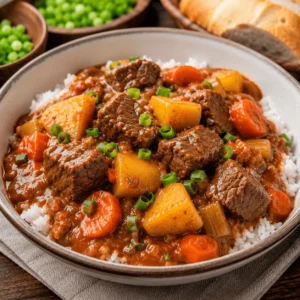
Spoon warm white rice into shallow bowls. Ladle the beef, vegetables, and plenty of tomato gravy over or beside the rice. Finish with chopped green onions for a fresh, colorful contrast.
Your stew is ready, but a few smart techniques can make each batch even more tender and flavorful.
Chef Tips and Variations
This beef stew recipe is flexible, but small details make a noticeable difference in the final pot.
Brown in batches: Crowding the beef traps steam and prevents a flavorful crust from forming.
Keep the simmer gentle: Rapid boiling can tighten the meat and break the potatoes apart.
Cut evenly: Similar-size beef and vegetable pieces cook at the same rate.
Add potatoes later: Starting them with the beef can make them overly soft before the meat becomes tender.
Make it ahead: Cook the stew one day early, cool it safely, and reheat it gently for an even deeper flavor.
Use more vegetables: Add mushrooms with the celery or frozen peas during the final five minutes.
Adjust the sweetness carefully: Add extra brown sugar only in small pinches after tasting.
Thin a heavy gravy: Stir in a splash of broth until it reaches your preferred consistency.
Once the texture and seasoning are just right, choose a serving style that makes the most of that rich gravy.
Serving Suggestions
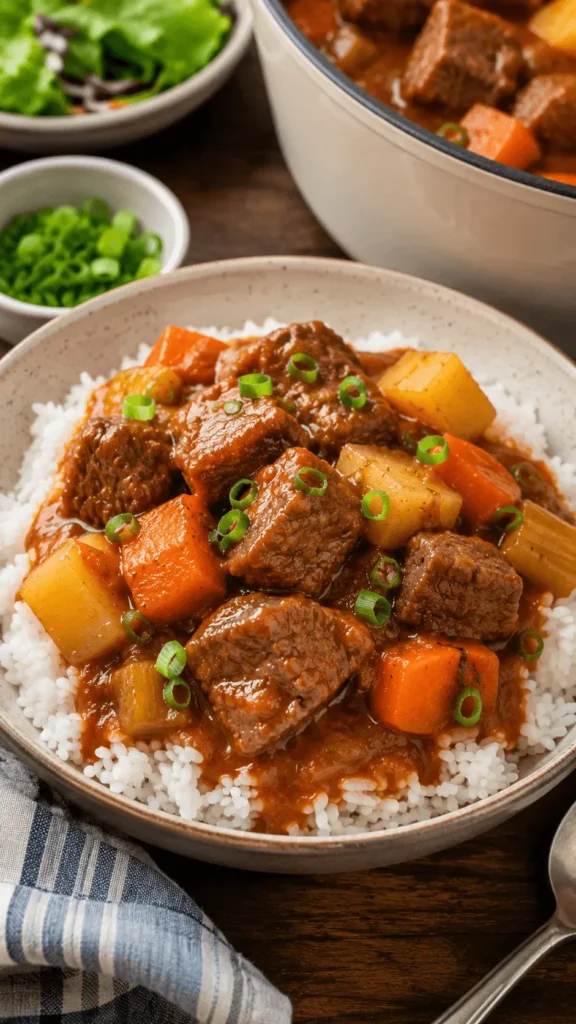
A steaming bowl of this beef stew recipe feels right at home at a casual family table. The red-brown gravy, bright carrots, creamy potatoes, and fresh green onions look especially inviting against white rice.
Serve over rice: Spoon the stew generously over fluffy white rice for a classic local-style meal.
Keep rice on the side: This lets each person choose how much gravy soaks into the rice.
Add a crisp salad: A simple cabbage, cucumber, or leafy green salad adds a refreshing contrast.
Pair with steamed vegetables: Green beans or broccoli bring color without competing with the stew.
Use shallow bowls: They provide room for both rice and plenty of sauce.
Offer extra green onions: Their fresh bite brightens the rich tomato gravy.
Serve family style: Place the pot in the center of the table with a large bowl of rice for easy sharing.
After the meal, store the leftovers correctly so the beef stays tender and the gravy remains smooth.
Storing and Reheating
Leftover beef stew recipe can taste even richer the next day because the tomato, beef, and seasonings continue to blend as they rest.
Refrigerating: Cool leftovers promptly, then transfer them to shallow airtight containers. Refrigerate for up to 3 to 4 days.
Freezing: Freeze the cooled stew in airtight containers for up to 3 months. Leave a little room for expansion.
Thawing: Thaw frozen stew overnight in the refrigerator rather than at room temperature.
Stovetop reheating: Warm over medium-low heat, stirring occasionally, until steaming throughout. Add a splash of broth or water if the gravy is too thick.
Microwave reheating: Cover loosely and heat in short intervals, stirring between each one, until evenly hot.
Texture note: Potatoes may become slightly softer after freezing, but the flavor will remain comforting and savory.
Rice storage: Store cooked rice separately and reheat it until steaming before serving.
These simple steps make it easy to enjoy another satisfying bowl, which brings us to the most useful points to remember.
Ultimate Hawaiian Style beef stew recipe

Equipment
- Large heavy pot or Dutch oven
- Cutting board
- Sharp knife
- Measuring cups and spoons
- Large mixing bowl
- Wooden spoon
- Small bowl
- Ladle
Ingredients
- 2 pounds beef chuck cut into 1½-inch cubes
- 1½ teaspoons salt divided
- ¾ teaspoon ground black pepper divided
- 3 tablespoons all-purpose flour
- 2 tablespoons neutral cooking oil plus more as needed
- 1 large yellow onion diced
- 4 garlic cloves minced
- 3 tablespoons tomato paste
- 1 can crushed tomatoes 14.5 ounces
- 4 cups beef broth
- 2 tablespoons soy sauce
- 1 tablespoon brown sugar
- 1 teaspoon dried thyme
- 2 bay leaves
- 3 medium carrots cut into 1-inch pieces
- 3 celery stalks cut into ½-inch pieces
- 1½ pounds yellow potatoes cut into 1½-inch chunks
- 1 tablespoon cornstarch optional
- 1 tablespoon cold water optional
- 3 tablespoons chopped green onions
- Cooked white rice for serving
Optional Ingredients
- 1 cup frozen peas
- 1 teaspoon finely grated fresh ginger
- 8 ounces quartered mushrooms
Instructions
- Pat the beef dry. Season with 1 teaspoon salt and ½ teaspoon pepper, then toss with flour.
- Heat the oil in a heavy pot over medium-high heat. Brown the beef in two batches and transfer it to a plate.
- Reduce the heat to medium. Cook the onion and celery for 5 minutes.
- Add the garlic and cook for 30 seconds. Stir in the tomato paste and cook for 1 to 2 minutes.
- Add 1 cup broth and scrape up the browned pieces. Stir in the remaining broth, tomatoes, soy sauce, brown sugar, thyme, bay leaves, remaining salt, and remaining pepper.
- Return the beef and its juices to the pot. Bring to a gentle boil, reduce the heat, partially cover, and simmer for 60 minutes.
- Add the carrots and potatoes. Simmer partially covered for 35 to 45 minutes, until the beef is fork-tender.
- Remove the bay leaves. Mix the cornstarch with cold water and stir it into the stew if thicker gravy is desired.
- Simmer uncovered for 2 to 3 minutes. Taste, adjust the seasoning, and rest for 10 minutes.
- Serve over warm white rice and garnish with green onions.
Notes
Key Takeaways
This beef stew recipe is all about patient cooking and layered flavor. Keep this quick cheat sheet nearby when you start your pot.
- Brown dry, well-seasoned beef in uncrowded batches for the deepest savory flavor.
- Cook the tomato paste briefly before adding liquid to create a richer tomato base.
- Simmer gently so the beef becomes tender instead of firm or dry.
- Add potatoes and carrots after the beef has already cooked for about an hour.
- Serve the finished stew with rice to catch the thick, glossy gravy.
- Refrigerate leftovers for up to 3 to 4 days or freeze them for longer storage.
The answers below cover a few common questions that can help you prepare the stew with confidence.
FAQs
What makes this a Hawaiian beef stew recipe?
A Hawaiian beef stew recipe is often tomato-forward, hearty, and served with white rice. It commonly includes beef, potatoes, carrots, celery, and a smooth red gravy with a balanced savory flavor.
This version also includes soy sauce and a small amount of brown sugar, which add depth and soften the natural acidity of the tomatoes.
Can I make this beef stew recipe ahead of time?
Yes. This beef stew recipe is excellent when prepared a day ahead. Let it cool safely, refrigerate it in a covered container, and reheat it over medium-low heat.
The gravy may thicken in the refrigerator, so add a small splash of broth or water while reheating.
Why is my beef still tough?
The beef probably needs more time. Chuck becomes tender as its connective tissue slowly softens, and the exact timing can vary depending on the size of the pieces.
Keep the stew at a gentle simmer and check every 15 minutes. Avoid increasing the heat to rush the process, since hard boiling can make the meat feel tighter.
Can I use a different cut of beef?
You can use another cut intended for slow cooking, but avoid very lean steak cuts. Lean meat can become dry before the vegetables and gravy finish cooking.
Look for beef with visible marbling and cut it into evenly sized chunks.
How can I thicken Hawaiian style beef stew recipe without cornstarch?
Simmer the stew uncovered for 10 to 15 minutes so some liquid evaporates. You can also mash one or two cooked potato pieces into the gravy.
Remember that the sauce will continue to thicken slightly while the stew rests.
Can I double this one-pot beef stew recipe?
Yes, provided your pot is large enough to hold everything without overflowing. Brown the beef in several small batches and allow extra time for the larger volume to return to a simmer.
The tenderness cues remain the same: the beef should pull apart easily with a fork, and the potatoes should be creamy inside.
With those questions answered, all that remains is to bring this warm, satisfying meal to your table.
Conclusion
This Hawaiian-style beef stew recipe turns everyday ingredients into a deeply comforting dinner. Tender beef, creamy potatoes, sweet carrots, and a savory tomato gravy come together in one pot, while warm rice makes every serving feel complete.
Take your time browning the beef, keep the simmer gentle, and use the texture of the meat, not just the clock, as your final guide. Once the aroma fills the kitchen and the gravy turns glossy, you will have a hearty meal made for generous bowls and relaxed evenings.