
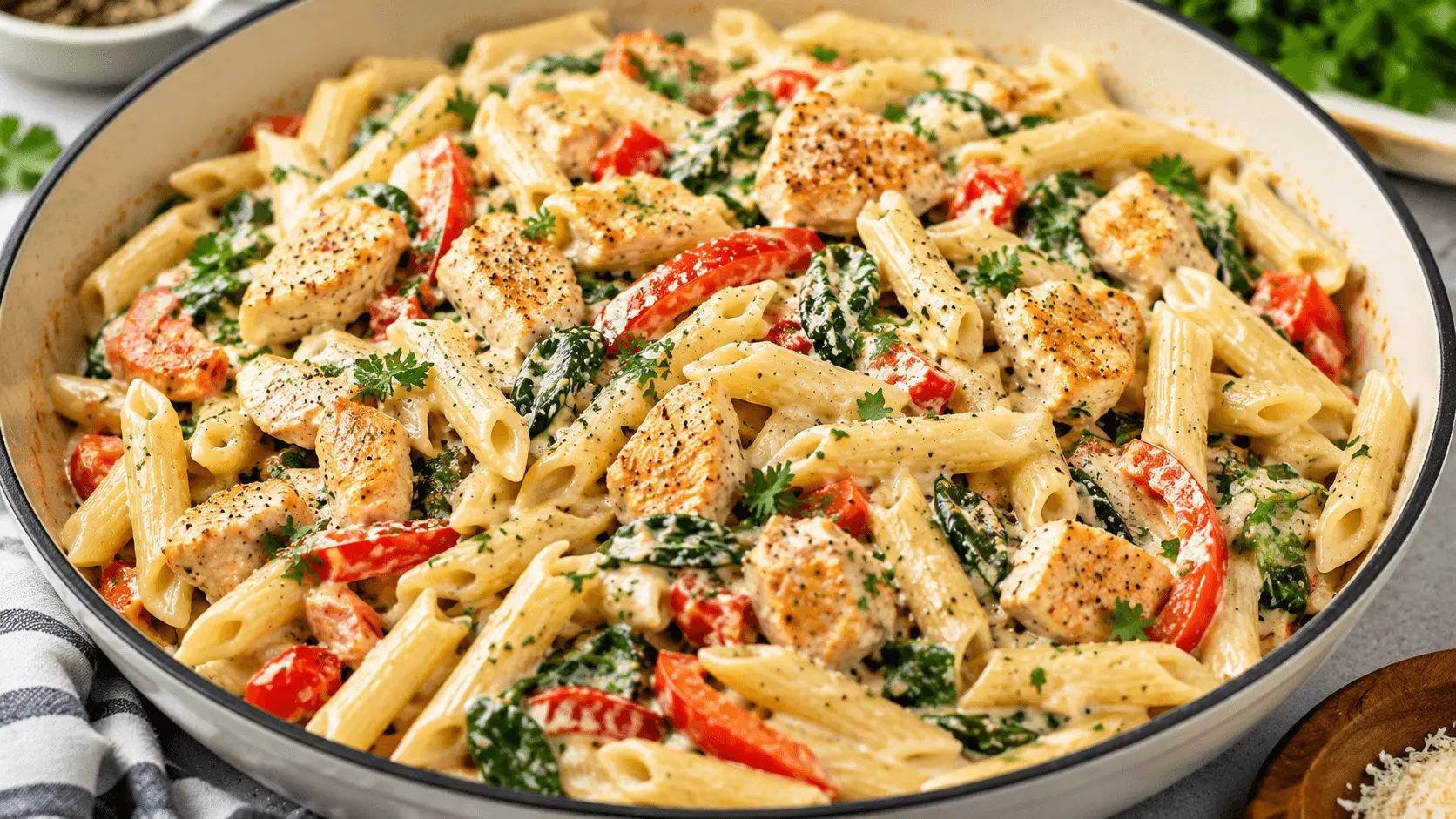
Chicken Pasta is a fast, comforting dinner made with tender chicken breast, pasta, vegetables, and a smooth garlic-Parmesan sauce. It comes together in about 30 minutes using one skillet and one pasta pot, making it ideal for busy weeknights when you want a homemade meal without a long cleanup.
Some evenings call for a dinner that feels comforting but does not keep you in the kitchen all night. This Chicken Pasta solves that problem with juicy bites of chicken, tender noodles, colorful vegetables, and a creamy sauce that clings to every forkful.
It is an easy weeknight chicken dinner made with familiar ingredients and simple cooking methods. You will learn which ingredients work best, how to keep the chicken tender, how to build a silky sauce, and how to store leftovers safely.
Why You’ll Love Chicken Pasta
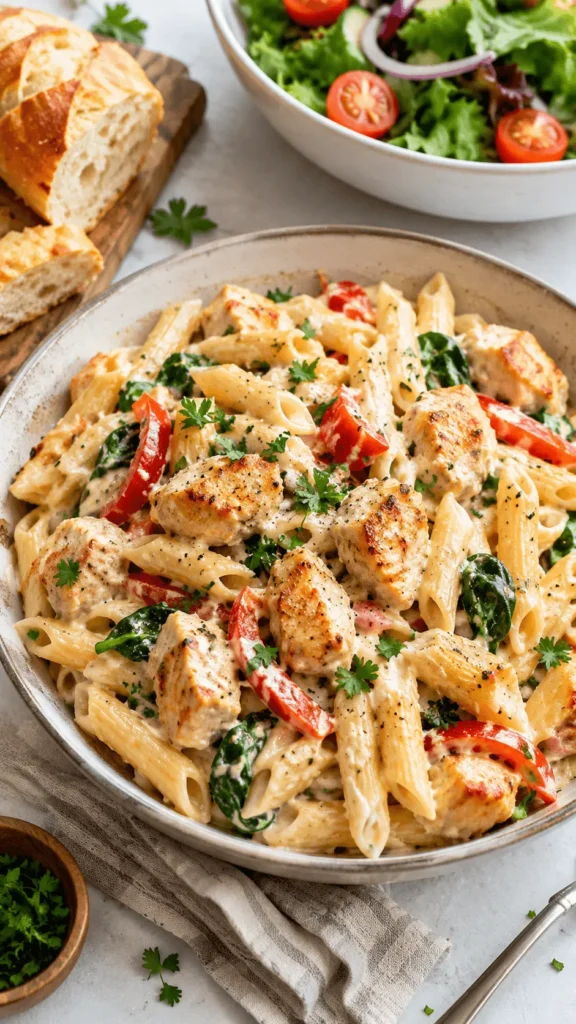
This Chicken Pasta delivers the cozy flavor of a slow, homemade meal in a fraction of the time. The chicken develops golden edges, the garlic smells warm and savory, and the sauce becomes creamy without feeling overly heavy.
Ready in about 30 minutes: This 30-minute pasta recipe moves quickly when you prepare the ingredients before cooking.
Made with everyday ingredients: Pasta, chicken breast, broth, milk, cheese, and seasonings create a satisfying meal without a complicated shopping list.
Family-friendly: The mild, creamy sauce makes this a family-friendly pasta dinner that both children and adults can enjoy.
Easy to customize: Add vegetables, adjust the seasoning, or switch the pasta shape based on what you have.
Great for beginners: The method uses basic boiling, sautéing, and stirring techniques, making it a simple chicken pasta recipe for newer cooks.
Balanced in texture: Tender pasta, juicy chicken, crisp-tender vegetables, and a smooth sauce keep every bite interesting.
Useful for leftovers: The dish reheats well when you add a small splash of milk or broth.
Now that dinner sounds manageable, gather the ingredients and prepare everything before heating the pans.
Ingredients for Chicken Pasta
The ingredients in this Chicken Pasta are simple, but each one has a clear purpose. Preparing and measuring everything first will help this quick chicken pasta recipe stay on schedule.
Short pasta — 12 ounces: Penne, rotini, bow ties, or another sturdy shape catches the creamy sauce.
Boneless, skinless chicken breasts — 1¼ pounds: Cut into small, even pieces for quick cooking and a tender bite.
Olive oil — 2 tablespoons, divided: Helps brown the chicken and soften the vegetables.
Salt — 1 teaspoon, divided: Seasons the pasta water, chicken, and sauce.
Black pepper — ½ teaspoon: Adds gentle warmth without overpowering the creamy flavor.
Garlic powder — ½ teaspoon: Seasons the chicken evenly and builds savory depth.
Italian-style dried herb blend — 1 teaspoon: Adds a balanced mix of familiar herbs.
Small yellow onion — 1, finely diced: Creates a lightly sweet, savory base for the sauce.
Red bell pepper — 1, thinly sliced: Adds color, gentle sweetness, and a crisp-tender texture.
Fresh garlic — 3 cloves, minced: Gives the sauce a warm, fragrant flavor.
All-purpose flour — 1 tablespoon: Lightly thickens the sauce so it coats the pasta.
Low-sodium chicken broth — 1 cup: Loosens the browned bits in the skillet and gives the sauce depth.
Whole milk — 1 cup: Creates a creamy texture while keeping the sauce light enough to coat the noodles.
Finely grated Parmesan-style cheese — ¾ cup: Melts into the sauce and adds a rich, savory finish.
Fresh spinach — 2 packed cups: Wilts quickly and brings fresh color to the dish.
Reserved pasta water — up to ½ cup: Helps loosen and smooth the finished sauce.
Fresh parsley — 2 tablespoons, chopped: Adds a bright, fresh finish.
Optional Add-Ins
Mushrooms — 8 ounces, sliced: Cook them until lightly browned before adding the onion.
Broccoli florets — 2 cups: Add them to the pasta water during the final three minutes of cooking.
Crushed red pepper — ⅛ to ¼ teaspoon: Adds a mild or moderate kick.
Lemon zest — ½ teaspoon: Brightens the creamy sauce without making it sharply acidic.
Frozen peas — 1 cup: Stir them into the skillet during the final two minutes.
Pro Tip: Cut the chicken into pieces that are about 1 inch wide. Similar-sized pieces cook at the same rate, helping you avoid a mixture of dry chicken and undercooked chicken.
With the ingredients prepared, you can move smoothly from the pasta pot to the skillet.
How to Make Chicken Pasta
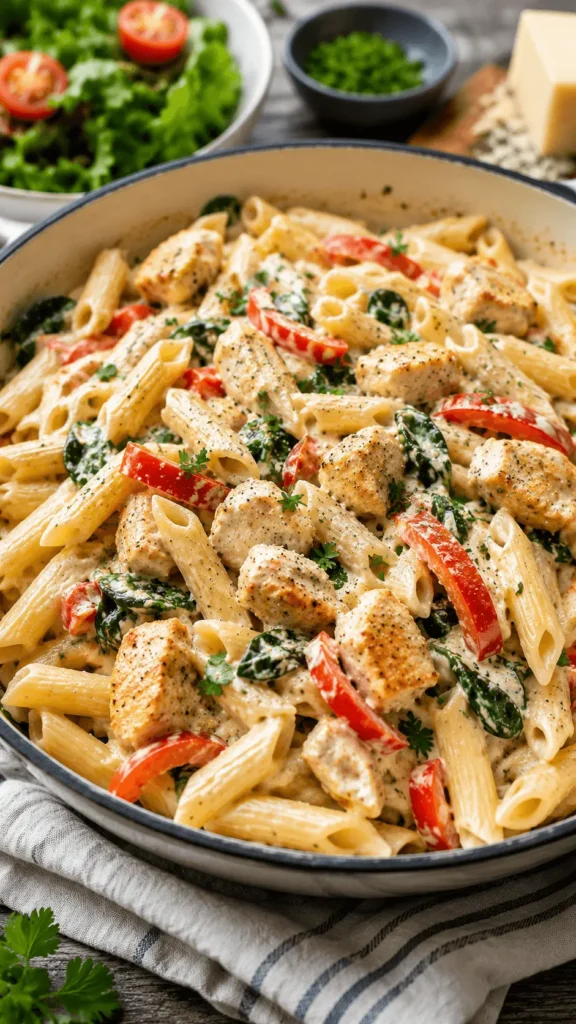
Making Chicken Pasta is a steady, straightforward process. Keep the ingredients close to the stove, stir the sauce gently, and rely on the visual cues in each step rather than rushing.
Bring the pasta water to a boil.
Fill a large pot with water and bring it to a strong boil. Salt the water lightly, then add the pasta. Cook according to the package directions until it is just al dente, meaning tender with a slight firmness in the center.
Reserve pasta water and drain.
Before draining, carefully scoop out ½ cup of the cloudy pasta water. Drain the pasta without rinsing it. The thin coating of starch left on the noodles will help the sauce cling.
Season the chicken.
While the pasta cooks, pat the chicken pieces dry with paper towels. Toss them with ½ teaspoon salt, black pepper, garlic powder, and the dried herb blend.
Brown the chicken.
Heat 1 tablespoon olive oil in a large skillet over medium-high heat. Add the chicken in a single layer. Cook for 3 to 4 minutes without moving it too much, allowing golden-brown edges to form.
Finish cooking the chicken.
Turn the pieces and cook for another 3 to 4 minutes. The chicken should be opaque in the center and reach an internal temperature of 165°F when checked with a food thermometer. Transfer it to a clean plate.
Sauté the vegetables.
Reduce the heat to medium and add the remaining tablespoon of olive oil. Add the onion and bell pepper. Cook for 3 to 4 minutes, stirring occasionally, until the onion looks translucent and the pepper begins to soften.
Add the garlic.
Stir in the minced garlic and cook for about 30 seconds. It should smell fragrant but should not turn dark brown, which can make it taste bitter.
Create the sauce base.
Sprinkle the flour over the vegetables and stir for 30 to 60 seconds. The flour should disappear into the oil and lightly coat the vegetables.
Pour in the broth.
Slowly add the chicken broth while stirring. Scrape the bottom of the skillet to release the flavorful golden bits left by the chicken. Let the mixture simmer gently for 1 to 2 minutes.
Add the milk.
Lower the heat to medium-low. Pour in the milk gradually, stirring continuously. Allow the sauce to warm and gently bubble for 2 to 3 minutes. Avoid a hard boil, which may cause the dairy to separate.
Melt in the cheese.
Add the grated cheese a small handful at a time, stirring after each addition. The sauce should look smooth, glossy, and thick enough to lightly coat the back of a spoon.
Wilt the spinach.
Add the spinach and stir for 1 to 2 minutes, until the leaves soften and turn bright green.
Combine the dish.
Return the chicken and any juices from the plate to the skillet. Add the drained pasta and toss until everything is evenly coated. If the sauce seems too thick, add reserved pasta water 1 tablespoon at a time.
Taste and finish.
Taste the pasta and add a small pinch of salt or pepper if needed. Sprinkle with fresh parsley and serve while the sauce is warm and creamy.
Your homemade chicken pasta is ready, but a few useful techniques can make the next batch even better.
Chef Tips and Variations
This Chicken Pasta is flexible enough for different tastes, schedules, and ingredients. Small changes can create a brighter, spicier, lighter, or more vegetable-packed dinner while keeping the same dependable method.
Do not crowd the chicken: Cook it in two batches when using a smaller skillet. Crowding traps steam and prevents golden browning.
Use freshly grated cheese: Finely grated cheese melts more smoothly and is less likely to leave the sauce grainy.
Keep the heat gentle: After adding milk and cheese, avoid high heat. A gentle simmer protects the creamy texture.
Save the pasta water: Its starch helps thin the sauce while keeping it silky rather than watery.
Try chicken thighs: Boneless, skinless thighs can replace chicken breast. Cut them into small pieces and cook until they reach 165°F.
Add more vegetables: Mushrooms, peas, broccoli, zucchini, or asparagus turn this into one of those flexible pasta dishes with chicken that can change with the season.
Make it brighter: A little lemon zest or chopped parsley balances the creamy sauce.
Prepare ingredients early: Slice the chicken and vegetables up to one day ahead, store them separately in covered containers, and refrigerate until cooking.
Avoid overcooking the pasta: Al dente noodles finish cooking in the skillet and are less likely to become soft or mushy.
Once the flavor and texture are just right, complete the meal with a simple side or colorful garnish.
Serving Suggestions
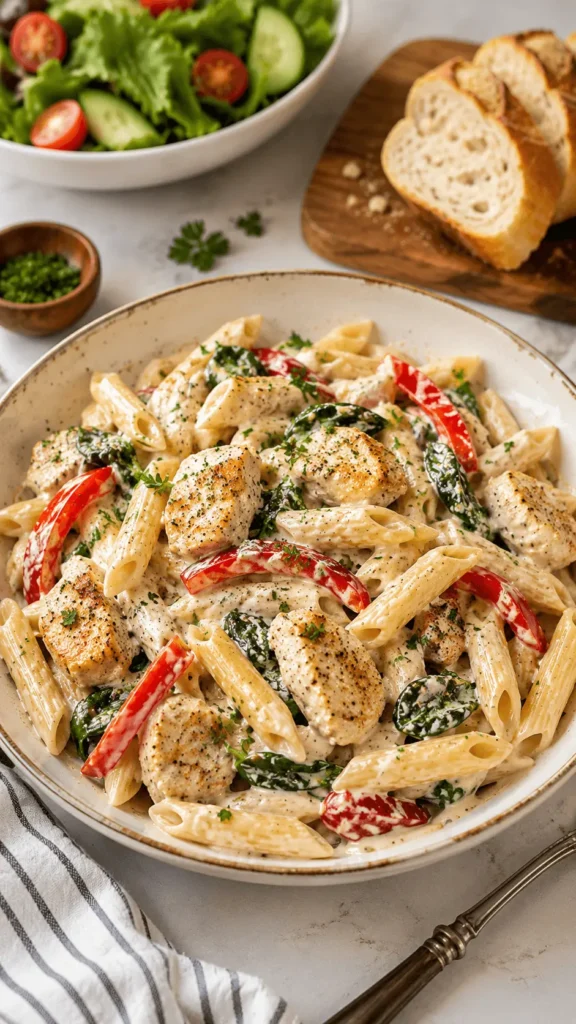
A warm bowl of Chicken Pasta fits casual family meals, quiet evenings, and relaxed gatherings. Serve it in wide bowls so the creamy sauce stays around the noodles and every serving gets plenty of chicken and vegetables.
Add a crisp green salad: Lettuce, cucumber, tomato, and a light lemon dressing offer a fresh contrast to the creamy pasta.
Serve with roasted vegetables: Green beans, broccoli, zucchini, or carrots add color and caramelized flavor.
Pair with warm bread: A crusty slice is useful for scooping up the sauce left in the bowl.
Finish with fresh herbs: Parsley, basil, or chives add a bright aroma and polished appearance.
Add a simple tomato side: Sliced tomatoes with olive oil, salt, and pepper bring freshness to this chicken pasta dinner recipe.
Serve family-style: Transfer the pasta to a large shallow serving bowl and place it in the center of the table.
Pack for lunch: Divide leftovers into single-serving containers and include fruit or raw vegetables on the side.
Keep portions comfortable: The creamy pasta is filling, so smaller bowls paired with vegetables can create a satisfying meal.
After dinner, cool and store any leftovers promptly so they remain safe and pleasant to reheat.
Storing and Reheating Chicken Pasta
Leftover Chicken Pasta can still taste creamy and satisfying when it is cooled, covered, and reheated carefully. The sauce will thicken in the refrigerator, but a splash of liquid brings it back together.
Refrigerator storage: Transfer leftovers to shallow, airtight containers within two hours of cooking. Refrigerate for up to three to four days.
Freezing: Freezing is possible, but the dairy sauce may become slightly grainy and the pasta may soften after thawing. For the best texture, enjoy this dish fresh or refrigerated.
Stovetop reheating: Place the pasta in a skillet over medium-low heat. Add 1 to 2 tablespoons of milk or broth per serving, cover, and stir occasionally until steaming hot.
Microwave reheating: Add a splash of milk or broth, cover loosely, and heat in short intervals. Stir between intervals so the chicken and pasta warm evenly.
Food safety: Reheat leftovers to 165°F and only reheat the portion you plan to eat.
Texture note: The noodles continue absorbing sauce as they sit. Extra liquid helps restore creaminess, but the pasta may be softer than it was on the first night.
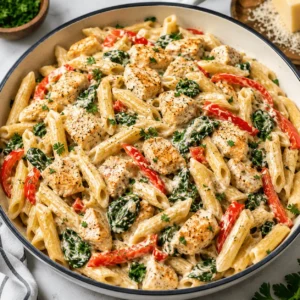
Easy 30-Minute Chicken Pasta

Equipment
- Large pot
- Colander
- Large skillet
- Cutting board
- Sharp knife
- Measuring cups and spoons
- Wooden spoon or heat-safe spatula
- Cheese grater
- Food thermometer
Ingredients
- 12 ounces short pasta
- 1¼ pounds boneless skinless chicken breasts, cut into 1-inch pieces
- 2 tablespoons olive oil divided
- 1 teaspoon salt divided, plus salt for pasta water
- ½ teaspoon black pepper
- ½ teaspoon garlic powder
- 1 teaspoon Italian-style dried herb blend
- 1 small yellow onion finely diced
- 1 red bell pepper thinly sliced
- 3 garlic cloves minced
- 1 tablespoon all-purpose flour
- 1 cup low-sodium chicken broth
- 1 cup whole milk
- ¾ cup finely grated Parmesan-style cheese
- 2 packed cups fresh spinach
- Up to ½ cup reserved pasta water
- 2 tablespoons chopped fresh parsley
Optional Ingredients
- 8 ounces sliced mushrooms
- 2 cups broccoli florets
- ⅛ to ¼ teaspoon crushed red pepper
- ½ teaspoon lemon zest
- 1 cup frozen peas
Instructions
- Bring a large pot of lightly salted water to a boil. Cook the pasta until al dente.
- Reserve ½ cup pasta water, then drain the pasta without rinsing.
- Season the chicken with ½ teaspoon salt, pepper, garlic powder, and dried herbs.
- Heat 1 tablespoon oil in a large skillet over medium-high heat.
- Cook the chicken for 6 to 8 minutes, turning once, until golden and 165°F inside. Transfer to a clean plate.
- Reduce the heat to medium. Add the remaining oil, onion, and bell pepper. Cook for 3 to 4 minutes.
- Add the garlic and cook for 30 seconds.
- Stir in the flour and cook for 30 to 60 seconds.
- Slowly stir in the broth and simmer for 1 to 2 minutes.
- Reduce the heat to medium-low. Gradually stir in the milk and cook for 2 to 3 minutes.
- Add the grated cheese in small handfuls, stirring until smooth.
- Stir in the spinach and cook until wilted.
- Return the chicken to the skillet. Add the pasta and toss to coat.
- Add reserved pasta water as needed, then taste, adjust the seasoning, and garnish with parsley.
Notes
Key Takeaways
This Chicken Pasta is designed to make weeknight cooking easier without sacrificing satisfying flavor or texture. Keep these simple reminders nearby when preparing the recipe.
- Cut the chicken into even pieces so it cooks quickly and evenly.
- Brown the chicken in a single layer for deeper flavor and golden edges.
- Cook the pasta just until al dente because it will soften slightly in the sauce.
- Add milk and cheese over gentle heat to keep the sauce smooth.
- Use reserved pasta water to adjust the sauce without diluting its flavor.
- Refrigerate leftovers promptly and add liquid when reheating to restore creaminess.
The answers below address a few common questions that may come up before you begin.
FAQs
Questions about substitutions, timing, and sauce texture are common when making Chicken Pasta. These practical answers will help you adapt the recipe confidently.
Can I make this chicken pasta ahead of time?
You can cook it ahead, but the texture is best immediately after the pasta meets the sauce. For easier preparation, cut the chicken and vegetables, grate the cheese, and measure the seasonings in advance.
When reheating the finished dish, add milk or broth over low heat to loosen the sauce.
Can I use a different type of pasta?
Yes. Short shapes such as rotini, bow ties, shells, or rigatoni work well because they hold the sauce. Long noodles may also be used, but they can be slightly harder to toss with the chicken pieces and vegetables.
Why did my sauce become grainy?
The pan may have been too hot when the cheese was added, or the cheese may have been added too quickly. Reduce the heat and stir in small handfuls, allowing each addition to melt before adding more.
How do I keep chicken breast from drying out?
Cut the chicken into evenly sized pieces, avoid overcrowding the skillet, and remove it as soon as it reaches 165°F. Returning it to the sauce near the end prevents unnecessary extra cooking.
Can I double the recipe?
Yes, but use a very large skillet or prepare the chicken in several batches. A crowded pan will steam the chicken instead of browning it. You may also need a large pot or mixing bowl to combine everything evenly.
Can I make the sauce less thick?
Add reserved pasta water, milk, or broth 1 tablespoon at a time until the sauce reaches your preferred consistency. Add liquid gradually so the sauce does not become too thin.
Conclusion
This Chicken Pasta brings together tender chicken, creamy sauce, colorful vegetables, and satisfying noodles in about 30 minutes. It is practical enough for a busy evening yet comforting enough to feel like a meal you truly looked forward to eating.
Keep the basic recipe as written, or make it your own with seasonal vegetables, extra herbs, or a touch of gentle heat. It is a reliable option for anyone looking for easy dinner recipes with chicken and a warm, homemade finish.