
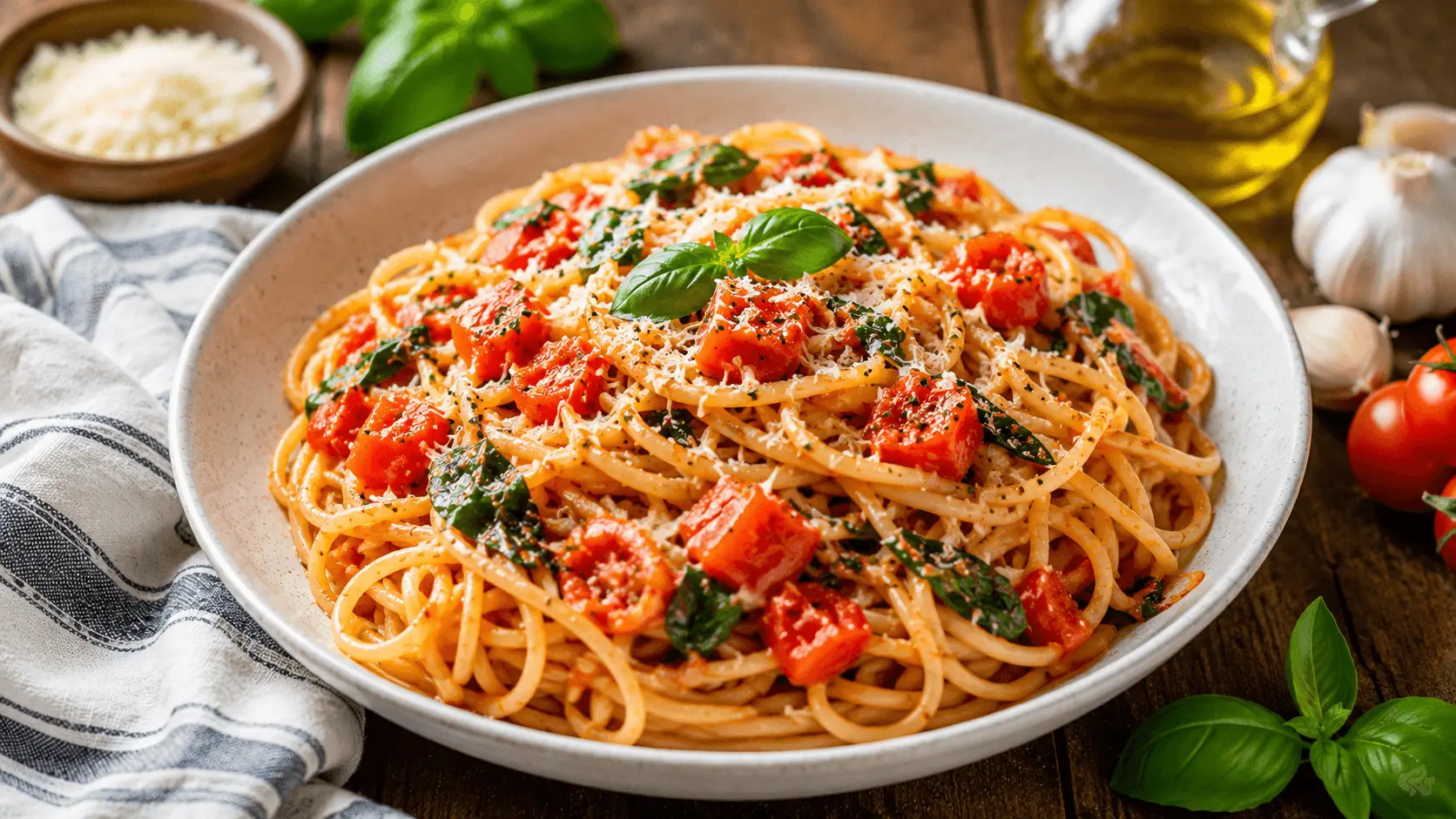
Tomato Basil Pasta is a bright, simple dinner made with juicy fresh tomatoes, fragrant basil, garlic, olive oil, and tender pasta. It comes together in about 30 minutes, making it a fresh summer meal that feels special without requiring a complicated sauce.
Warm evenings call for a dinner that is satisfying without feeling heavy. The challenge is turning a few fresh ingredients into a sauce that actually clings to the pasta instead of leaving watery tomatoes at the bottom of the bowl.
This Tomato Basil Pasta solves that problem by gently cooking the tomatoes until their juices become glossy and flavorful. Garlic adds warmth, basil brings a garden-fresh aroma, and reserved pasta water pulls everything together. You will learn which ingredients work best, how to build the sauce, and how to store any leftovers.
Why You’ll Love Tomato Basil Pasta
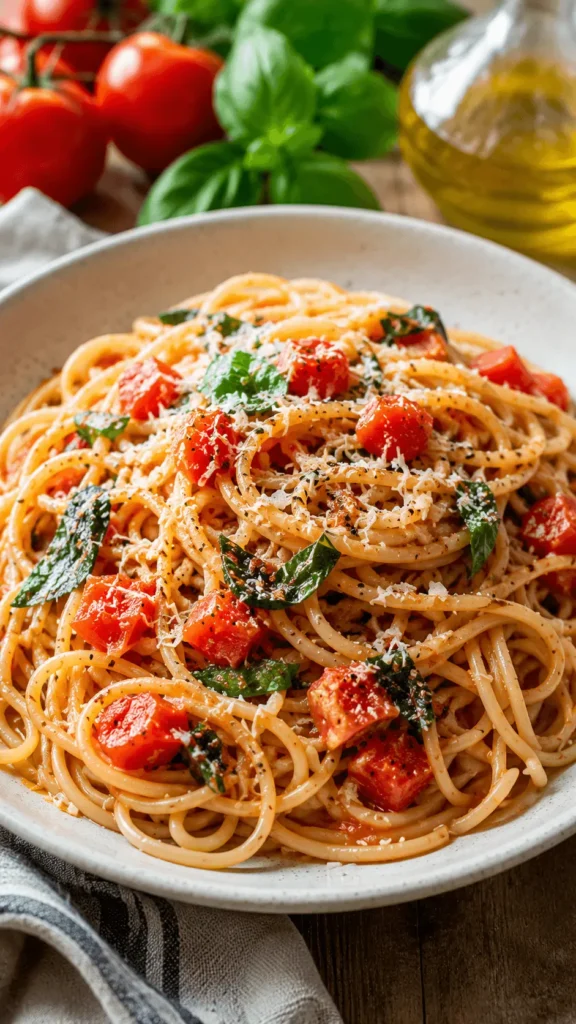
This Tomato Basil Pasta has all the comfort of a cozy pasta dinner with the lively flavor of summer produce. The sauce tastes fresh and savory, with sweet tomatoes, mellow garlic, and basil added at the end so its flavor stays bright.
Ready in about 30 minutes: You can prepare the sauce while the pasta cooks, making this an easy weeknight pasta dinner.
Made with simple ingredients: Fresh tomatoes, garlic, basil, pasta, and pantry staples create plenty of flavor without a long shopping list.
Fresh but comforting: The juicy sauce feels light, while the tender pasta keeps the meal satisfying.
Beginner-friendly: The steps are straightforward, and the sauce does not require blending or hours of simmering.
Easy to customize: Add vegetables, adjust the garlic, change the pasta shape, or finish the dish with cheese.
Naturally meat-free: This colorful vegetarian pasta recipe works as a complete dinner or a flexible side dish.
Perfect for summer: Peak-season tomatoes and fresh basil give this summer pasta recipe its best flavor and aroma.
With those benefits in mind, gather your ingredients and prepare to turn them into a glossy homemade sauce.
Ingredients for Tomato Basil Pasta
The ingredients in Tomato Basil Pasta are familiar, but each one has an important job. Ripe tomatoes provide sweetness and moisture, garlic creates a savory base, and starchy pasta water helps the sauce coat every strand.
Dry spaghetti or another long pasta — 12 ounces: Provides a tender, satisfying base and plenty of surface area for the fresh sauce.
Ripe tomatoes — 1½ pounds, diced: Form the main sauce and bring a juicy, naturally sweet flavor. Roma, vine-ripened, or small tomatoes all work well.
Extra-virgin olive oil — ¼ cup: Softens the garlic, carries the basil aroma, and gives the sauce a smooth finish.
Garlic — 4 cloves, thinly sliced or finely minced: Adds savory warmth without overpowering the tomatoes.
Red pepper flakes — ¼ teaspoon: Gives the sauce gentle heat. Reduce or omit them for a milder dish.
Fine salt — ¾ teaspoon, plus more for the pasta water: Sharpens the tomato flavor and seasons the pasta from the inside.
Black pepper — ¼ teaspoon: Adds a mild earthy bite.
Fresh basil leaves — 1 packed cup: Brings the fresh, peppery aroma that defines pasta with fresh tomatoes and basil.
Finely grated vegetarian hard cheese — ⅓ cup, optional: Adds a salty, nutty finish and helps the sauce feel slightly richer.
Reserved pasta water — ½ to 1 cup: Loosens the tomatoes and helps the oil and juices form a silky sauce.
Optional Add-Ins
Baby spinach — 2 cups: Wilts quickly into the hot sauce and adds more color.
Zucchini — 1 small, diced: Adds a tender bite and works especially well in summer.
Lemon zest — ½ teaspoon: Gives the finished pasta an extra-bright aroma.
Toasted breadcrumbs — ¼ cup: Add a crisp contrast when sprinkled over each serving.
Fresh parsley — 2 tablespoons, chopped: Complements the basil without covering its flavor.
Pro Tip: Choose tomatoes that smell fragrant near the stem and feel heavy for their size. If they are extremely juicy, keep the liquid rather than draining it—the pasta water and olive oil will help transform those juices into sauce.
Once everything is measured and ready, the cooking process moves quickly.
How to Make Tomato Basil Pasta
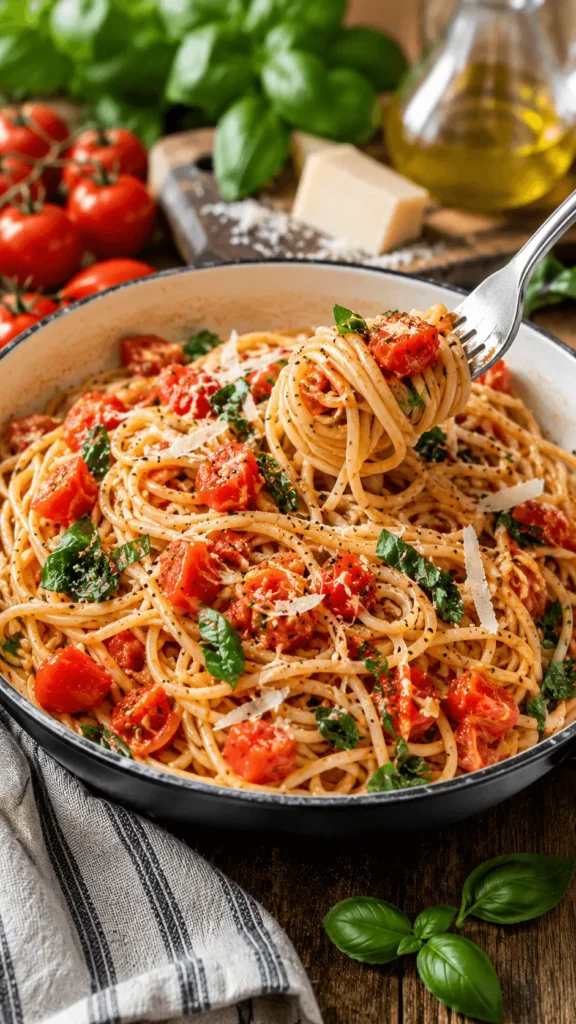
Making Tomato Basil Pasta is mostly about timing. Start the sauce while the water heats, keep the garlic from browning too deeply, and transfer the pasta while it is still slightly firm so it can finish cooking in the tomato juices.
Prepare the ingredients.
Dice the tomatoes into small pieces so they soften evenly. Thinly slice or mince the garlic, tear the basil leaves into rough pieces, and grate the cheese if you are using it. Keep everything near the stove because the garlic tomato basil pasta sauce cooks quickly.
Bring the pasta water to a boil.
Fill a large pot with water and bring it to a strong boil. Salt the water generously enough that it tastes pleasantly seasoned. Add the pasta and stir during the first minute to prevent the pieces from sticking together.
Cook the pasta until barely tender.
Cook it for about 1 minute less than the package suggests. The pasta should bend easily but still have a slightly firm center when tasted. Before draining, scoop out at least 1 cup of the cloudy cooking water.
Warm the olive oil.
While the pasta cooks, place a large skillet over medium-low heat. Add the olive oil and let it warm for about 30 seconds. It should shimmer gently but should not smoke.
Soften the garlic.
Add the garlic and red pepper flakes. Cook for 45 to 60 seconds, stirring often, until the kitchen smells fragrant and the garlic looks pale golden around the edges. Do not let it turn dark brown, or it may taste bitter.
Cook the fresh tomatoes.
Add the diced tomatoes, salt, and black pepper. Increase the heat to medium and cook for 6 to 8 minutes, stirring occasionally. The tomatoes should soften, release their juices, and become slightly saucy while some pieces remain visible.
Add the pasta to the skillet.
Transfer the drained pasta directly into the tomato mixture. Add ¼ cup of reserved pasta water and toss continuously for 1 to 2 minutes. The sauce should look glossy and lightly coat the pasta instead of pooling in the pan.
Adjust the consistency.
Add more pasta water, 2 tablespoons at a time, if the sauce appears dry or sticky. Continue tossing until the pasta is tender and the tomato juices cling to it. Avoid adding too much water at once.
Fold in the basil.
Turn off the heat before adding the fresh basil. Toss gently until the leaves soften slightly and release their bright aroma. Keeping the basil away from prolonged heat preserves its color and fresh flavor.
Finish and serve.
Add the grated cheese, if desired, and toss once more. Taste and adjust with a small pinch of salt, black pepper, or red pepper flakes. Serve immediately while the pasta is glossy and the basil is fragrant.
Now that the basic method is clear, a few practical tips can make the result even better.
Chef Tips and Variations for Tomato Basil Pasta
Your Tomato Basil Pasta can be adjusted to match the produce in your kitchen and the texture you enjoy. The most important details are controlling the heat and saving enough pasta water.
Do not burn the garlic: Keep the heat moderate and add the tomatoes as soon as the garlic becomes fragrant.
Use a wide skillet: More surface area helps excess tomato juice reduce instead of making the sauce watery.
Save extra pasta water: The sauce thickens as it sits, so a splash may be useful just before serving.
Add basil off the heat: High heat can darken the leaves and soften their fresh flavor.
Make it extra saucy: Increase the tomatoes to 2 pounds and simmer them for an additional 2 minutes.
Try short pasta: Penne, shells, or twists catch small tomato pieces and work well for packed lunches.
Add vegetables carefully: Sauté zucchini or mushrooms before adding the garlic so they have time to become tender.
Create a creamy variation: Stir in a spoonful of soft ricotta-style cheese after removing the skillet from the heat.
Keep some texture: Do not cook every tomato until completely smooth. A mixture of soft sauce and juicy pieces gives fresh tomato basil pasta a lively bite.
With the flavor adjusted to your liking, you can build a complete meal around the finished pasta.
Serving Suggestions for Tomato Basil Pasta
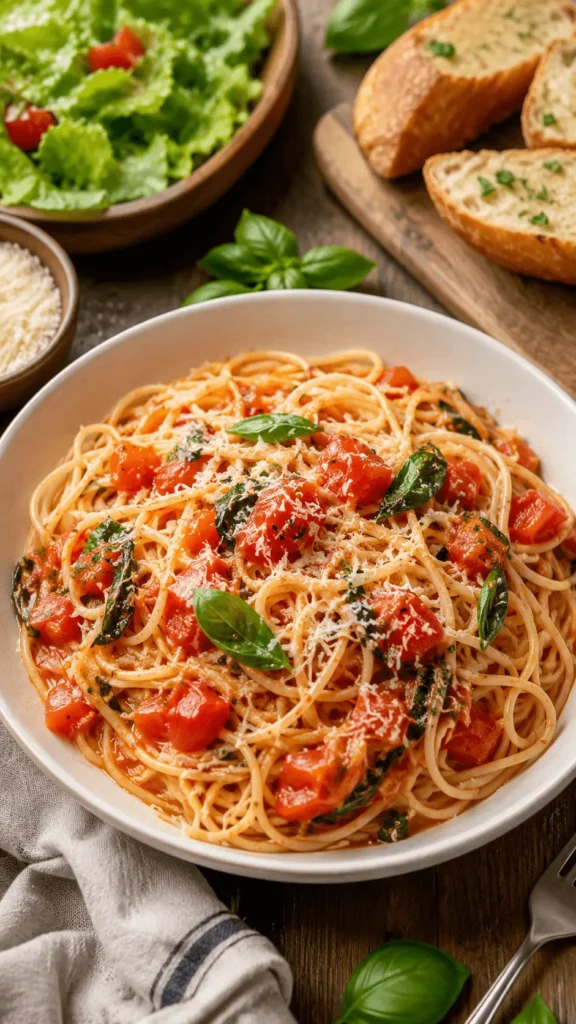
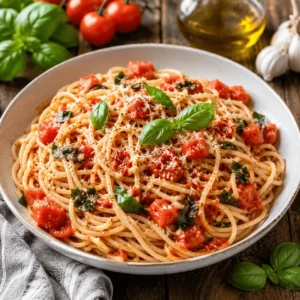
A bowl of Tomato Basil Pasta looks especially inviting when served family-style with visible tomato pieces, ribbons of green basil, and a light drizzle of olive oil. It suits relaxed patio dinners, busy weeknights, or casual summer gatherings.
Pair it with a crisp green salad: Lettuce, cucumber, and a simple lemon dressing balance the warm pasta.
Serve with roasted vegetables: Eggplant, zucchini, bell peppers, or asparagus complement the tomato sauce.
Add a crunchy topping: Toasted breadcrumbs create contrast against the tender pasta and juicy tomatoes.
Finish with fresh basil: A few small leaves on top make the colors look brighter and reinforce the fresh aroma.
Offer extra cheese separately: Guests can add as much or as little as they enjoy.
Serve smaller portions as a side: The pasta pairs well with grilled vegetables, baked fish, or seasoned white beans.
Turn leftovers into a pasta salad: Chill the pasta, loosen it with a little olive oil, and add cucumber or leafy greens.
When the meal is over, proper storage helps protect the flavor and texture of any remaining pasta.
Storing and Reheating Tomato Basil Pasta
Leftover Tomato Basil Pasta will lose some of its just-cooked gloss, but it can still make a tasty lunch when cooled and reheated carefully. Store it promptly and use gentle heat so the pasta does not become overly soft.
Fridge storage: Allow the pasta to cool briefly, then place it in a shallow airtight container. Refrigerate within two hours and use within 3 to 4 days.
Freezing: Freezing is not ideal because fresh tomatoes can become watery and the pasta may soften. This dish is best enjoyed fresh or refrigerated.
Stovetop reheating: Place the pasta in a skillet with 1 to 2 tablespoons of water. Cover and warm over medium-low heat, stirring occasionally, until steaming throughout.
Microwave reheating: Add a small splash of water, cover loosely, and heat in short intervals. Stir between intervals so the pasta warms evenly.
Texture note: Stored basil may darken, so add a few fresh leaves after reheating to restore color and aroma.
Serving cold: The pasta may also be enjoyed chilled. Let it sit at room temperature for several minutes and loosen it with a small drizzle of olive oil.
These storage basics are part of the simple formula that makes this recipe dependable.
Easy Tomato Basil Pasta

Equipment
- Large pot
- Large skillet
- Colander
- Cutting board
- Sharp knife
- Wooden spoon or heat-safe spatula
- Measuring cups and spoons
- Pasta tongs
Ingredients
- 12 ounces dry spaghetti or another pasta
- 1½ pounds ripe tomatoes diced
- ¼ cup extra-virgin olive oil
- 4 garlic cloves thinly sliced or minced
- ¼ teaspoon red pepper flakes
- ¾ teaspoon fine salt plus more for pasta water
- ¼ teaspoon black pepper
- 1 packed cup fresh basil leaves roughly torn
- ⅓ cup finely grated vegetarian hard cheese optional
- ½ to 1 cup reserved pasta water
Optional Ingredients
- 2 cups baby spinach
- 1 small zucchini diced
- ½ teaspoon lemon zest
- ¼ cup toasted breadcrumbs
Instructions
- Dice the tomatoes, prepare the garlic, tear the basil, and grate the cheese if using.
- Bring a large pot of salted water to a boil.
- Cook the pasta for about 1 minute less than the package directions. Reserve 1 cup of pasta water, then drain.
- Warm the olive oil in a large skillet over medium-low heat.
- Add the garlic and red pepper flakes. Cook for 45 to 60 seconds, until fragrant and pale golden.
- Add the tomatoes, salt, and black pepper. Cook over medium heat for 6 to 8 minutes, until juicy and slightly thickened.
- Add the drained pasta and ¼ cup of pasta water. Toss for 1 to 2 minutes.
- Add more pasta water as needed until the sauce looks glossy and coats the pasta.
- Turn off the heat and fold in the basil.
- Add the cheese if desired, adjust the seasoning, and serve immediately.
Notes
Key Takeaways
This Tomato Basil Pasta is a practical recipe worth keeping nearby when tomatoes are ripe and dinner needs to happen quickly. Here is the essential cheat sheet:
- Fresh tomatoes cook into a light, chunky sauce in less than 10 minutes.
- Slightly undercooked pasta finishes in the skillet and absorbs more flavor.
- Reserved pasta water is the key to a smooth, glossy consistency.
- Basil should be added after the heat is turned off.
- The recipe is easy to customize with vegetables, cheese, or crunchy toppings.
- Leftovers keep for 3 to 4 days, although the dish has its best texture when freshly made.
The answers below cover a few common questions that may come up before you start cooking.
FAQs About Tomato Basil Pasta
Can I make Tomato Basil Pasta ahead of time?
You can chop the tomatoes, slice the garlic, and grate the cheese several hours in advance. Store each ingredient separately in the refrigerator.
For the best texture, cook and combine the pasta shortly before serving. Fully assembled pasta will continue absorbing sauce as it sits.
Which tomatoes work best?
Ripe Roma or vine-ripened tomatoes create a balanced sauce with good flavor and manageable moisture. Small tomatoes also work and usually taste pleasantly sweet.
Very firm, pale tomatoes may not release enough flavorful juice. Allow them to ripen at room temperature before using them.
Can I use canned tomatoes?
Fresh tomatoes give this Italian tomato basil pasta its light summer character, but canned diced tomatoes can work when fresh ones are not flavorful. Drain only a little of the liquid, then simmer the sauce until it thickens.
The flavor will be deeper and less fresh, but the dish will still be comforting and savory.
How do I prevent watery tomato sauce?
Use a wide skillet and allow the tomatoes to simmer uncovered before adding the pasta. Their juices should bubble and reduce slightly.
After adding the pasta, toss it continuously. The starch on its surface helps thicken the liquid into a sauce.
Can I double the recipe?
Yes, but use a very large skillet or prepare the sauce in two batches. An overcrowded pan traps steam and prevents the tomato juices from reducing properly.
You will also need a large pot so the pasta can move freely while boiling.
Why did my pasta turn dry?
The pasta probably absorbed the sauce while sitting or did not receive enough reserved cooking water. Add warm pasta water a few tablespoons at a time and toss until the sauce becomes glossy again.
This quick tomato basil pasta should look lightly coated rather than thick or pasty.
Conclusion
Tomato Basil Pasta proves that a short ingredient list can still create a colorful, satisfying meal. Sweet tomatoes, fragrant basil, mellow garlic, and tender pasta come together in about 30 minutes with very little cleanup.
Serve it straight from the skillet while the sauce is glossy and the basil smells bright and fresh. It is an easy recipe to return to whenever you have ripe tomatoes, a busy evening, and a craving for homemade comfort.